The sterile scent of the hospital room, the ache in my broken rib, and the image of Noah’s bruised face flashed before my eyes. My wife’s violent outburst, her hateful slurs, and her physical assault on our son had shattered any lingering doubt. The “conversion camp” was merely the tip of an iceberg of deep-seated homophobia and rage. I had filed for divorce, sought full custody, and was now grappling with the horrifying realization that the woman I married harbored such venomous hatred for our child. My question of whether I was the asshole for divorcing her now seemed absurd, replaced by a desperate need to protect my children from her toxicity.
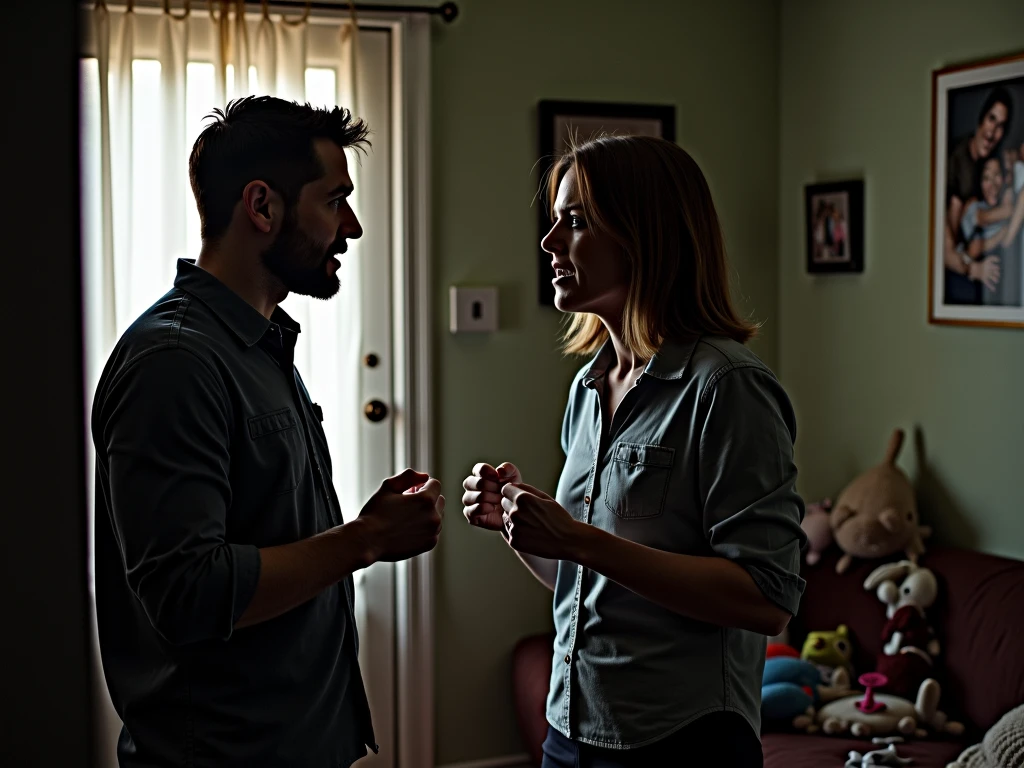
The hospital room, a stark white canvas, felt like a temporary refuge from the chaos that had erupted in our home. My broken rib was a physical testament to the violence, but the deeper wounds were etched on Noah’s face and in his quiet, understanding eyes. My wife, now facing charges, was a stranger, her true colors a horrifying revelation. I was resolute in my decision for divorce and full custody, but the lingering question of why she had become so consumed by hatred, so willing to harm her own child, gnawed at me. How could a mother, whom I thought shared my unconditional love, harbor such venom?
A few days later, after I was discharged from the hospital and Noah was safely with me and our daughter at a temporary apartment, I received a call from my wife’s estranged older brother, David. I hadn’t spoken to him in years; he had cut ties with his family over a decade ago, citing “irreconcilable differences.”
“I heard what happened,” David said, his voice flat, devoid of emotion. “I’m not surprised. I’m sorry you and Noah had to go through that. But I think it’s time you understood why Katy is… like this.”
I listened, a cold dread settling in my stomach.
“Our father,” David began, his voice taking on a distant, almost robotic tone, “was a deeply religious man. A fire-and-brimstone preacher, actually. He believed that any deviation from his strict interpretation of the Bible was a direct path to hell. And his biggest obsession, his absolute biggest fear, was homosexuality. He preached about it constantly, called it the ultimate sin, a corruption of the soul. He believed it was a demonic influence that could ‘infect’ families and destroy them from within.”
My mind flashed to Katy’s words: “condition cured,” “filth corrupted me.”
“He was also incredibly abusive,” David continued, his voice growing colder. “Not physically, not usually. But emotionally, psychologically. He used fear, guilt, and shame as weapons. He would constantly tell Katy and me that if we ever ‘strayed’ from his path, if we ever brought ‘shame’ upon the family, we would be ‘cast out,’ ‘disowned,’ and ‘condemned to eternal damnation.’ He made us believe that his love was conditional, entirely dependent on our adherence to his rigid beliefs. And he was particularly harsh with Katy, because she was the youngest, and he saw her as more ‘impressionable,’ more ‘vulnerable’ to outside influences.”
“When Katy was about 15,” David revealed, his voice barely a whisper, “she had a secret. She was deeply, profoundly in love with her best friend, a girl. She was terrified. She came to me, crying, begging me not to tell Dad. I tried to help her, tried to tell her it was okay, but she was so indoctrinated, so utterly terrified of Dad’s wrath, of being ‘unclean,’ of being ‘cast out.’ She genuinely believed she was ‘corrupted.’ She tried to ‘pray it away,’ she tried to ‘fix’ herself. And then, her friend, the girl she loved… she came out publicly at school. Dad found out. He didn’t just disown her friend; he subjected Katy to weeks of intense ‘spiritual cleansing,’ ‘exorcisms,’ and ‘reparative therapy’ sessions with his church elders. He told her she was ‘tainted,’ that she had ‘invited evil’ into our home. He made her believe that her own desires were a direct threat to the family’s salvation.”
“Katy, she never truly recovered from that,” David concluded, his voice heavy with a profound sadness. “She learned to completely repress any deviation from Dad’s teachings. She became obsessed with ‘purity,’ with ‘normalcy,’ with projecting an image of ‘righteousness’ to avoid his condemnation. Her homophobia, her desire to send Noah to a conversion camp… it’s not just prejudice. It’s a deeply ingrained trauma response, a desperate, almost involuntary, attempt to ‘cure’ Noah of the very ‘sin’ she believed almost destroyed her, almost led to her being ‘cast out’ by her father. She genuinely believes she’s ‘saving’ Noah, not from being gay, but from the terrifying condemnation and abandonment she experienced. And when Noah came out, and then you stood up for him, it triggered her deepest, most primal fear: that Noah’s ‘filth’ would ‘corrupt’ the family, just like her father warned, and that she would finally be ‘cast out’ by the man she loved, just like she feared her father would do.”
I sat there, stunned into silence. The “conversion camp,” the “dates with girls,” the “condition cured,” the violent outburst, the hateful slurs – it wasn’t about simple homophobia. It was the devastating legacy of childhood religious trauma and psychological abuse, a woman trapped in a perpetual cycle of fear, shame, and self-loathing, desperately trying to conform to a rigid, conditional love that had warped her entire sense of self. Her violence wasn’t just rage; it was a desperate, almost involuntary, attempt to control the narrative, to ‘cleanse’ her son of the ‘filth’ she believed would lead to her own condemnation, a condemnation she had lived under since childhood. The AITA question, once a clear binary of right and wrong, dissolved into a profound, aching understanding of the unseen burdens people carry, and how the echoes of deeply entrenched, unacknowledged family trauma can tragically dictate adult actions, even at the cost of profound violence and the destruction of profound love.