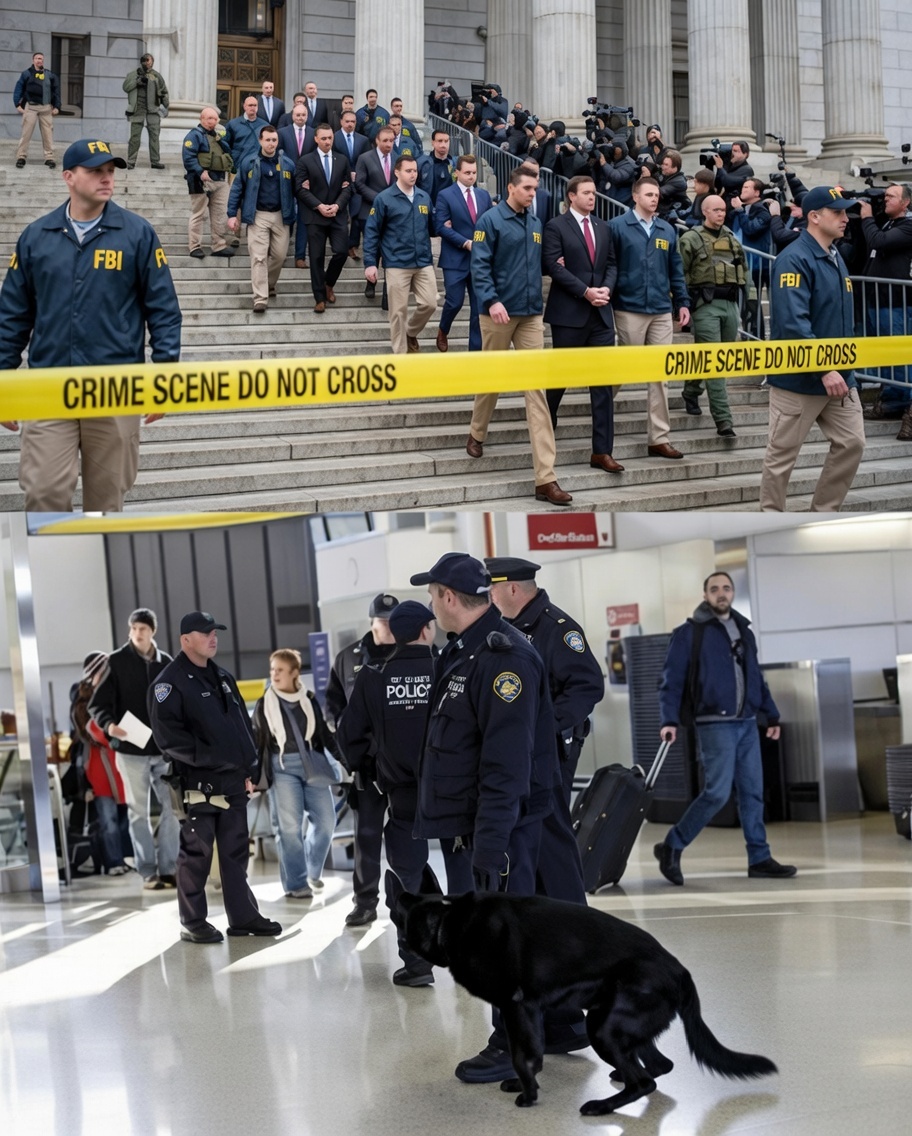
The first arrest happened at 2:17 a.m.
arrow_forward_ios
Read more
00:00
00:01
01:31
By 3:00 a.m., the phones inside five state courthouses were ringing nonstop.
By sunrise, 128 judges were in federal custody.
And by noon, the public learned that the American justice system had been quietly bleeding from within for seven years.
Chapter One: The Traffic Stop That Shouldn’t Have Mattered
Special Agent Daniel Reyes of the Federal Bureau of Investigation had almost ignored the call.
It was routine. A highway patrol officer in Arizona had stopped a sedan for drifting lanes outside Tucson. The driver was nervous. Too nervous. The trunk contained 47 kilograms of methamphetamine, vacuum-sealed and stamped with a small scorpion insignia.
But it wasn’t the drugs that caught Reyes’ attention.
It was the driver’s ID.
Judicial clerk. Assigned to a senior superior court judge.
Reyes had spent twelve years dismantling narcotics networks tied to the Sinaloa Cartel. He knew their packaging. Their routes. Their coded ledgers.
He did not expect to find their product sitting in the trunk of a courthouse employee’s car.
At first, the clerk insisted he was just a mule. Paid to transport packages. He claimed ignorance of their origin.
Then Reyes noticed something else.
The man had two phones.
One personal.
One encrypted.
And the encrypted one contained a calendar labeled simply: “SD.”
Shadow Docket.
Chapter Two: Cracks in the Marble
Within weeks, Reyes assembled a quiet task force. Financial analysts. Cybercrime specialists. Two prosecutors who had reputations for refusing political pressure.
They started with the clerk’s bank records.
Small deposits at first. Then larger ones.
Shell companies with names like Southwest Consulting Group and Liberty Legal Holdings.
They led nowhere. Dead ends. Paper walls.
Until a forensic accountant named Leah Morgan spotted something strange: recurring transfers that aligned perfectly with high-profile cartel prosecutions being dismissed.
Coincidence, perhaps.
But the amounts were consistent.
$10,000.
$25,000.
$50,000.
Monthly retainers.
Reyes felt something cold settle in his chest.
Judges weren’t being bribed case by case.
They were on salary.
Chapter Three: The First Judge
The first warrant they executed was against Judge Harold Whitmore in Nevada.
Respected. Thirty years on the bench. Known for “balanced sentencing.”
When agents searched his home, they found nothing unusual.
Until Morgan discovered an encrypted hard drive hidden inside a hollowed-out copy of a constitutional law textbook.
Inside were spreadsheets.
Case numbers.
Payment confirmations.
And a column labeled “Priority — S.”
Reyes stared at the screen.
Over 1,400 cases were tagged.
Evidence suppressed.
Search warrants invalidated.
Bail lowered for high-level operatives.
Whitmore broke after 14 hours of interrogation.
He claimed he wasn’t the architect.
He was recruited.
There was a coordinator.
Someone who managed the payments across five states.
Someone who kept the “Shadow Docket.”
Chapter Four: The Leak
Three days later, the story leaked to the press.
Not details.
Just whispers: “Federal probe into judiciary.”
Reyes hadn’t told anyone outside the task force.
Which meant someone inside was talking.
The next morning, one of the prosecutors on his team was found unconscious in her home. No signs of forced entry. Toxicology revealed fentanyl exposure.
Accidental? Maybe.
Or a message.
Reyes pushed forward anyway.
He requested emergency authorization for simultaneous raids.
Five states.
Dozens of courthouses.
But Washington hesitated.
Arresting a sitting judge is seismic.
Arresting 128?
Unthinkable.
Chapter Five: The Coordinator
The breakthrough came from the encrypted calendar.
“SD” entries were color-coded.
Red for Arizona.
Blue for California.
Green for Texas.
Each entry linked to a bank routing number.
Morgan traced them to a trust fund registered under a philanthropic foundation in New Mexico.
The director?
Chief Judge Eleanor Vance.
Publicly, she was a reform advocate. Anti-corruption. Vocal about ethics.
Privately, she had access to every courthouse network in her state.
Reyes couldn’t believe it.
The architect of the shield.
The guardian of justice.
Or so the public thought.
When agents raided Vance’s office, they discovered a private server concealed behind framed commendations.
Inside: the master Shadow Docket.
Payments totaling $84 million over seven years.
Judges categorized by reliability.
Some labeled “Hesitant.”
Others marked “Loyal.”
And one chilling tag: “Untouchable.”
Chapter Six: The Untouchables
Reyes expected politicians.
Maybe senior administrators.
He did not expect what came next.
The Untouchables were not judges.
They were federal.
Names partially redacted.
Connections extending beyond state lines.
Before Reyes could secure full access, the server was remotely wiped.
Someone with higher clearance had intervened.
That night, Reyes received a call from an unknown number.
A calm voice said, “You’re arresting the pawns.”
Then the line went dead.
Chapter Seven: Operation Gavel Fall
Despite the interference, warrants were signed.
At 2:00 a.m., federal agents moved simultaneously across Arizona, California, New Mexico, Texas, and Nevada.
Doors breached.
Chambers sealed.
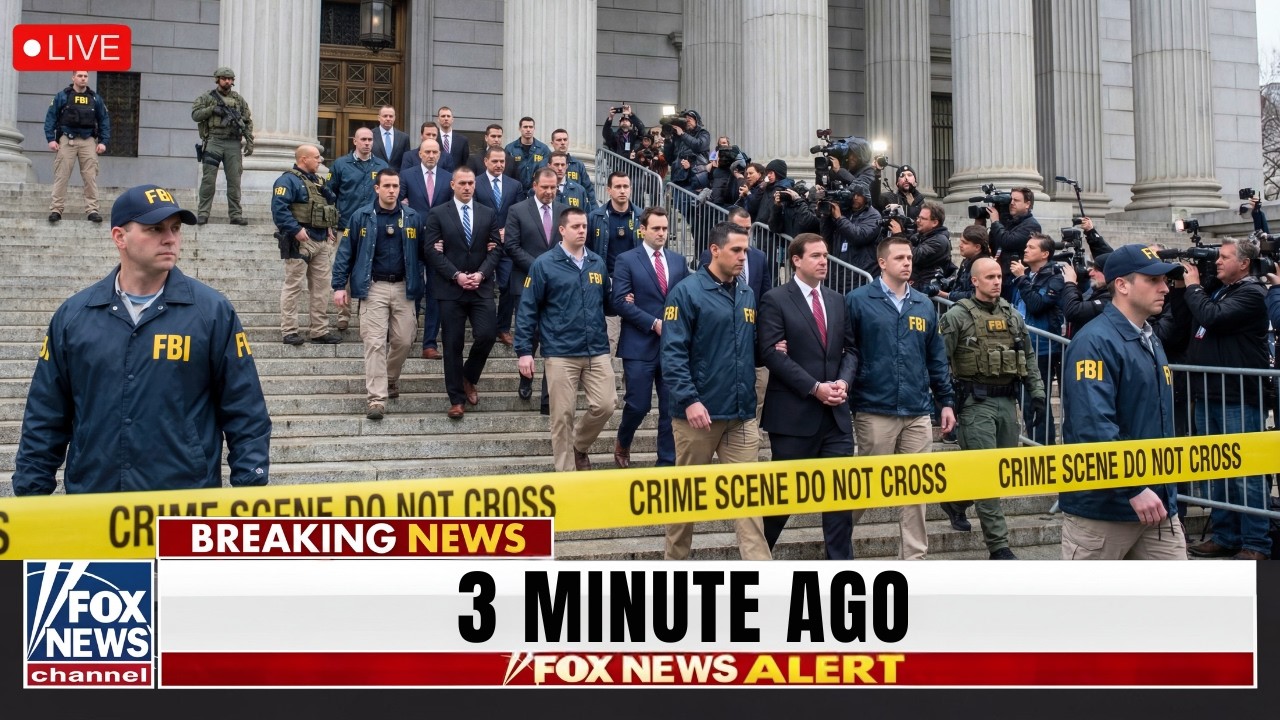
128 sitting judges taken into custody.
News helicopters circled courthouses as stunned staff watched their superiors led away in handcuffs.
The country reeled.
Cable networks called it the largest judicial corruption takedown in American history.
But Reyes knew something the public did not.
Eleanor Vance was missing.
Her home empty.
Her phone inactive.
And the funds in the foundation account had been transferred hours before the raids.
Chapter Eight: The Betrayal Within
As media pressure mounted, the Department of Justice demanded answers.
So did Congress.
But Reyes’ problems were closer.
Internal Affairs opened an inquiry into his task force, citing “procedural irregularities.”
Someone had accused him of exceeding his authority.
Then Leah Morgan disappeared.
Her apartment showed signs of a rushed exit. Laptop gone. Files missing.
Reyes found a single note taped beneath her desk.
“Check the federal dockets. It’s bigger than state.”
He accessed sealed federal case files.
And his blood ran cold.
Several major cartel prosecutions at the federal level had also collapsed over the past five years.
Technicalities.
Mishandled evidence.
Judges recused without explanation.
The pattern mirrored the Shadow Docket.
Which meant the rot might reach the federal bench.
Chapter Nine: The Revelation
Weeks later, a package arrived at Reyes’ office.
No return address.
Inside: a flash drive.
It contained a video.
Leah Morgan, alive but shaken.
She explained that the Untouchables weren’t a rumor.
They were a contingency plan.
If state operations were exposed, federal allies would intervene to protect the core network.
She named one.
A federal appellate judge.
Before the video cut off, a shadow crossed behind her.
The screen went black.
Chapter Ten: The Choice
Reyes faced an impossible decision.
Release what he had — risk destabilizing the judiciary nationwide.
Or bury it — preserve institutional trust.
As he prepared a classified report, his secure terminal displayed a new message.
No sender.
Just three words:
“We see you.”
Then a list of personal details about his family.
Addresses.
School schedules.
The message ended with:
“Justice is expensive.”
Reyes leaned back in his chair.
128 judges were behind bars.
$84 million traced.
1,400 compromised cases under review.
The public believed the system was cleansing itself.
But the architect was free.
The Untouchables remained unnamed.
And now the war had turned personal.
Epilogue: The Next Target
Two months later, Eleanor Vance appeared on a news broadcast from an undisclosed location.
She claimed political persecution.
She hinted at evidence implicating officials “far beyond state borders.”
Then she smiled.
“I was never the top,” she said.
The feed cut.
Reyes received a final encrypted message that night.
A new docket.
New names.
Different states.
The header read:
“Phase Two.”
He stared at it for a long time.
If he opened it, there would be no turning back.
If he didn’t, the Shadow Docket would grow again.
Reyes hovered over the file.
And clicked.