The microphone felt heavier than it should have.
For a split second, I considered giving him exactly what he wanted—a soft, tragic ballad about forgiveness. Something tasteful. Something that would make the guests dab at their eyes and whisper about his generosity.
Instead, I turned slightly toward the pianist.
“Could you wait?” I asked gently.
He froze, hands hovering above the keys.
Three hundred guests shifted in their seats.
Cameron’s smile flickered—but only for a second.
I lifted the microphone closer.
“Good evening,” I began. My voice didn’t tremble the way he expected it to. Chemotherapy had taken my hair, my strength, my appetite—but it hadn’t taken my clarity.
“For those of you who don’t know me, I’m Olivia Reed. Cameron’s former wife.”
A ripple moved through the ballroom. Vanessa’s smile tightened, just barely.
“I was invited here tonight to sing,” I continued. “And I will. But before I do, I think it’s important to explain why I’m here.”
Cameron’s jaw stiffened.
I could see it now—the calculation behind his eyes. He was measuring risk. Optics. Control.
“Two months ago,” I said calmly, “I was diagnosed with advanced ovarian cancer. I was also five months pregnant with Cameron’s daughter.”
A few gasps. A fork clattered against china.
“I had a choice. Begin aggressive treatment immediately… or delay it to give my baby a chance.”
The silence in the room deepened into something dense and uncomfortable.
“I chose my daughter.”
Vanessa’s fingers tightened around her bouquet.
“I called Cameron from the oncology clinic that day,” I said. “He didn’t answer. But I did see photos of him at a charity gala that evening. He looked very happy.”
A nervous murmur rippled across the tables.
Cameron leaned toward me, whispering through his smile. “Olivia. Enough.”
I angled the microphone slightly so his whisper carried.
He stepped back.
I continued.
“When he came to see me in the hospital, he didn’t bring flowers. He brought divorce papers.”
Now the room wasn’t just silent—it was watching.
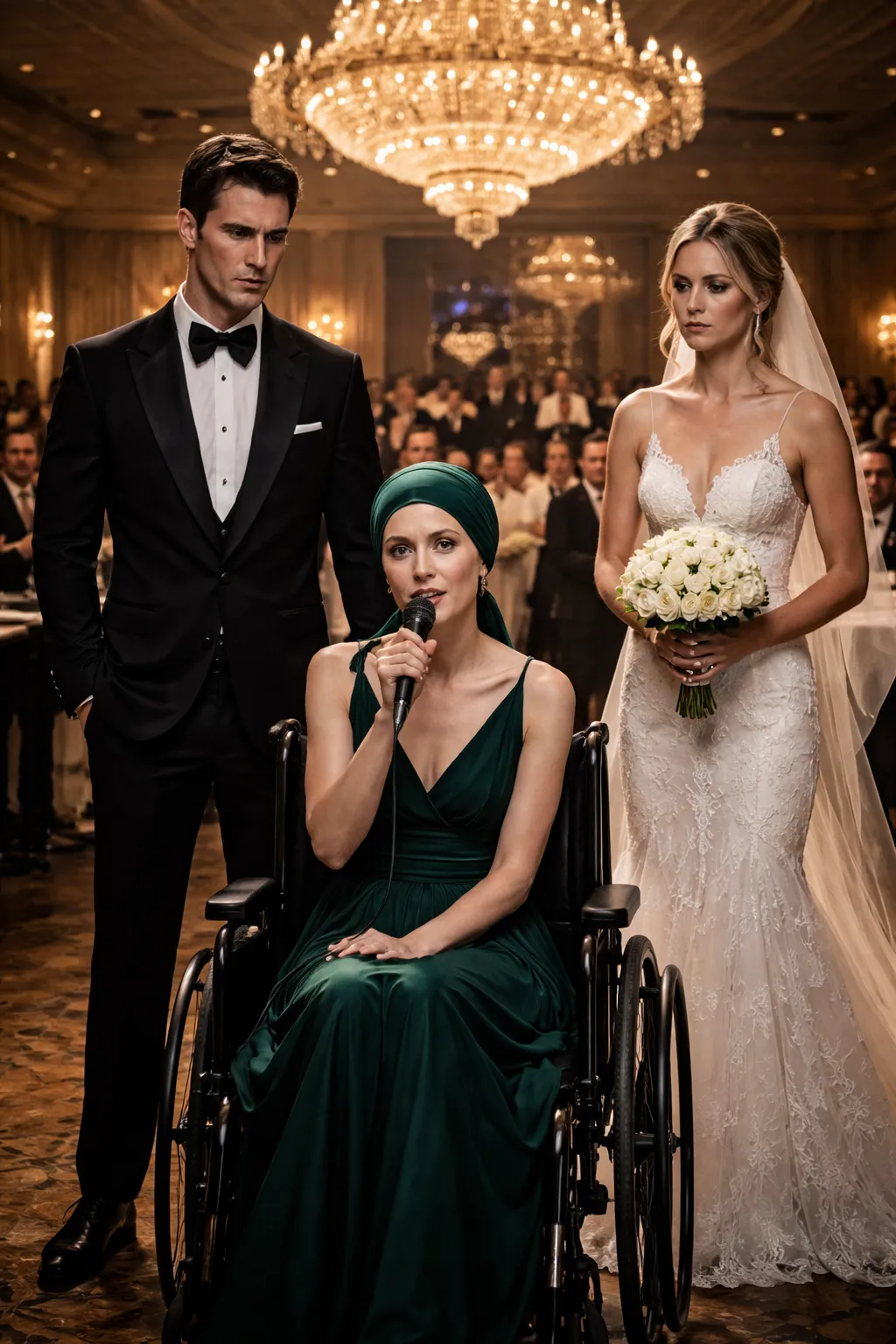
“And buried in those papers,” I said evenly, “was a clause requiring me to comply with ‘reasonable personal requests’ for two years… or risk losing financial support for our child.”
Someone near the front audibly said, “Oh my God.”
Cameron’s face had lost color.
“And tonight,” I said softly, “this is considered reasonable.”
The word hung in the air like a stain.
I let the silence stretch—not dramatically, just long enough for the weight of it to settle onto crystal glasses and diamond earrings.
Then I smiled.
“But here’s the thing,” I said. “I did bring a song.”
The pianist looked at me, unsure.
I nodded.
He began to play.
It wasn’t a love song.
It was a lullaby.
Simple. Gentle. The kind you sing in a dark room at 3 a.m. when the world feels fragile and small.
I sang to my daughter.
Not to Cameron.
Not to Vanessa.
Not to the guests.
To Grace.
About strength. About choosing love when it costs you everything. About mothers who fight battles quietly so their children never have to see the war.
Halfway through, my voice cracked—not from weakness, but from something deeper. The room felt different now. No longer entertained.
Witnessing.
When I finished, there was no immediate applause.
Just silence.
And then, slowly, someone stood.
An older woman at a table near the back.
Then another.
Within seconds, the room was on its feet.
Not for Cameron.
For me.
Vanessa lowered her bouquet.
Cameron did not move.
I handed the microphone back to him gently.
“Congratulations,” I said, loud enough for the room to hear. “I truly hope this marriage brings you everything you deserve.”
The sentence was polite.
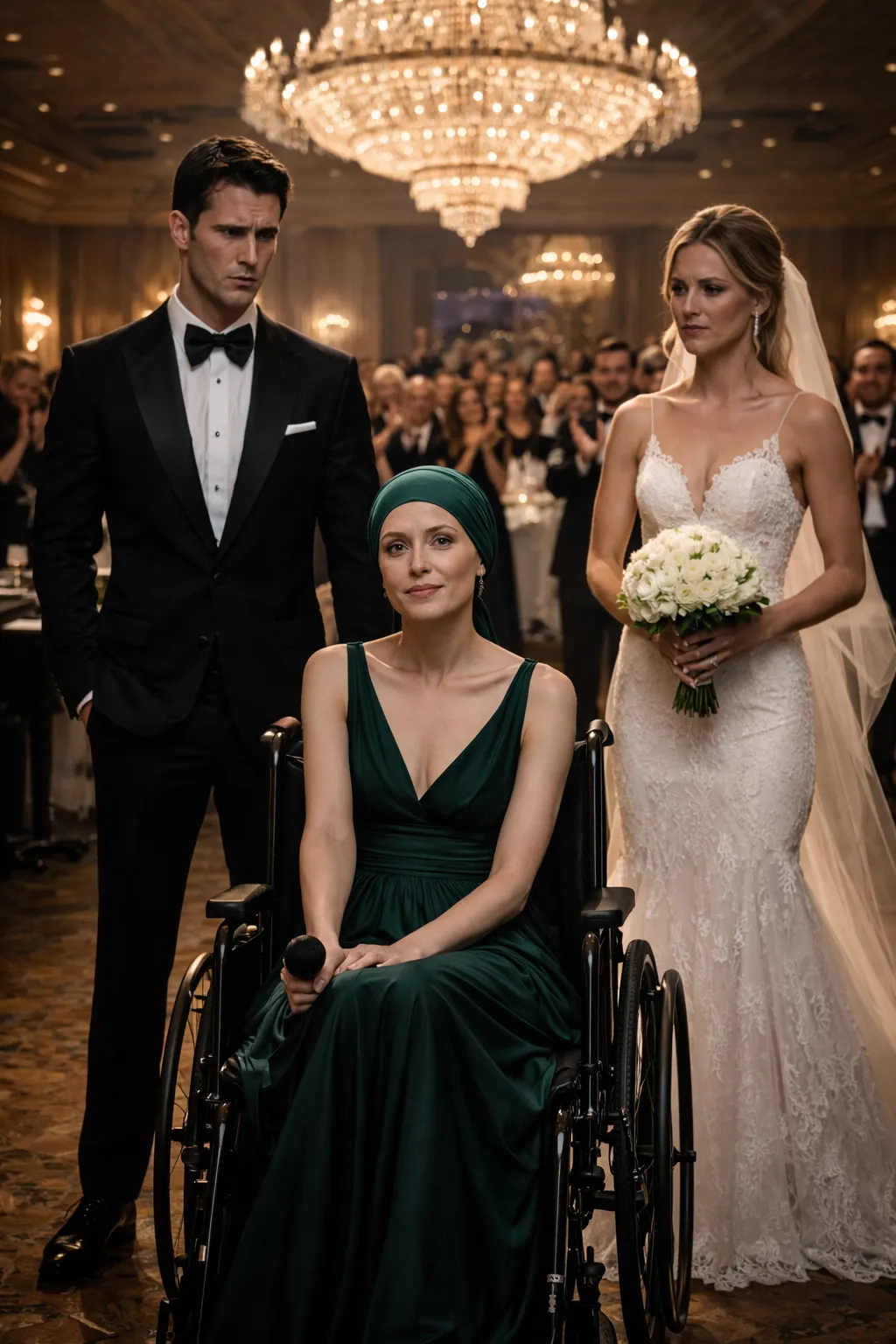
The meaning was not.
I wheeled myself toward the edge of the stage. For a terrifying second, I thought I might have to navigate down alone—but then one of the groomsmen stepped forward silently and helped guide my chair.
As I passed the front table, Vanessa avoided my eyes.
Cameron didn’t.
His expression had changed.
Not angry.
Worried.
Because the one thing he valued more than money—
was reputation.
And tonight, in a room full of investors, donors, and board members—
he had just lost control of the narrative.
I didn’t look back as I exited the ballroom.
Outside, the night air felt cool against my scalp.
My phone buzzed in my lap.
A text.
Unknown number.
I’m a partner at Whitmore & Klein. If what you said tonight is documented, you need independent counsel immediately. Please call me.
A second buzz.
Another message.
My sister died of ovarian cancer. I’m so sorry. Let me help.
I stared at the screen, heart pounding—not from fear this time.
From possibility.
For months, I had felt like I was surviving minute to minute.
Tonight, for the first time—
I felt something else.
Not revenge.
Not bitterness.
Power.
And inside the hotel, beneath that glittering chandelier—
Cameron was beginning to understand
that I had never been the weakest person in the room.