The morning of my grandparents’ will reading was crisp and gray, with the fog still curling outside the windows of the quaint old law firm of Harper and Doyle, nestled in Downtown Charleston. I sat quietly in a worn leather chair near the fireplace, watching my cousin Daniel pace the room like he was already king of the castle. And honestly, he probably was. “Eliza Monroe,” the lawyer’s voice brought me back. I nodded. I was 35 and bracing myself to hear officially how little I mattered to the people who raised me. After all, Daniel was always the Golden Boy.
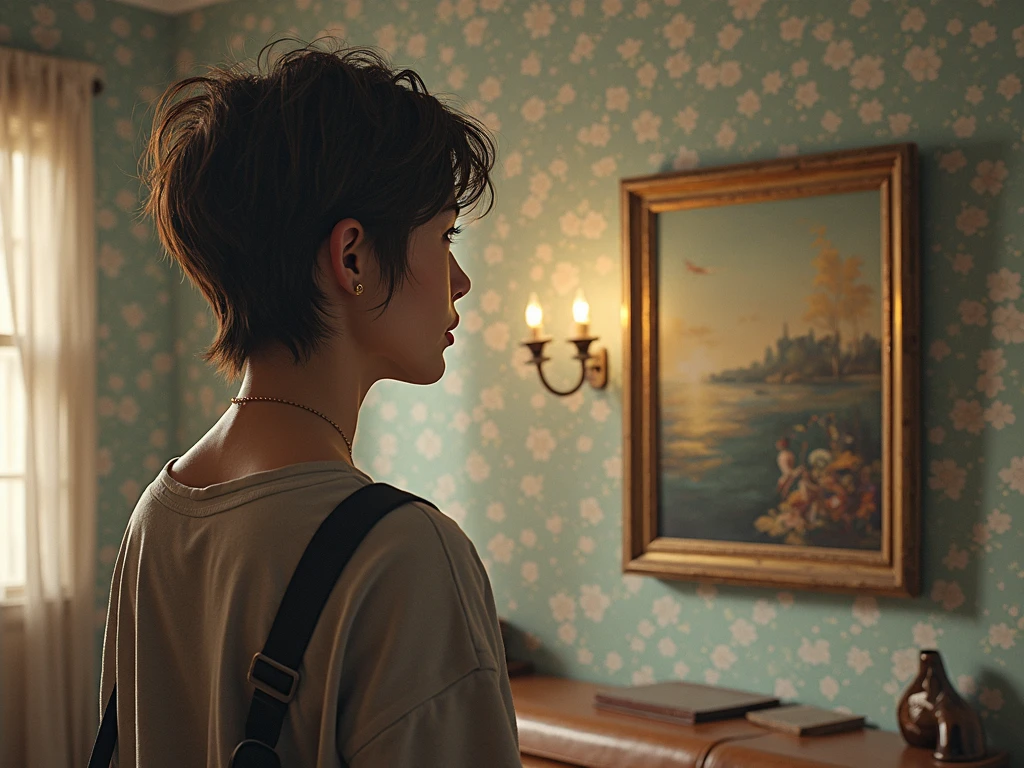
Mr. Doyle, a small man with tired eyes, cleared his throat. “To our grandson Daniel, for his unwavering loyalty to the Monroe Family Legacy…” The list began: a beachfront property on Sullivan’s Island, the antique car collection, majority ownership in Monroe Shipping, a trust fund that would make anyone’s head spin. Daniel flashed a smug smile in my direction. “And to our granddaughter Eliza,” Mr. Doyle hesitated, “we leave the oil painting ‘Whispers of Ashwood,’ currently hanging in the library.” Silence. Daniel chuckled under his breath. “A painting?” I asked, barely audible. “That’s all?” “Your grandmother’s favorite,” Mr. Doyle said gently. Daniel came over, clapping a heavy hand on my shoulder. “Hey, maybe we can find you a spot in the dockyard offices. You’d like that, right?”
I stood, shaking him off. The Monroe fortune, built over a century, was now entirely his. All I got was a moody painting from a dusty old library. Still, I’d always found something strange about it: a shadowed forest, odd symbols buried in the brush. I glanced back at Mr. Doyle. “That’s it?” I asked. He nodded. “You must retrieve it within 5 days.” Without another word, I left.
—
Unraveling the Mystery of the Painting
Nao had been more like a mother to me than my actual one ever was. As the longtime housekeeper, she was the one who tucked me in when I had nightmares, who remembered my birthdays when my grandparents didn’t. She helped me gently lift “Whispers of Ashwood” from the library wall, wrapping it in an old quilt she’d kept from my childhood. “Your grandmother used to stare at this for hours,” she said softly, “especially those last few weeks.” “She said anything specific?” I asked. “Numbers? Patterns?” “We all thought the illness was getting to her.” I looked closer. In the dim light of the library, the geometric shapes in the painting seemed to hum with life—lines shifting, angles morphing the longer I stared. Were there numbers hidden in the brush? Nao nodded, her fingertips lightly tracing a triangle nestled among painted branches. “She’d follow these shapes with her fingers, over and over. Mr. Monroe hated it. Said it was nonsense.”
That night, back in my tiny rental above an old bakery on Queen Street, I hung the painting in my living room. It seemed even more vivid here; the forest shimmered with unreal detail. But those odd shapes—squares, circles, spirals—they didn’t belong. They were too precise, too intentional. I poured a glass of Merlot and sat back, staring. Was this painting just a final insult, a token? Or had my grandmother left me a message no one else understood?
My phone buzzed. Daniel again. I let it ring out. He’d either want to brag or dangle another pity job. I opened my laptop and typed in the artist’s name: Julian Lyre. Nothing. No record of major shows, the gallery closed in 2002. The painting had no history. Then a text lit up the screen: “Don’t be petty. Come join the company. It’s what Gran would have wanted.” I laughed. What she wanted was for me to fit into their world. But I chose art restoration. Truth. And now, staring at the painting, something clicked. Those shapes—they weren’t random. They were a cipher. And someone didn’t want me to see it.
—
Daniel’s Desperation and a Grandmother’s Secret
A knock rattled the door. It was almost 1:00 a.m. Who would be knocking at this hour? I crept toward the door and peeked through the peephole. Daniel. His usually polished hair was a mess, his tie loosened like he’d yanked it off mid-breakdown. “Eliza!” he called out, voice muffled by the door. “Open up! We need to talk about the painting!” I stayed silent, heart thudding. Daniel never cared about art; he once called my graduate thesis a “cute hobby.” Why now? “Eliza, please!” he said, his voice cracking. “There were instructions from Gran about the painting. You need to give it back!” Instructions? My grip tightened on the doorknob. Maybe I wasn’t imagining things. Maybe those shapes really did mean something.
“Go away, Daniel!” I said firmly through the door. “The painting is mine! It’s all she left me, remember?” “You don’t understand!” he hissed. “That painting… it’s not what you think! Give it to me now, and I’ll give you $5 million!” I froze. $5 million from a guy who scoffed at it earlier? That meant it was worth a hell of a lot more. I heard the jingle of keys. He still had a copy from when I’d been sick last year. Panicking, I grabbed the painting off the wall and ran to my bedroom, slamming the door shut just as the front door creaked open. “Eliza!” his voice boomed. “Where is it? Where’s the painting?!”
I clutched it close. In the soft glow of my bedside lamp, the shapes almost shimmered. Then I saw it: something I hadn’t noticed before. The angles and lines weren’t random; they formed numbers. Coordinates. “Eliza!” The doorknob jiggled violently. “Open this door right now!” Ignoring him, I turned the painting over. The frame had a gap, barely noticeable unless you were looking for it. I pried it open. A folded piece of paper fell out. My grandmother’s handwriting. “My dearest Eliza, if you’re reading this, you’ve found what I always knew you would. You see what others overlook, and now you’ll finally understand why your grandfather and cousin have feared your mind for years. The numbers are more than shapes; they’re coordinates, passwords, proof of everything they stole: my inventions, my patents, my life’s work. Monroe Shipping was never theirs; it was built on the backs of minds they crushed—mine included. But you, Eliza, you were always meant to carry on the truth.”
Another crash echoed from the living room. Daniel had stopped knocking. “I’m calling the police!” I shouted, already dialing. “Do it!” he yelled. “I’ll tell them you stole company property! That painting belongs to Monroe Shipping!” But I knew better now. The letter detailed everything: how my grandmother had once been a groundbreaking engineer, how her work had been buried beneath the Monroe name. The painting wasn’t just art; it was a map, a vault key. “The coordinates will lead you to my private lab. Everything is there, but be careful. Your grandfather and cousin would destroy it all to protect their legacy.”
Daniel’s footsteps retreated. The door slammed. Silence. I stepped out of the bedroom, surveying the wreckage. He’d torn through the place looking for it. I didn’t care. I had work to do. I photographed the painting from every angle, noting each pattern. I copied the coordinates from the letter, carefully overlaying the symbols in sequence, just as instructed. Then my phone buzzed. It was a message from Nao: “Miss Eliza, men are at the estate. They’re taking all your grandmother’s things. I tried to stop them.” My chest tightened. They were erasing her. But not if I could help it. I stared at the painting—my inheritance, my mission—and whispered, “I’m ready, Gran.” The truth wouldn’t stay hidden much longer.
—
The Secret Lab and the Family’s Lies Exposed
“They’re tearing through her study,” Nao’s text read, “looking for something. Please be careful, they’re destroying evidence.” I didn’t have time to waste. The coordinates from the painting pointed to a remote spot in the Berkshires, about a 3-hour drive from Charleston. In her letter, my grandmother wrote that she’d bought the land decades ago under her maiden name, Addison, hiding it from both my grandfather and Daniel. “The lab is underground,” she explained. “It looks like an old storm cellar, but the access panel is hidden. Use the first number sequence to get in.”
I packed fast: my laptop, the painting wrapped in blankets, a few clothes, and her letter. As I stepped outside, I noticed a black SUV idling across the street. Daniel wasn’t finished. The SUV tailed me for over an hour, always a few car lengths back. I detoured through back roads, even doubled back once, finally losing them near the Massachusetts line. By the time I arrived at the coordinates, the sky was pink with sunrise. The land looked deserted; an aging farmhouse swallowed by ivy and weeds slouched beside a field of wild grass. But as I walked the perimeter, clutching the painting, I started to recognize the patterns: trees, stones, even the slope of the hill. Everything matched the strange geometry from the painting. And then I saw it: a rusted storm cellar door, barely visible under vines. I brushed them aside, revealing a keypad tucked into the soil. I entered the first code. The doors hissed open, revealing a staircase spiraling into darkness.
As I descended, motion sensors clicked on, casting the hallway in clean, sterile light. The hum of machines echoed below. At the bottom was a second keypad. I keyed in the next sequence. The heavy door slid open, and the world shifted. The lab was massive, pristine, humming with energy. Rows of computers, shelves of prototypes, blueprints, and patents—dozens of them—bearing the name Addison Monroe. “My God,” I whispered, stepping closer. Every design I recognized from Monroe Shipping. But they weren’t Daniel’s or my grandfather’s. They were hers.
“Beautiful, isn’t it?” a voice said behind me. I spun around. It was him. My grandfather. Alive. Standing next to Daniel, who wore that same smug grin he always did when he thought he’d won. “You’re supposed to be dead,” I breathed. “Sometimes the best way to search is to make people stop looking,” he said with a cold smile. “Your grandmother’s death was inconvenient, but mine, strategic.” “You led me here,” I realized aloud. “The will reading… it was a setup!” Daniel stepped in front of the door, cutting off my escape. “We couldn’t get in. She changed the security protocols before she died. Only you could unlock it. And now,” my grandfather added, “you’ll help us erase everything: her files, her work. No one ever needs to know.”
But they underestimated me. While they talked, I edged toward her old workstation. Her letter had mentioned one final failsafe: the Clarity Protocol. I entered the last sequence. Red lights bathed the room. “Clarity Protocol activated. Transmitting data to secure recipients. Deletion disabled.” My grandfather’s face darkened. “What have you done?!” “She called it her insurance policy,” I said, my voice steady. “Everything in this lab—her files, her patents, proof of theft—is being sent to every major news outlet, patent office, and regulatory agency in the country.” “You little—” Daniel lunged toward me, but the lab sealed with a hiss. Steel doors slammed shut. We were locked inside with the truth. “She knew you’d try to bury her legacy,” I said. “So she made sure the world would see it no matter what.” Through the narrow windows, I saw blue and red lights approaching. The system had called the authorities. And just like that, the empire they stole from her began to crumble.
My grandfather and Daniel exchanged panicked glances as the sirens grew louder. The painting, “Whispers of Ashwood,” still sat wrapped in blankets by the lab entrance. Those seemingly random geometric patterns had led me right to this moment. My grandmother’s final gift wasn’t just art; it was justice. And as I watched their faces crack under the weight of incoming consequences, I smiled. This was only the beginning. The real story of Monroe Shipping was about to be told, and this time, no one could bury the truth.
—
The Aftermath and A New Legacy
The next 48 hours passed in a blur of police interviews, emergency board meetings, and an avalanche of media coverage. From my hotel room in the Berkshires, I watched it unfold: “Monroe Shipping CEO Found Alive, Arrested in Corporate Fraud Investigation,” “Company Built on Stolen Patents,” “Hidden Genius: The Woman Behind the Monroe Empire.” My phone never stopped ringing—journalists, former employees, attorneys. But I only cared about one voice. Nina. She called with a tremble in her voice. “Eliza, your grandmother made me promise: if the truth ever came out, I was to give you this.” An hour later, I sat on Nina’s worn couch in Charleston, hands wrapped around a cup of tea, a second letter resting on my lap. This one wasn’t about clues or codes; it was her story.
“My dearest Eliza,” it began, “now that the truth is out, it’s time you know the rest. You were never less than Daniel; you were always meant for more.” Each word reshaped my memories. My grandmother had been preparing me for this all along. The art history classes my family mocked? They had trained me to recognize patterns, symbolism, and hidden meanings. My quiet career in restoration? It had taught me to uncover what others missed, to put broken pieces back together. “Every time your grandfather dismissed you, every time Daniel got praised for parroting lies, it sharpened your mind. While they built a house of cards, you were learning how to topple it.”
A knock interrupted me, a sharp, confident rhythm. I opened the door to a woman in a sharp navy suit. “Eliza Monroe? I’m Alexandra Chen from the SEC. We need to talk about your grandmother’s patents.” What followed was a crash course in how deep her legacy ran. She hadn’t just protected her stolen designs; she had kept inventing, working in secret. Alexandra spread documents across Nao’s coffee table. “She filed them under a trust, a trust that names you the sole beneficiary.” My hands shook as I flipped through patent after patent: not just the ones Monroe Shipping had stolen, but new designs, technology years ahead of anything currently on the market. “They can’t function without this tech,” Alexandra said. “You effectively control the company.”
While my grandfather and Daniel sat in a holding cell, I walked into Monroe Shipping’s Downtown Charleston headquarters the next morning, not as the overlooked niece, but as its new owner. The board, desperate to avoid collapse, had no choice. My terms were clear. That afternoon, I stood alone in my grandfather’s former office, surrounded by decades of theft masquerading as legacy. Behind a faded painting of a clipper ship, I found a safe. The combination? The final sequence from “Whispers of Ashwood.” Inside was a diary, page after page of stolen brilliance, betrayal, and names—dozens of them—people like my grandmother, erased from history.
A month later, I stood on stage at a press conference. “Monroe Shipping was built on stolen dreams,” I said. “Today, we begin making things right.” I announced a foundation to compensate every inventor wronged by the company, but more than that, we would become what the company should have been: a haven for true innovation. “Whispers of Ashwood” now hung in my new office, right where my grandfather’s portrait once loomed. Weeks later, I got a letter from Daniel—half threats, half desperate pleas. I mailed back a photo of the painting, framed in pride, where his lies once hung. His world was over. My grandfather never spoke again, but it didn’t matter; the truth was finally his legacy, and mine.
Nina brought me one final letter from my grandmother. This one had been timed to arrive exactly 1 month after Monroe Shipping became Aurora Innovations. “My beloved Eliza,” it began, “if you’re reading this, then you’ve done more than exposed the truth; you’ve begun to rebuild something beautiful from the wreckage of deception. I never wanted you to inherit a broken empire. I wanted you to create something worthy of your heart.” I traced the elegant script with my fingertips, feeling her presence like a whisper in the room. That painting, once dismissed as worthless, had been everything—not just a key to justice, but a map to legacy. Her legacy, and mine.
—
Aurora Innovations: A Future Forged in Truth
Two years later, Aurora Innovations is nearly unrecognizable. We lead not only in tech but in transparency. Our foundation has restored credit to dozens of forgotten inventors, and our Open Access incubator is reshaping the landscape of ethical innovation. “Whispers of Ashwood” still hangs in my office; the strange shapes within it are now a familiar comfort. Some nights I could swear they shift subtly in the lamp light, like she’s still there, sending me new puzzles to solve, new truths to uncover. But the greatest truth was always there: Success built on deception will collapse. But truth, no matter how hidden, endures.
Daniel was released last week. He sent a message asking to talk about healing, about family. I haven’t answered. Some patterns, I’ve learned, don’t need restoring. At our annual Innovation Fair, I presented an award to a young woman whose fire reminded me of my grandmother: brilliant, overlooked, and fearless. As she held the trophy, I caught a glimpse of the painting reflected in the glass. The shapes inside shimmered faintly, and I knew the painting hadn’t just led me to justice; it had led me to purpose.
—
Your Voice Matters: Share Your Story
If my story moved you, I’d love to hear from you. Leave a comment, tell me what you think, what part stayed with you, or even what you would have done in my shoes. Your voice matters. And if you’ve ever felt overlooked, underestimated, or silenced, like I once did, let this be your reminder: You are not powerless. Truth has a way of rising if you’re willing to follow the patterns. Don’t let fear or doubt keep you from stepping into your own purpose. Stand up, speak out, and never be afraid to rebuild something better from the ruins of the past.
Here’s the advice I wish someone had told me: You don’t need loud validation to make your work meaningful. You don’t need to be seen to be powerful. Let them underestimate you. Let them talk, and then build anyway. Build something so strong, so smart, so unshakable that by the time they recognize your brilliance, you’re already 10 steps ahead. Success doesn’t have to look how they expect. It just has to be yours—on your terms.
So tell me, what’s one thing you’ll stop accepting from others?