“Absolutely not, Jenna. I don’t care what kind of emergency you think you have. The Brightwell pitch is next Thursday, and I need every hand on deck.” The words hit like ice, and **Dana Whitmore’s** voice was colder still. She leaned back in her leather chair, tapping her acrylic nails against her glass desk, eyes locked on mine. I stood frozen, gripping the leave request like it might crumble.“Miss Whitmore, please. I wouldn’t ask unless it was urgent. He needs me.”
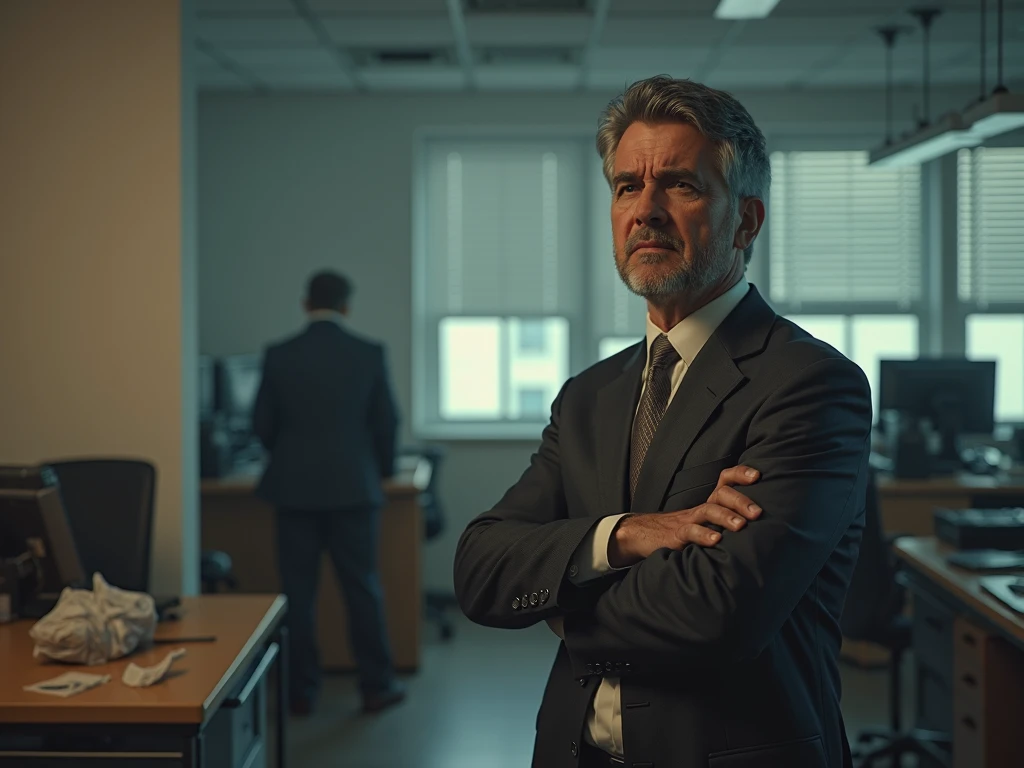
“You’re a brand strategist, Jenna,” she snapped, her lips curling into a smirk. “Not a doctor. Whatever personal drama you’ve got going on, it’s not this firm’s problem.” Her office at Whitmore and Brand was all white walls, steel furniture, and zero empathy. I swallowed hard. “This isn’t drama. My uncle’s in hospice, stage four. He has no one else, just me.”
“No.” Dana’s palm hit the desk with a crack. I flinched. “You’ve been distracted for weeks, long lunches, quiet quitting vibes, and now you want 7 days off? This is the biggest client we’ve ever landed.” I felt my chest tighten. I was 29. I’d given this agency five straight years, missed birthdays, holidays, even my sister’s wedding. I’d never asked for time off, not once. “I’ll work nights, weekends, zoom in when needed, but I have to be there. He’s family.”
Dana stood tall in her heels, jaw clenched. “Do you understand what Brightwell means to this firm? Clearly not. You’re too wrapped up in your little charity case.” I thought of Uncle Lou fading in that hospital bed back in Austin, always smiling through the pain. He deserved better than dying alone because my boss couldn’t see past the bottom line. “I’m going,” I said, voice steady. “Do what you have to do.”
Dana sneered. “Is that defiance?”
I met her glare. “That’s compassion.” And I walked out.
Fired for Compassion
“What’s right is being a team player, Jenna. What’s right is understanding that in this industry, we don’t get to play Mother Teresa.” Dana Whitmore’s voice was sharp, her heels clicking across the office floor as she circled me like a lioness, sizing up her prey. My heart pounded, but I stood tall. “I understand,” I said, keeping my tone calm. “Dock my pay. Write me up. Whatever you need, but I’m taking this week.”
Dana stopped in front of me, eyes glinting. She snatched the leave form from my hand, tore it into pieces, and let them fall to the floor. “Oh, I’ll do better than that,” she said, voice like ice. “You’re—” The words landed like a blow, but I refused to let her see me break. “You’re firing me for asking for medical leave?”
“No,” she said smoothly. “I’m firing you for insubordination and poor performance. Your priorities clearly don’t align with the company’s.” She smiled coldly. “Enjoy unemployment, Jenna. Maybe your patient will thank you.”
I should have been crushed. 5 years of loyalty, missed holidays, late nights, all gone. But instead, I felt… “Thank you,” I said quietly. “You’ve just made this decision a lot easier.” As I turned to go, she called after me. “And don’t bother asking for a reference. As far as I’m concerned, you never worked here.” I walked out without looking back.
Packing my things was surreal. Photos, a coffee mug, my desk plant. **Jenny** from accounting came rushing over. “Jenna, what happened? I heard Dana…”
“She fired me,” I said, wrapping up my things.
“What? She can’t do that over medical leave!”
“She did,” I replied. “But honestly, it’s okay.” And somehow it really was. As I left the mirrored lobby of Whitmore and Brand, the weight I’d carried for years began to lift.
—
An Unlikely Friendship
The hospital was a short drive away. I thought of **Thomas Edwards**, his humor, his warmth. We’d met by chance. I brought in *The Great Gatsby*, and he joked. “Bit dramatic for a cancer ward, don’t you think?” I’d offered *The Bell Jar* instead. His laugh filled the room. Over the weeks, we became unlikely friends. He told me how he built his investment firm from scratch. How he lost his wife to cancer, how his kids rarely visited. “I built an empire,” he once said. “But I forgot to build a life.” Now he wasn’t alone. I parked and carried my box inside. Thomas was awake, and when he saw me, his face lit up. “Jenna, what are you doing here? Shouldn’t you be conquering corporate America?”
“Change of plans,” I said, sitting beside him. “Looks like I have more time now.” His smile faded. “What happened?”
“I got fired,” I said. “For asking to be here.”
“Jenna. You shouldn’t have done that. Not for me.”
“Don’t say that,” I interrupted gently. “You matter. Everyone deserves someone during times like this.” I managed a smile. “Besides, that job was slowly killing me.”
He chuckled. “When you put it like that?” Then his face grew serious. “What now?”
I shrugged. “I’ll figure it out. Right now, let’s focus on getting you comfortable.”
The nurse said, “You skipped your meds.”
“They make me groggy. I like being sharp when you’re here.”
“And I like seeing you pain-free,” I said, pressing the call button. Because some things are worth more than a paycheck. “Let’s compromise,” I said gently. “Take the medication and I’ll read until you fall asleep. I brought a new book.”
Thomas raised an eyebrow. “Please tell me it’s not *The Bell Jar* again.” We both laughed. For a moment, the weight of everything—my lost job, his illness, the uncertainty of what came next—melted into something lighter. The nurse came in with his meds, and I pulled out a well-loved copy of *Tequila Mockingbird*. As I read, I watched the lines on his face soften, the tension ease as the medication took hold. I couldn’t help thinking, maybe Dana thought she’d punish me, but she’d given me something far more valuable: the freedom to be where I was meant to be. And I had no idea this was just the beginning.
More Than a Patient
The following days settled into a quiet rhythm. I arrived early each morning armed with books, puzzles, and the world’s worst jokes, which Thomas pretended to hate, but always laughed at. We talked for hours about his early business failures, my dream of starting a boutique marketing consultancy, and his late wife Margaret. He told stories about his first startup, a computer repair shop in the ’80s that flopped spectacularly, but taught him the kind of lessons no MBA could. He spoke of Margaret’s love for art, how her influence shaped his early investments in digital media and creative tech. Between tracking medication schedules and chatting with nurses, I learned more about the man behind the empire.
One afternoon, sunlight stretched across the room as we worked on a crossword. Then Thomas looked at me with surprising seriousness. “Why did you really leave your job for me, Jenna?”
I looked up. “I told you.”
“You told me what I wanted to hear, but I want the truth.” I set the newspaper aside, taking a breath. “Do you remember your first week here when I was reading to everyone on the floor?”
He nodded slowly. “There were 17 patients, 15 had family, one had friends. You were the only one alone.” His eyes didn’t leave mine. “I asked the nurse and she said, ‘You’d been here 3 weeks without a visitor.’ That broke my heart.”
“Ah,” he said softly. “So it was pity.”
“No,” I said firmly. “Recognition.” I looked at him. “I’ve always been that person. Chasing goals, deadlines, never slowing down long enough to build a real life. When I saw you, I saw what could happen to me if I didn’t change. That’s not pity, Thomas. That’s understanding.”
He was quiet, his expression unreadable. Then he smiled. Eyes glassy but full of something deeper. “You’re too young to be that wise.”
“And you’re too important to be alone,” I replied.
He chuckled. “Important? I’m just an old man with too much money and too many regrets.”
“An old man,” I said, “who helped shape the ethical investing landscape, created thousands of jobs, and changed lives. Yeah, I googled you.”
“Google,” he said, amused.
“LinkedIn,” I smirked. “Your profile needs work.” We both laughed, the heaviness between us easing. But something had shifted, a deeper understanding of the loneliness we’d both felt, and the connection we’d found.
—
The Truth About Business
That night, after the nurses dimmed the lights and the hallway quieted, Thomas looked at me. “I need you to do something for me.”
“Anything,” I said.
“In my briefcase, the one my assistant dropped off last month. There’s a letter. I need you to deliver it.” I opened the closet, pulled out the briefcase, and found the envelope. The name on it stopped me cold: **Dana Whitmore, CEO, Whitmore and Brand**. I turned slowly. “You knew?”
Thomas nodded. “Since the day I saw your company badge. I’ve followed Whitmore and Brand for years. My firm is a silent partner.” My heart raced. “Why didn’t you say anything?”
“Because I wanted to get to know you. Not Jenna the employee, Jenna the human being.” I stared at the envelope. “What’s in it?”
He looked at me clear-eyed. “The truth about business, about values, about what leadership really means.”
“When should I deliver it?”
“Tomorrow,” he said, “and I knew it would change everything. I think it’s time Dana Whitmore learned a few things about the real cost of success.” As I left the hospital that night, Thomas’s letter tucked safely in my bag, I couldn’t help but wonder what tomorrow would bring. Dana had tried to break me, thinking she held all the cards. But sometimes life has a quiet way of setting the scales right. Not through revenge or drama, but through truth and consequences. What she didn’t know was that her world was about to shift, and I’d have a front-row seat.
The Boardroom Showdown, Part II
The next morning, I stood in front of Whitmore and Brand’s sleek downtown Austin office, Thomas’s letter in hand. The security guard at the front desk, Rick, who used to greet me every morning with a smile, now looked uncomfortable. “I’m sorry, Miss Blake,” he said, glancing at his screen. “You’re no longer on the visitor list.” “Miss Whitmore’s orders.”
I smiled unfazed. “Could you let her know I have a letter from Thomas Edwards?” His eyebrows shot up. The name clearly meant something. A quick call later, he handed me a visitor badge. “She’ll see you now.” The elevator to the 18th floor felt strange. Just a week ago, I was racing up here, balancing cold brews and pitch decks. Now, I was walking in with something that mattered more than any campaign. Dana’s assistant didn’t meet my eyes when she ushered me in. Word had gotten around.
Dana sat behind her desk, rigid as ever, her expression unreadable. “Jenna,” she said coolly. “I assume this isn’t some misguided attempt to get your job back.”
I calmly placed the envelope on her desk. “No, this is a delivery from Thomas Edwards.” Her hand hovered over the letter, fingers suddenly twitchy. “The Thomas Edwards?” as in the investor? I nodded, sitting down without asking. Her lips pressed together at the breach of etiquette, but she didn’t protest. “He asked me to deliver it personally.”
Dana tore open the envelope, scanning the contents. Her face shifted—first confusion, then disbelief, and finally full-blown panic. “This… This can’t be right,” she muttered.
“What’s wrong?” I asked calmly. “Not the memo you were expecting? He’s pulling out all of it, effective immediately.” She shuffled the pages like they might suddenly rewrite themselves. “The Brightwell deal, the expansion, they’re all backed by his firm. This will ruin us.”
“I know,” I said softly.
Her eyes snapped up. “You knew.”
“When was I supposed to tell you, Dana? While you were firing me for taking care of a dying man or while you were threatening to blacklist me?” Dana stood abruptly, pacing behind her desk. “We can fix this. You have to help me fix this. Just talk to him. Explain it was a misunderstanding.”
“A misunderstanding?” I repeated, voice firm. “You humiliated me. You mocked me for showing compassion. That wasn’t a misunderstanding. That was who you are.”
Dana stopped pacing. “Please,” she said, and this time it wasn’t icy. It was real. Desperate. “I’ll reinstate you. Promotion, raise, name it. Just help me fix this.” I thought of Thomas, of the employees like Jenny, who cried in the bathroom after Dana’s public lashings. Of Mark, who missed his daughter’s recital because Dana moved a deadline for no reason. This wasn’t just about me anymore.
“I don’t want my job back,” I said. “But I will tell you what Thomas told me to say.” She leaned forward, clinging to hope. “He said, you have a choice. You can keep the investment, your position, everything, but only if you agree to changes.”
“What changes?” I pulled out a second envelope. This one containing a typed agreement from Thomas. “Restructure management. Implement actual work-life balance. Enforce fair medical leave. Quarterly employee satisfaction reviews with consequences.”
Dana blinked. “And one more thing,” I added. “I’ll be returning as director of employee relations. I’ll be making sure the changes stick.”
Her jaw dropped. “You’re joking.”
“Thomas Edwards doesn’t joke about business,” I said. “You have until 5:00 p.m. to decide.” And I walked out, feeling lighter than ever. She sank into her chair, the air of superiority finally gone. “He’s really dying, isn’t?”
“Yes,” I said softly. “He is. And his final act in business will either be saving this company from itself or making an example of it.” Dana stared at the documents for a long, silent moment. Then she looked up at me. For the first time in 5 years, I saw something new in her expression. Not arrogance, not calculation. Respect.
“You planned this,” she said quietly, “getting close to him, telling him about the company.”
I shook my head. “No, Dana. I just treated someone like a human being. Everything else?” I gestured toward the papers. “That was all Thomas. He’s been watching this firm for years, waiting to see if it could be led by someone he could believe in.” I let that hang in the silence. “Last week,” I added, “you showed him who you really are.” Dana’s jaw tightened. She picked up a pen, hand trembling slightly, and signed the documents. “I assume you’ll want your own office.”
“Corner office,” I replied with a view, “and I start Monday.” When I left her office, the floor was quieter than usual. The whispers would start soon. That was fine. For now, I savored the silence.
—
A New Era at Whitmore and Brand
That afternoon, I returned to the hospital. Thomas was asleep, his breathing shallow but steady. I sat beside him, gently taking his hand. “It’s done,” I whispered. “She signed everything.” His eyes fluttered open and a small smile crossed his face. “Didn’t doubt it. Dana Whitmore is ruthless. But she’s not stupid.”
“Thank you,” I said, squeezing his hand, “for trusting me.”
“No, Jenna, thank you. You reminded me that even at the end, we still have the power to do something that matters, to leave something better than we found it.”
In the days that followed, I split my time between the hospital and the office, rolling out the new policies. Dana, to her credit, threw herself into the changes with the same intensity she’d once used to micromanage her team. Whether she was protecting her reputation or trying to grow, I wasn’t sure, but either way, things were changing. Thomas held on long enough to see the results from our first employee satisfaction survey. I read him the responses, overwhelmingly positive. He smiled. “Told you,” he whispered. “Sometimes the best investments are in people.”
Three days later, he passed peacefully, holding my hand as I read *The Great Gatsby*. His final joke had been about my taste in inappropriately morbid hospital reading. At his memorial, I was shocked by the crowd. Not just executives and board members, but scholarship recipients, small business owners, artists, and nonprofit workers. People whose lives Thomas had touched quietly, without headlines or press releases. Dana was there, too, standing quietly in the back, for once, not needing to be seen.
A month later, I sat in my new corner office, reviewing proposals for our employee wellness fund. Jenny from accounting peeked in, eyes wide. “You’ll never believe this,” she grinned. “Dana just approved all the flexible schedule requests, and she… she smiled, like a real one.” I laughed, glancing at the framed photo of Thomas on my desk. “People can surprise you,” I said, “especially when someone shows them a better way.”
As I looked out over the Austin skyline, I thought about how full circle everything had come. Dana had fired me for being too soft, for choosing people over deadlines. But it was that same compassion that had brought me to Thomas and helped transform an entire company. Whitmore and Brand wasn’t perfect. Change never is, but it was real. The kind of change that ripples outward. Productivity was up. People were smiling. And Dana, she still had sharp edges, but they didn’t cut as deep.
The Future of Ethical Business
One year to the day after Thomas passed, I received a package from his estate. Inside was a letter written in shaky handwriting. “Dear Jenna, if you’re reading this, it’s been a year since we met. I hope you’ve seen what I always saw in you: a leader not because of power but because of empathy. The world needs more like you. Keep going, and transform the industry’s approach to human capital. That’s why I’ve left you something else: voting shares in my investment firm. Use them wisely. Look for companies like Whitmore and Brand. Businesses with potential stifled by poor leadership. Change them. You once told me you gave up your job because you saw something in me. Well, I see something in you, too. The future of ethical business. Make me proud. With gratitude and faith, Thomas.”
I sat motionless for a while, Thomas’s letter in my lap. The city bathed in golden light outside my office window. In my inbox, messages from companies across the country asking how we did it. On my desk, reports showing not only record profits, but employee satisfaction scores we once thought impossible. A knock at the door. Dana, holding two coffees, our weekly ritual now. “Good news,” she said, handing me a cup. “Brightwell just renewed their contract.”
“Because of the new culture initiatives?” I asked with a smile. She nodded, then paused. “You know, I never properly thanked you or Thomas. You could have burned this place down. Instead, you saved it. Saved me, if I’m honest.”
“Thank him,” I said. “He believed in second chances.”
Dana smiled. “Third and fourth, too. I should know.” When she left, I glanced again at Thomas’s letter. “Make me proud,” he’d written. I think he already was, of all of us, of what we’d built. Tomorrow, I’d start looking outward at new companies to invest in, new leaders to mentor. But tonight, I sat in my corner office sipping coffee, watching Austin light up beneath a darkening sky, grateful for the unexpected path that had led me here.
The next morning, Rick greeted me with a grin. “Good morning, Miss Blake. Making lives better today?”
“Every day,” I said, “that’s what good investments do.”
—
If my story resonated with you, I’d love to hear your thoughts. Leave a comment, share what you would have done in my shoes, or just say hi. I read everyone. Your support reminds me that choosing empathy over ego is never wasted. If you’ve ever been overlooked, underestimated, or told your kindness was weakness, know this: You are not alone. Keep showing up. Keep choosing what’s right. Even when it costs you. The return on that investment, it’s bigger than profit. It’s purpose. And if you’re standing at a crossroads like I was, let this be your sign: Compassion is power.