I’m a 27-year-old woman and I was the only one of my mother’s five children she didn’t give away. It’s not because she loved me, but because she needed proof she didn’t give up all of us. Growing up, I didn’t have siblings in the traditional sense. I had shadows, hints, stories, four half-siblings scattered across foster homes, passed to distant relatives, or lost in sealed adoption files. Their names were never spoken unless it was to praise her bravery for giving them a chance at a better life. And always, she made it clear, I was the one she had fought to keep.
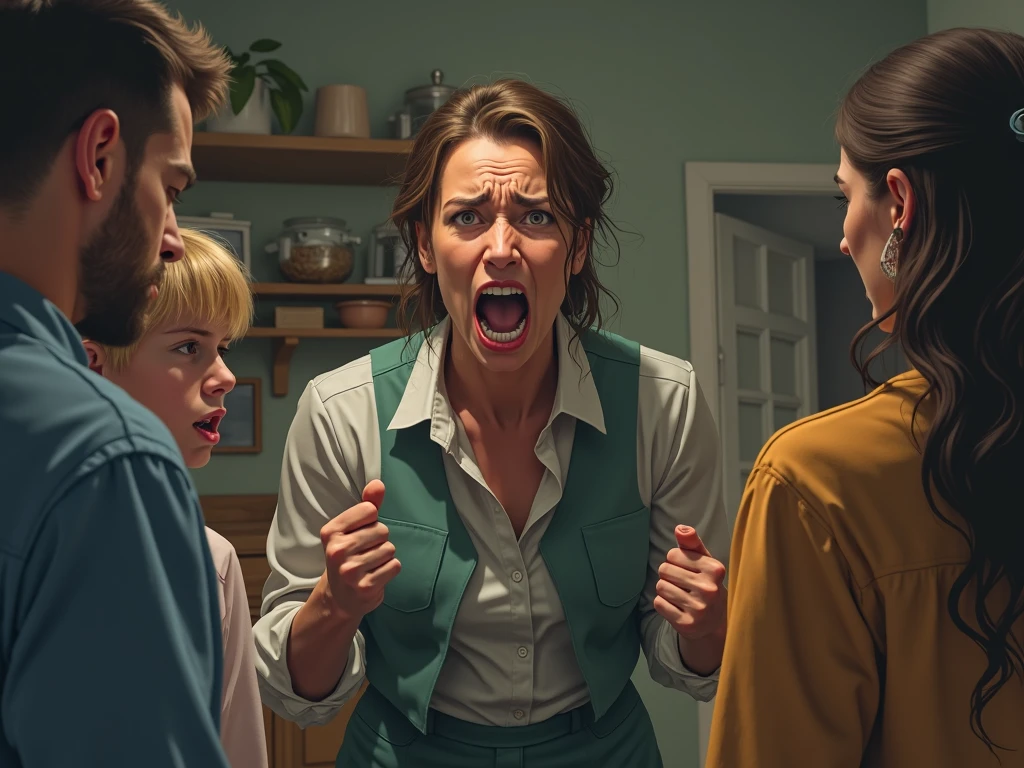
People in our small town and church saw her as a reformed woman, the survivor, a mother who had made hard choices and then walked the hard road of redemption by raising her miracle child alone. She played that role well. She gave speeches at women’s ministry lunches, cried during sermons, always wearing the same gold cross necklace, and a smile that trembled just enough to look real.
But at home, she didn’t talk to me like I was a miracle. She talked at me, brushed my hair like she was polishing a trophy, used my report cards as her receipts. At parent-teacher conferences, she would tear up while talking about her past, then gesture toward me like I was her prize. “She’s why I kept going,” she’d say, then stare at me like I owed her something for existing. She told people she kept me because “you can’t give away all your blood.” But even as a kid, I could tell I wasn’t a daughter. I was a symbol. Proof she wasn’t a monster. Proof she had changed.
She never hit me in a way that would leave marks. But I knew exactly how far I could go before her hand would flash out and land across my shoulder or my arm. Never my face. Never enough to bruise. Just enough to remind me that I had no say. I couldn’t have a locked drawer. Couldn’t shut my door fully. Couldn’t say no without being accused of rebelling or forgetting who kept me. If I missed curfew, she’d cry for days, slamming doors and refusing to cook. If I brought home a B instead of an A, she’d accuse me of making her look like a failure. If I tried to speak up about how unfair something was, she’d say, “You should be thankful you weren’t thrown away, too.” One time when I was around 16, I asked her why she gave the others away. She slapped me before I even finished the question. Then she stood over me, voice shaking, and told me I had no right to judge what I didn’t understand. That moment was never spoken about again. But something shifted after that. I stopped asking, and she stopped pretending I didn’t know. Her friends adored her. The church crowd called her strong, god-fearing, brave. One of them even told me once that my mother was an example of redemption through motherhood. I just nodded. I had learned early on that saying nothing was safer than saying the truth.
—
Uncovering Hidden Truths: The Siblings Emerge
By the time I turned 19, I was in college, commuting from home to save money, working part-time. Life was stuck in that weird phase where you’re technically an adult, but still answering to curfews, still walking on eggshells, still trying not to trigger another guilt storm. That’s when I got the message. It came through Facebook. The name was Tessa, 25 years old, said she thought we might be related. I stared at her profile picture for a long time. Same eyes, similar smile. She told me she had been searching for her mother for years, only to learn her mother had kept me and abandoned her at age three.
I didn’t answer right away. I needed to be sure it wasn’t some scam or mistake, but something about the way she wrote, the things she knew, it didn’t feel fake. So, I told my mother – I shouldn’t have. She lost it, pacing the living room, yelling about stalkers and people trying to destroy what God rebuilt. She told me to block Tessa immediately before she ruins everything. I didn’t block her. Instead, I created a new email and gave it to Tessa. We started exchanging messages. She sent me copies of court documents, placement records from foster care, even a blurry photo of her as a kid standing in front of a social worker’s office. She said the day she was taken away, our mother didn’t even cry, just signed the papers and left. She had been in and out of group homes, eventually landing with a family that treated her well, but the damage was done. Her voice cracked in one of the voice notes when she said, “I just wanted to know why she kept you.” That hit me harder than anything else because I didn’t know either. I didn’t feel chosen. I felt stuck. I wasn’t the one she loved. I was the one she needed for show, but now I had a crack to look through. And once I saw through it, I couldn’t look away. I started asking questions she couldn’t deflect. I found old journals she didn’t know I had saved. I remembered names she tried to erase. And I started putting it all together quietly, deliberately, because the version of her the world loved wasn’t the real story. And I was done playing the part she gave me. What came next? No one, not even she, could see coming.
The DNA test arrived in a plain white box. I had it shipped to a friend’s address just in case. It took 10 days for the results. Tessa and I shared the same mother. No doubt. Half sisters. The confirmation didn’t bring clarity. It brought more questions and more names. Tessa introduced me to Calvin next. 23. He had the same middle name as one of the names scribbled in my mother’s old journal. She had given him up at birth. Then came Elise, 21, placed with a distant family friend when she was two. Never formally adopted, but never brought back either. In the span of 2 weeks, I had gone from being an only child to having three siblings. All of us had been born within 5 years. Four different last names, three different cities, every story different, but the ending always the same. Our mother handed them over and disappeared. Calvin had been in the foster system until he aged out. Elise was raised by a couple who weren’t cruel, just distant. Tessa bounced between group homes and short-term guardians. None of them knew about the others until recently. Each sibling had documents, old medical records, placement forms. One even had a scanned note signed by her mother relinquishing her parental rights. I compared the handwriting to a birthday card I still had, identical. We laid out the timelines together in a shared folder. My name didn’t show up anywhere because I was the one she kept.
I brought everything to her one evening. A printed timeline, copies of documents, even a childhood photo of Elise that she had never seen. Her eyes scanned the papers slowly. Then she started crying, said she had no choice, that life was hard, that she did what she had to do. But the way she said it wasn’t soft. It was defensive, like she was checking a script she had used too many times. She tried to flip it, claimed they were using me, claimed they only wanted money. None of them had asked for a thing. All they had done was try to find out why they were discarded. I didn’t respond. I just walked out. 3 days later, she stood in front of a room full of women at church and gave a speech titled “The Blessing and Burden of Being Chosen.” I wasn’t there, but a friend sent me a clip. She used my name, told them how I was her miracle, how she had fought the world to raise me, how I was the proof that God could redeem even the broken. She cried on stage while I stared at my laptop watching the video. That was the moment it clicked. I had never been her daughter. I was her cover story, her character witness, her redemption arc.
—
Building the Case: Documentation and Exposure
That night, I started collecting everything I could find. Journals, photos, old letters, emails. I scanned everything, saved them to a USB drive, and kept it in a locked drawer at work. I started recording things, too. Voice memos of memories I hadn’t said out loud. My notes about the way she twisted facts. I titled the folder “The Story She Doesn’t Want Told.” I didn’t want revenge. I wanted truth. I booked a consultation with a lawyer, someone who handled defamation and digital rights. I wasn’t planning to sue. I just wanted to know what she could do to me if I ever told the truth. Turns out not much, especially if I kept names out of it. But the more I shared with him, the more he raised his eyebrows.
Meanwhile, my siblings and I opened a group chat. It started slow, mostly pictures and timelines. Then the heavier things came out. Elise talked about being left alone for hours while her guardians worked night shifts. Calvin had stories about sleeping on couches until a caseworker could find him a bed. Tessa shared a memory of being told at age five that her real mother was too sick to take care of her. None of them blamed me. They had every right to, but they didn’t. Instead, they thanked me for not shutting them out. We all agreed to wait before doing anything public, but we wanted the truth out there eventually.
The next Sunday, I told my mother I wasn’t going to church. She stood in the kitchen doorway, arms folded, voice shaking. She accused me of betraying her, of picking strangers over the woman who raised me. Then came the tears, the threats. “You’re ungrateful. You’re all I have.” I didn’t yell. I didn’t argue. I grabbed my coat and walked out mid-rant. I didn’t even slam the door. That silence hit her harder than anything else I could have said. Later that week, I reached out to a neighbor from when I was a kid, a woman named Patricia, who used to watch me after school. She remembered my mother being pregnant twice during the years I was in elementary school. Both times, she said, “The baby’s disappeared. No funerals, no explanations, just gone.” Patricia agreed to talk if needed. I opened a new folder on my laptop, not just for documents, but for names, contacts, and patterns. The truth had been buried under years of fake tears and church applause. I was done clapping, and I wasn’t alone anymore.
Two weeks after I confronted her with the truth, my mother rebranded herself online. I didn’t even know she knew how to run a blog, but suddenly she had a website filled with pastel colors, smiling photos, and inspirational quotes layered over filtered images of open Bibles and coffee mugs. Right there on the homepage, front and center, was a picture of me, 7 years old, holding a stuffed rabbit, with the caption, “Redemption begins with a child’s smile.” The blog was called “Raising Grace.” She had filled it with rewritten stories of my childhood, ones that never happened. In one post, she talked about our quiet nights reading scripture together. I don’t remember her ever reading to me once. In another, she wrote about how proud she was when I walked across the stage at college graduation after we beat every odd together. She included a photo of me in my graduation gown, a photo I had posted privately years ago, now slapped with the caption, “We made it. Just the two of us.”
I emailed the platform that hosted her blog and submitted proof of identity, screenshots, ID documents, even links to the original photos. After a few days, they removed some of the images, but not all. She didn’t slow down. She just got quieter about it. A new post went up the day after the takedown: “When your truth threatens others, they’ll try to silence it.” No names, but I recognized the tone. It was meant for me. Then the comments started. Anonymous ones, some praising her, others quoting things that made my stomach turn. Someone mentioned my therapist’s name, a name I had never shared online. Someone else referred to a fight I’d had with her when I was 17, something I had only written about in one place, my private therapy notebook, locked in the drawer next to my bed. I checked the drawer. It wasn’t locked anymore. I bought a new lock the same day and a hidden camera. I installed it in a small decorative box on my shelf. It was motion-activated and uploaded directly to a cloud folder. It took less than 48 hours to catch her. She walked into my room while I was at class. She opened the drawer, pulled out notebooks, flipped through them, took pictures, checked my laptop screen. She even scrolled through browser history using the mouse. I saved the footage and put it on the USB drive I had hidden at work. Then I printed stills of the clearest moments. When she came home, I laid them out on the table. She looked at the photos, looked at me, and without skipping a beat, accused me of being secretive. Said I was hiding things like I was ashamed of her. Not a word about the violation, not a hint of apology. I told her I was going to stay with a friend. Packed a bag while she paced behind me. She laughed while I zipped it shut. Said I’d be back. Said I had nowhere else to go. She was wrong. I moved in with Elise that same evening. She picked me up from the corner by our old grocery store. Her apartment was small, two bedrooms, clean, quiet. She had dinner ready. She made up the guest bed before I even arrived. There were no questions, no judgment, just a place that felt like it wasn’t watching me for weakness. For the first time, I wasn’t being studied. I wasn’t being measured or molded into someone else’s story. I was just someone’s sister.
The next morning, my phone had five missed calls and seven messages from the Bible. Accusations, claims that I had chosen outsiders over family, denying that I was walking in darkness. I didn’t answer. I didn’t reply. I blocked her number. I blocked her email. I disabled voicemail so she couldn’t leave those long guilt-laced monologues. I made it permanent. No contact, no gaps. She tried reaching me through mutual contacts, church friends, old neighbors, even one of my former teachers. I didn’t respond to any of them. Elise let me use her number for anything official. We moved my mail to her place. I told my boss about the situation just enough so he’d understand if anything weird happened. He nodded, didn’t pry, and said to let him know if I needed a place to park until things settled. I bought a small lockbox for my USB drive, labeled it as tax records. Tessa sent me a few more documents she found. Calvin shared a short video he had taken of an old caseworker talking about our mother’s patterns. We saved everything in the shared folder. We weren’t rushing to go public, but we weren’t stopping either. Back at the apartment, Elise cleared a shelf for me. I didn’t ask, she just did it. Said she was glad I was there. We cooked together that night. Nothing fancy, pasta and garlic bread, but it was the first meal I had eaten in years that didn’t come with tension. My mother’s blog kept updating. More stories, more pictures I hadn’t approved. But the tone had shifted. There was a new edge to her writing, a desperation. She had always used me to control the story. Now she didn’t know what I was doing. And that silence, it was louder than anything I could have said, and she knew it.
—
Escalation and Accountability
2 weeks after I blocked all contact from my mother, an unmarked envelope showed up at Elise’s apartment. No return address, no note. Inside were printed screenshots, dozens of them, from our private sibling group chat. Every conversation we thought was safe was now out in the open: names, timelines, even a message where Calvin talked about finding a caseworker. All printed, organized, and delivered like evidence. We went into full lockdown mode. The leak didn’t take long to trace. It came from a cousin on my mother’s side, someone I hadn’t seen since high school graduation. Quiet, unassuming, barely online, but she had been following Elise’s social media under a private account. That was the hole. Elise had accepted the follow months ago, not realizing the connection. We scrubbed our accounts clean, deleted old followers, removed anyone even vaguely tied to my mother. The group chat was moved to an an encrypted messaging app. From then on, no names, no dates, just code words and initials.
Three days later, my mother published another blog post. This one called, “When strangers spy on your light.” She included blurred screenshots, clearly ours, and claimed she was being targeted by jealous, broken people who wanted to drag down a faithful mother just for speaking her truth. She never said our names. She didn’t have to, her readers knew exactly who she meant. My inbox filled up. Some were messages of support from church members who had never liked her. Others were attacks, people calling me ungrateful, saying she saved me when she could have left me like the others. One message said I would burn in hell for dishonoring my mother. I didn’t respond to any of them. That night, Elise suggested we write everything out, our lives side by side, not a tell-all, just the truth, one timeline for each of us. What year we were born, where we lived, when we were given up, what happened after – each line fact-checked against whatever documents we had. We kept it anonymous, no names, no identifying details. Tessa had a friend who ran a small blog focused on truthtelling and healing after religious trauma. She agreed to post it. The story went live on a Tuesday afternoon. By Thursday night, it was already being shared in parenting forums, church abuse survivor spaces, and blogs that dissected online influencers. People began comparing dates. Some figured out who the blog might be about. One post read, “This sounds like that Raising Grace lady, the one who cries every other video.” By the weekend, one of my mother’s sponsors announced they were ending their partnership. Another said they were reviewing their relationship. Donation links stopped working. Her view count dropped. She posted a tearful video late Sunday night accusing dark forces of attacking her ministry. She called it spiritual warfare. Cried through most of it. Mentioned betrayal. Never said our names, but she didn’t need to. Her audience had already picked sides.
That Monday, I was contacted by a man named Daniel. He said he had been a church treasurer until last year. He’d had suspicions for a while, things that didn’t add up with the donations she collected and where the money was going. He wanted to talk. We met at a diner near his office. I brought a folder with printed screenshots, photos, and a few of the journal scans. He took notes quietly, asked questions, said he would bring everything to the current board. He didn’t promise action, but he said it wasn’t the first time someone had raised concerns. Back in the group chat, tension started to rise. Calvin wanted to go public. Names, faces, everything. He said hiding made us look dishonest. Tessa wasn’t ready. She was pregnant. She didn’t want her child to grow up in a storm. Elise and I voted with her. We weren’t done collecting yet. Going public would come, but only when we had it all.
Then came the message from a woman named Clarissa. She said she used to live with my mother years ago back when I was still a toddler. My mother had left some of her things behind when she moved out, including a box. She had kept it, never opened it until now. We met at a park near her apartment. She brought a small shoebox with her wrapped in a grocery bag. Inside were notebooks worn and stained with frayed edges. Pages filled with my mother’s handwriting. Not Bible verses, not blog drafts. Real thoughts, unfiltered, dated. Some entries were only a few lines long. Others went on for pages. I didn’t read them there. I thanked her and took the box home. That night, Elise and I sat on the floor reading one page at a time. Some entries were about money. Others about the men she had dated. And then in one journal dated just after Elise’s birth, it was written in shaky ink: “The one I kept wasn’t the one I wanted. It’s just the one I needed for appearances.” I didn’t say anything. Elise didn’t either. We just kept reading because the version she showed the world was crumbling and what was underneath was starting to show. I spent three nights transcribing every journal entry by hand. Each page was scanned, labeled by date, and saved with backups on three separate drives. The entries weren’t emotional. They were strategic. Some were barely legible, others too detailed to ignore. One line kept circling back in my mind: “Keeping one made me look brave. If I’d kept none, I’d be trash. If I’d kept them all, I’d be broke.” That sentence sat at the center of a page, surrounded by no other words. We included that quote in a file we shared with the blog’s admin, the same friend of Tessa’s who had posted our timelines earlier. She uploaded small unedited snippets, careful not to include names, but clear enough that the voice behind the words couldn’t be denied. The response was immediate. Comment sections filled with readers questioning every post our mother had ever written. People started digging on their own, comparing photos, timelines, captions. The doubt had started as a whisper, now it was a roar.
2 days later, Elise got a message from someone on the church board. They had held a closed-door meeting the night before. Our mother was being suspended from all public-facing roles, effective immediately. Her weekly women’s ministry was paused. She was removed from the event flyers and upcoming speaking engagements. Her name, once front and center on the church website, disappeared. That same night, I noticed a car following me after work. Dark gray sedan, same dented fender from my mother’s car. I drove past my street, turned twice, then pulled into the parking lot of the local police station. The car stopped half a block back, then sped off. With help from Elise’s friend, a paralegal who had worked in family law, I filed for a temporary restraining order the next morning. I submitted the video footage from my hidden camera, the church blog posts, the envelope of leaked screenshots, and the journal scans. The judge granted the order. It took less than a week for her to violate it. A church member showed up at Elise’s apartment lobby. He claimed he had a message of peace to deliver. Inside the envelope was a single sheet of paper, no return address, just two lines written in my mother’s handwriting: “You ungrateful girl. You owe me your life.” I sent it to the officer assigned to my case. He visited her home and issued a formal warning. No arrest, but she was officially flagged for violation. We didn’t expect anything more, but it went into the record. Family lines started crumbling. Two cousins blocked me, accusing me of tearing down a good woman. One aunt called Elise and told her we were digging up demons. “God already forgave.” None of them asked what was true. They just defended what they thought they knew.
Meanwhile, more people started speaking up online. The blog’s admin posted additional entries. Each one came with disclaimers. No names, no accusations, just words cold, dated, scanned. Readers began to shift. One former supporter posted that she had donated over $500 last year and now felt manipulated. Another shared screenshots of private messages where our mother had asked for prayer donations, money supposedly used for ministry supplies. My mother deleted the blog the next morning. Every post, every picture, every video gone. But the cached version still floated around. Her face was already embedded in hundreds of shares. Her quotes were already printed and reposted. Her digital erasure came too late. That Sunday, the church released a public statement. No apology, just one sentence buried in their bulletin: “Certain content shared by affiliated members is under internal review and does not reflect the values of our institution.” Quiet distancing. Nothing more, but it confirmed what we already knew. They were letting her go quietly. That afternoon, she came to Elise’s building. The doorman called up, told us a woman was at the door asking to leave a note of forgiveness. He said she wasn’t allowed up. She tried waiting in the lobby. He asked her to leave. She did, but not before handing him a folded napkin blank on one side. The other had a verse scribbled on it. We didn’t keep it. Later that week, Tessa called. Her voice was soft. She said she couldn’t keep going. The stress, the attention, the possibility that her child would grow up connected to this. It was too much. She wanted out. We understood. We didn’t pressure her. She would stay in the group chat, but she wouldn’t be included in anything public moving forward. That was her line. We respected it. Calvin, Elise, and I met the next day. We printed a full index of the journals, organized them by year, highlighted passages that connected to documented events. We prepared a file to send to a journalist who had been reaching out since the first timeline post went live. This time, we were ready. What my mother built wasn’t real. It was an empire of ash. And now, every layer was starting to fall. We weren’t fanning the flames. We were just letting the wind do the rest.
The journalist’s name was Lydia. She had been covering faith-based abuse scandals for over a decade and reached out after reading the leaked journal excerpts. We met in a library study room on a rainy afternoon. I brought a flash drive with everything. The scanned journals, the church flyers, the timeline files, and photos of the restraining order. She didn’t rush. She read, verified, cross-checked each piece. After 2 hours, she said, “I’ll write it.” She didn’t use names. Not ours, not hers. But the facts were sharp enough to cut through the smoke. The dates lined up. The quotes were real. The blurred screenshots of her blog matched what was already floating around in public archives. Calvin and Elise gave short statements, not emotional ones, just facts. Descriptions of how they were discarded, ignored, erased. The article went live on a Wednesday morning. By noon, the church office line stopped ringing. Their voicemail inbox filled up. The donation link on her suspended blog returned a 404 error. Within 24 hours, two elders stepped down. The youth pastor removed his name from their website. By Thursday, the lead pastor released a one-sentence statement: “We are in a season of quiet reflection and reorganization.” He didn’t deny anything. He didn’t defend her either. Local news picked it up next. A community television station ran a short segment on faith influencers who profit from trauma. They blurred the blog name, but the layout, fonts, and background images matched hers exactly, and viewers recognized it. Several people called in during the segment to confirm. She responded the way we expected. A new social media account appeared under a slightly different spelling of her name. Profile photo was heavily filtered. Her post read, “Fabricated lies from embittered children I once tried to save. May God forgive them.” Comments were turned off. Within 6 hours, the account was reported and taken down. Lydia wasn’t finished. She called 2 weeks later to follow up. She had pulled court records. Our mother had filed for bankruptcy twice in the past 15 years, once under a false address. She also found a welfare fraud claim from when I was in elementary school. She had reported living alone with no income while simultaneously working under the table for a private cleaning company. Most surprising was a restraining order filed by a former roommate in 2004. The complaint cited stalking, emotional harassment, and identity manipulation. It was all public record. Her email list was deactivated. Next, one sponsor, a women’s devotional brand, issued a statement saying they had cut all ties with her due to recent findings. Another posted that they had never approved of the personal views expressed by the influencer in question. Then came the Instagram rebrand. A fresh account, new name, vague posts about rising from betrayal. All soft lighting, smiling quotes, and filtered selfies. We flagged it. It was removed within a day. Meanwhile, I was contacted by the detective who had taken my original stalking report. He asked if I’d had further contact. I hadn’t, but he said they were monitoring movements now. There wasn’t enough for charges yet, but her file was open. “She’s got eyes on her now,” he said before hanging up. Then something none of us expected happened. Calvin got a message through the journalist’s inbox. It was from a man named Robert. He said he believed he might be Calvin’s father. He’d read the article and saw a familiar middle name, a birth year, and a vague location. He had never been told he had a son, just that a past girlfriend had moved away suddenly. He offered to meet. They met at a public park. Calvin came back quiet, holding a photo of a man who looked exactly like him at age 30. They had spoken for 2 hours. Robert had brought yearbooks, photos, even a college ring. Calvin said it felt like something stolen had finally been returned.
Elise and I began therapy the following week. A trauma counselor who specialized in religious trauma and identity work. Our first session focused on rewriting the language we had grown up hearing. Phrases like, “Be grateful you were chosen.” and “God gives the hardest battles to the strongest.” We listed them out on paper and crossed them off one by one. That same week, I got a call from a nonprofit. The director had read the article. Their mission was helping women exit controlling religious homes and reclaim their independence. They were looking for someone who understood the layers, not just legally or emotionally, but personally. They offered me a position in their advocacy program. I accepted. We kept our distance from the noise, but the story didn’t stop spreading. More people came forward, not siblings, but people who had once been pulled into my mother’s orbit: a former Bible study member, a volunteer from her church kitchen, a teenager she once mentored who said she was left out in the cold after asking too many questions. Her house stayed dark, blinds drawn, car unmoved, no more videos, no blog, no platform, but no arrest either. She hadn’t been seen in weeks. Something told me she wasn’t done, and neither was I.
It started with an email to Elise’s work address. It came from a lawyer claiming to represent our mother. The subject line read, “Request for reconciliation via mediation.” It sounded official, but the moment we read the contents, we knew what it really was. She wanted us to sit in a room with her on record and paint her as a misunderstood woman who had done her best. The timing wasn’t random. She had just been served notice that she was under investigation for financial misconduct related to her church donations. She didn’t want closure. She wanted character witnesses. We declined formally. Elise, Calvin, and I each submitted signed statements refusing to participate in mediation. There would be no public support, no soft statements, no compromises. Whatever was coming her way, she’d face it without us. 2 weeks later, results from the church board’s internal audit leaked. Over 5 years, she had redirected at least $36,000 in donation money into personal accounts. Payments were labeled as event costs and outreach expenses, but no one could trace the actual services. Most were paid to shell companies or withdrawn in cash. It wasn’t enough for prison time, but it was enough for public disgrace, enough for the kind of silence that chokes rather than comforts. Lydia, the same reporter who had published the original exposé, contacted me again. She wanted to write a follow-up, a full feature on the fallout, the consequences, and the wider pattern of manipulation. This time, I said yes. I gave her everything I had archived. Photos, dates, journal scans, the video of my mother rifling through my drawers. And this time, I didn’t hide behind initials: my real name, my real face, the whole story, start to finish. The new article dropped on a Thursday morning. Within 24 hours, it was everyw