The silence that followed wasn’t fragile.
It was suffocating.
The young officer’s smirk faltered as boots shifted across the polished floor. No one laughed with him now. No one even looked at him. Every pair of eyes had moved to the General.
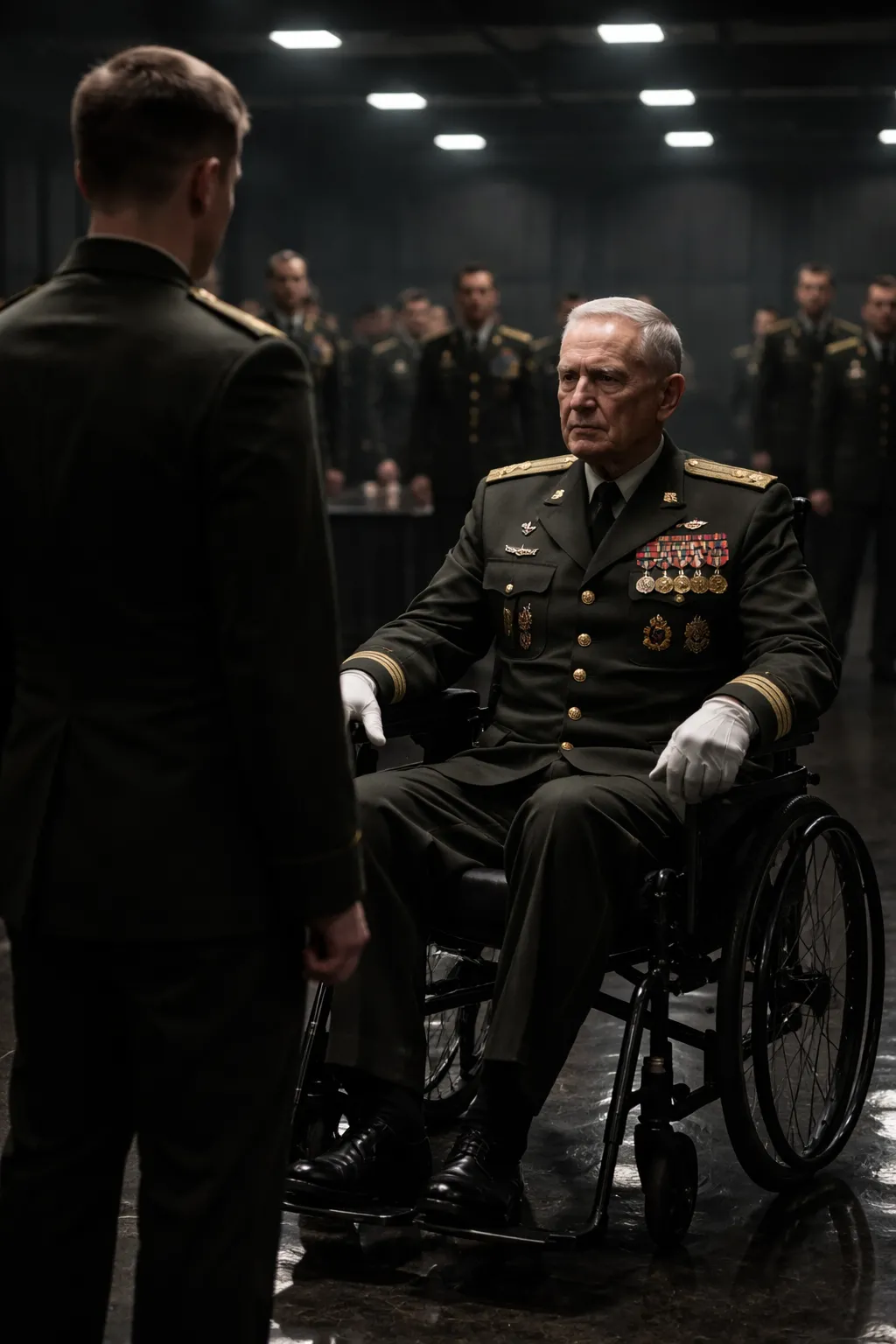
The old warrior in the wheelchair rested his gloved hands lightly on the armrests, posture straight, ribbons glinting beneath the lights. His voice, when it came, was not loud — it didn’t need to be.
“Lieutenant,” he said evenly. “Front and center.”
The words carried the weight of decades. Of battlefields. Of decisions that meant life or death.
The lieutenant stepped forward, but the swagger was gone. His heels clicked together too hard. His jaw tightened.
“Yes, sir.”
The General studied him for a long moment — not with anger, not even with disappointment. With assessment.
“Tell me,” the General asked quietly, “how many men have you carried off a field?”
The lieutenant hesitated. “Sir?”
“How many,” the General repeated, voice still calm, “have you dragged to safety while under fire?”
The room felt smaller.
“None, sir.”
The General nodded once. “How many times have you written a letter to a mother explaining why her son will not be coming home?”
A pause. Longer this time.
“None, sir.”
The General leaned back slightly. The wheelchair did not diminish him; if anything, it framed him — a reminder of cost, not weakness.
“I lost the use of my legs pulling three of my soldiers out of a burning convoy,” he said. No drama. No self-pity. Just fact. “They lived.”
The air seemed to shift.
“You see, Lieutenant,” he continued, “these wheels are not a symbol of what I lost. They are a record of what I chose.”
The young officer’s face drained of color.
Around them, senior officers stood rigid. A colonel near the doorway subtly shook his head, as if mourning a career already over.
The General’s eyes sharpened.
“You laughed at sacrifice,” he said. “Not at me.”
The words landed heavier than any shout.
Then came the command — simple, precise.
“Effective immediately, Lieutenant Carter is relieved of field leadership pending review. He will report to Ethics and Conduct for formal evaluation.”
A collective inhale rippled through the room.
The lieutenant opened his mouth, but nothing came out. He knew better than to argue. The General hadn’t humiliated him. He had judged him.
And judgment from a man like that was final.
As security escorted the shaken officer away, the General turned his chair slightly, addressing the room.
“Let this be clear,” he said. “Rank is given. Respect is earned. And honor—” his gaze swept across them all, “—is proven when it costs you something.”
No one would forget that moment.
Because they had witnessed something rare.
Not revenge.
Not anger.

Authority.
The kind that does not stand to be recognized.
The kind that commands even while seated.
And as the General wheeled himself toward the exit, the path parted without a word.
Not out of sympathy.
But out of respect.
The Forest Was Never Silent… It Was Waiting for Him to Return. And What Waited Behind That Door Knew Every Life He Left Behind.005
PART 1:
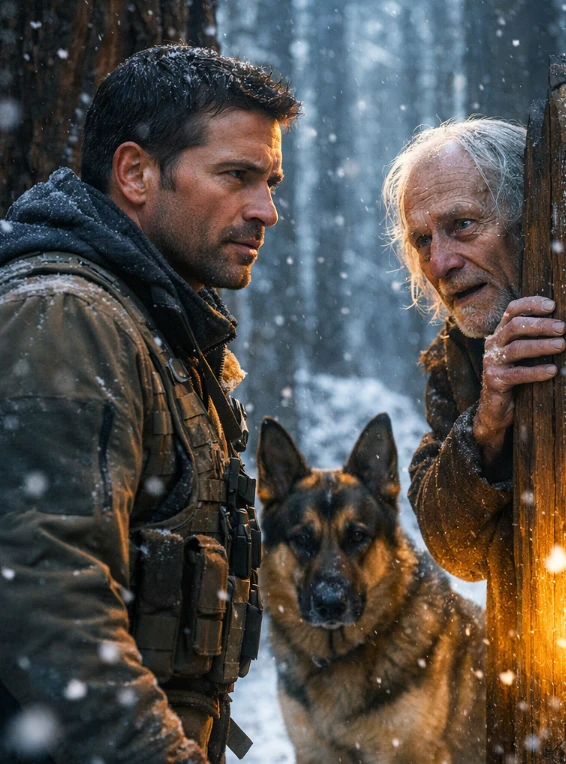
The forest was too quiet.
Not the peaceful kind of silence that calms the soul, but something heavier. Something that pressed against the chest and made every breath feel borrowed. Snow fell in thick, slow flakes, swallowing sound until the world felt distant and unreal, like it had been abandoned long ago.