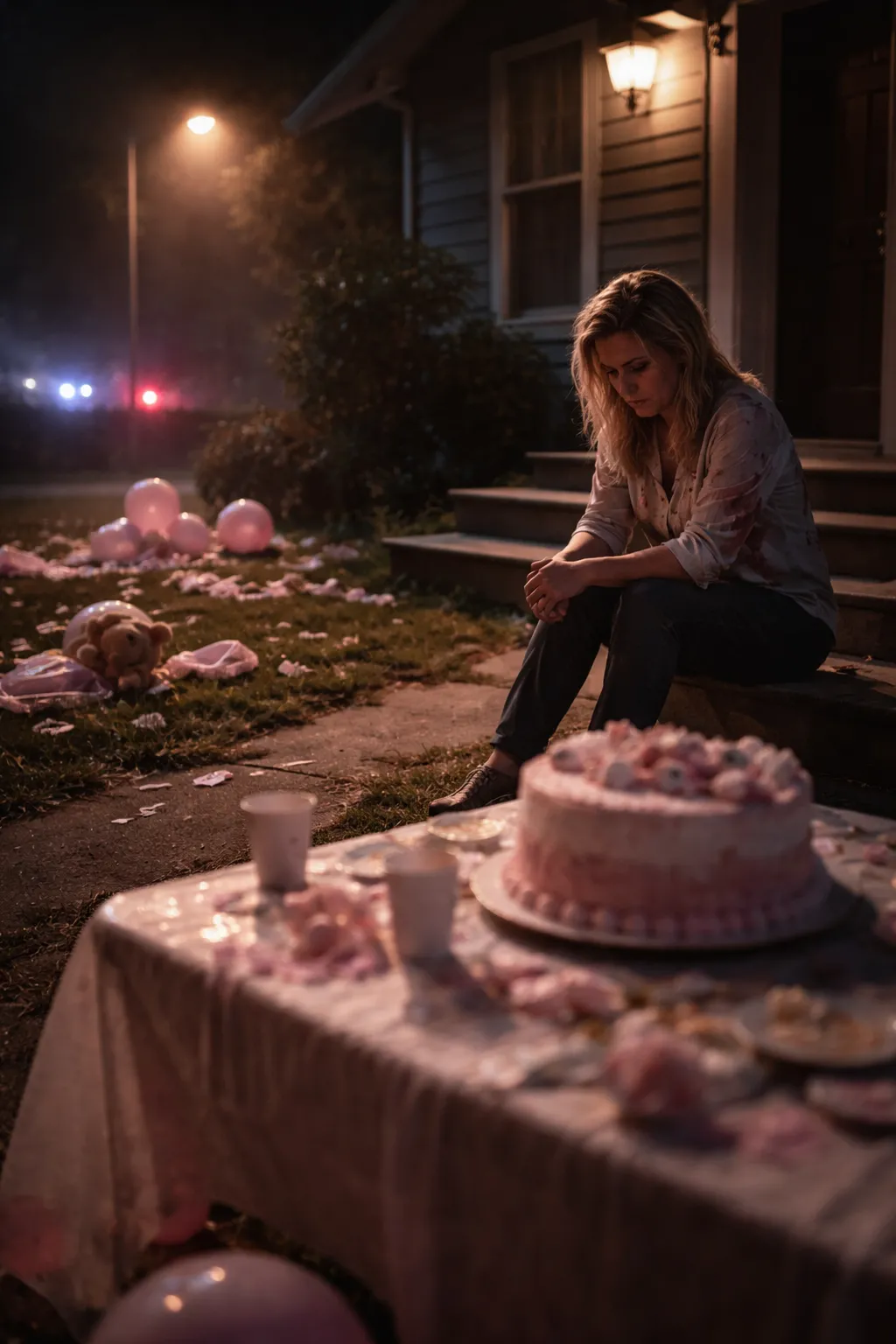
The house still smelled like vanilla cake and fear long after the police cars disappeared.
I sat on the front steps in my torn blouse, pink balloon ribbons tangled around my ankles, watching neighbors whisper in tight circles across the street. Someone had covered the half-eaten cake with foil. The words “Welcome Baby Girl” were still visible in bright frosting.
No baby.
No girl.
Just sirens fading into dusk.
They took Jason in one cruiser. Sarah in another.
And I didn’t know which one I was more afraid of losing.
At the station, everything felt fluorescent and unreal.
An officer explained that Jason would likely be charged with misdemeanor assault. The detective assigned to Sarah’s case used words that made my stomach churn: fraud, identity theft, attempted kidnapping, premeditation.
Premeditation.
That was the one that hollowed me out.
I asked to see Jason first.
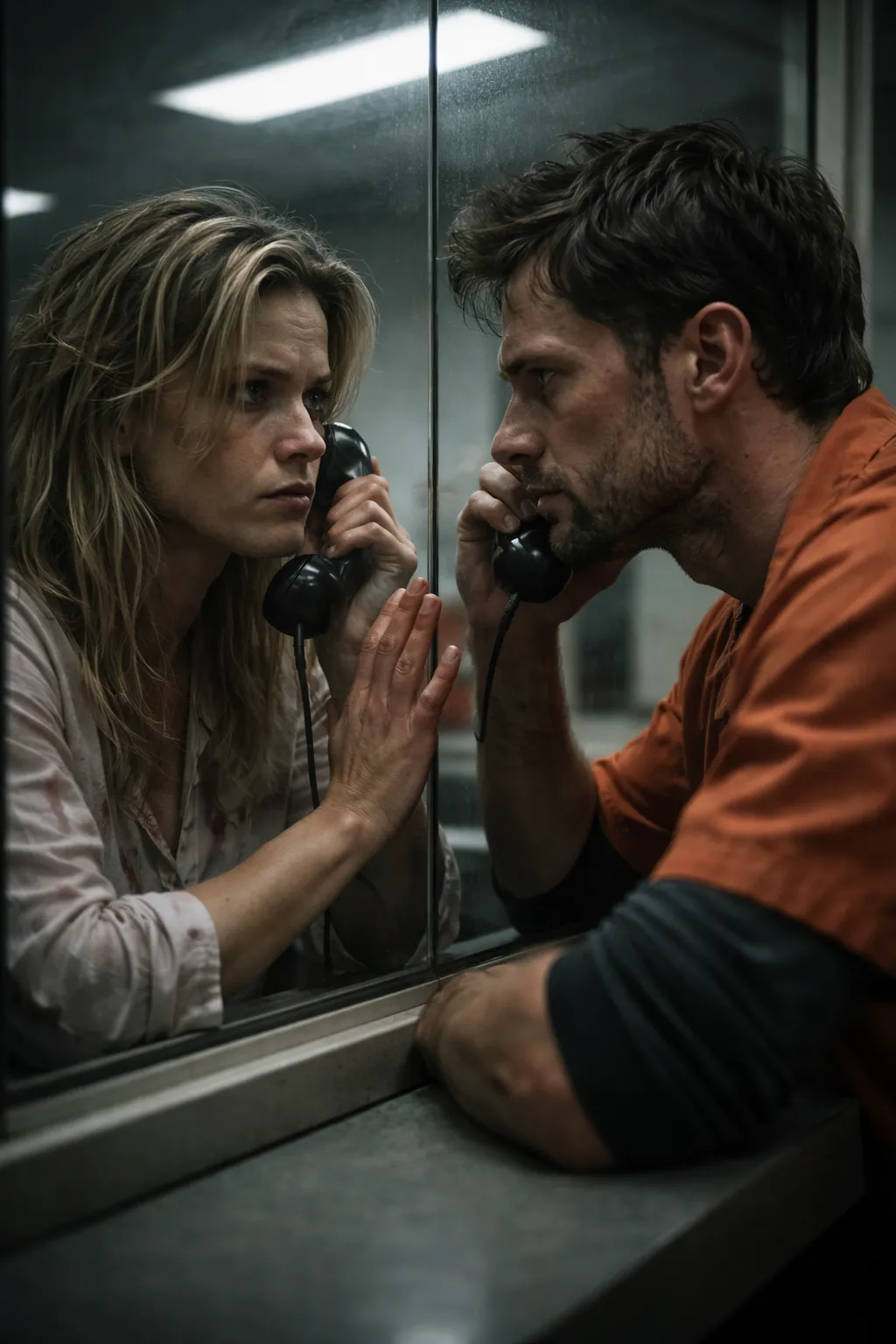
He looked wrecked. His knuckles were swollen and already bruising purple. When he saw me, his face crumpled—not in guilt, but in relief.
“I didn’t want to do it that way,” he said through the glass. “I tried to get proof. I went to your mom. She wouldn’t listen. I thought if I called her out without something undeniable, she’d twist it. She always does.”
“You could’ve told me,” I whispered.
“I was afraid you wouldn’t believe me,” he said. “And I was running out of time. The girl she was stalking goes into labor at six tomorrow morning.”
Six.
I checked the clock on the wall.
It was already after nine.
I met with the detective next.
What Jason had said wasn’t paranoia.
It was documented.
Security footage from County Hospital showed Sarah entering and leaving the maternity ward on different days wearing oversized coats. She had been seen speaking to a seventeen-year-old expectant mother who had no family present. Sarah had introduced herself as a volunteer. She had even brought the girl snacks.
They found nurse scrubs in Sarah’s car.
A forged hospital ID badge.
A car seat installed in her back seat.
And in her apartment—packed bags.
One labeled in neat handwriting: “Baby – Going Home Outfit.”
I threw up in the station bathroom.
By midnight, reality settled in layers.
The money I’d wired her? Gone.
The ultrasounds framed in my mother’s hallway? Fake.
The baby name we had embroidered on a blanket? Imaginary.
But the teenage girl at County Hospital?
Very real.
The detective told me security had been doubled. The hospital had been alerted. The girl was safe.
That word—safe—felt like the only steady thing in the universe.
Jason was released on bail just before three in the morning.
Technically, I paid it.
The irony wasn’t lost on me.
We drove home in silence. His hands trembled on the steering wheel.
“I would do it again,” he said finally. “I’d rather you hate me than let her take someone’s child.”
I stared out the window at the empty streets.
“I don’t hate you,” I said. And I realized it was true.
I hated the violence. I hated the shock. I hated that my sister had forced a moment so extreme that a punch felt like the only way to expose it.
But I didn’t hate him.
The next day, the news broke.
LOCAL WOMAN ARRESTED IN ALLEGED NEWBORN ABDUCTION PLOT.
Reporters camped outside my parents’ house. Mark disappeared entirely. My mother refused to speak to anyone.
And at 6:12 a.m., a healthy baby boy was born at County Hospital.
Not stolen.
Not missing.
Breathing.
When I heard that, I finally let myself cry.
Sarah refused to see me at first.
When she finally agreed, it wasn’t remorse I found in the visitation room.
It was anger.
“You ruined everything,” she said flatly.
“I ruined—?” My voice cracked. “You were going to steal someone’s baby.”
“She was a drug addict,” Sarah snapped. “You think she can raise him? I could’ve given him stability. Money. Love.”
“Love doesn’t start with kidnapping,” I said.
For a flicker of a second, something unstable moved behind her eyes. Then it was gone.
“You always thought you were better than me,” she murmured.
And suddenly, I saw it—not madness in a dramatic, cinematic sense. But years of comparison. Competition. Resentment fermenting quietly under smiles.
The fake pregnancy hadn’t just been about a baby.
It had been about attention.
About being celebrated.
About finally standing in the center of the room.
Jason’s court date came first.
The judge reviewed the evidence, the fraud investigation, the imminent risk to the teenage mother. Jason’s lawyer argued necessity—imperfect, desperate necessity.
The charge was reduced.
Anger management.
Community service.
A record, but not prison.
When we walked out of the courthouse, Jason squeezed my hand like he was afraid I’d disappear.
“I’m sorry,” he said again.
“I know,” I answered.
Sarah’s case moved slower.
Thirty thousand dollars in fraud.
Forged documents.
Intent to abduct.
The potential sentence stretched into years.
My parents were shattered. My mother kept saying, “There must have been signs.”
There were.
We just mistook them for drama.
Months later, the balloons and banners were long gone.
Jason and I started therapy—together and separately. Trauma doesn’t evaporate just because the danger is stopped.
Some nights I still hear the sound of that punch.
But I also hear something else now.
The silence that followed.
The silence that exposed the truth.
And I understand something I didn’t before:
Monsters don’t always roar.
Sometimes they cry convincingly.
Sometimes they wear pastel dresses and rest their hands on fake bellies.
And sometimes the person willing to shatter the illusion is the only reason a real child gets to go home safe.