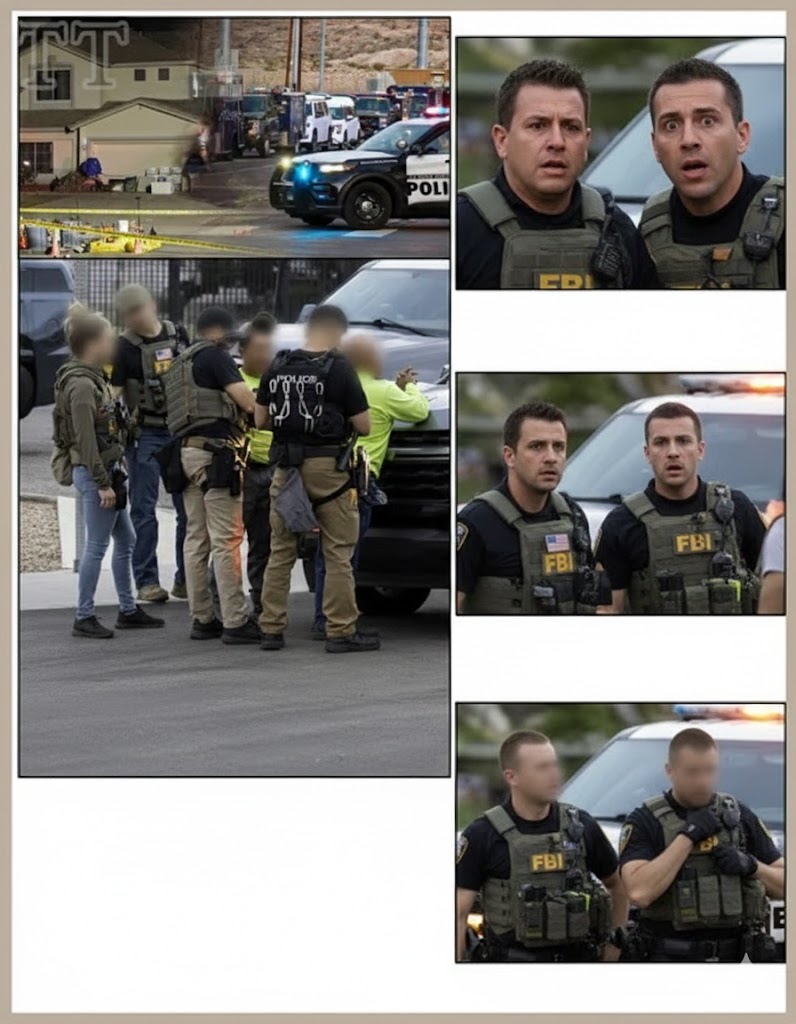
The first ambulance arrived without sirens.
That was the detail that stuck with Special Agent Mara Quinn long after the report crossed her desk.
No sirens meant discretion. No sirens meant the university wanted quiet. A sophomore found unconscious in a dorm stairwell. A medical emergency. Nothing criminal. At least, that’s what the campus incident log said.
Three weeks later, there was another ambulance. Then another. Different dorms. Different students. Same pattern: delayed calls, minimal reporting, swift internal cleanup.
Mara worked narcotics and financial crimes for the DEA. She wasn’t assigned to universities. But patterns had a way of finding her.
By the time the fourth ambulance arrived—still without sirens—she asked for the files.

Chapter 1 — The Wrong Kind of Cluster
Las Vegas was used to excess. Overdoses happened. But this wasn’t that.
The students didn’t fit the profile. No party history. No prior drug use. Two were honor students. One worked part-time in the campus mailroom.
Mara circled that line twice.
Mailroom.
She requested shipping logs. The university complied—slowly. Boxes came in daily. Grant materials. Equipment. “Wellness kits.” Nothing illegal. Nothing obvious.
But one package had been rerouted internally three times before reaching its destination.
That wasn’t normal.
Chapter 2 — The Scholarship That Didn’t Add Up
The money trail came next.
A scholarship fund called Bright Horizon Initiative had ballooned from $400,000 to $6.8 million in a single academic year. Donors were listed as nonprofits. Those nonprofits traced back to shell entities. Those shells traced back to offshore accounts.
Mara looped in the FBI.
Agent Caleb Ross, cyber and financial forensics, didn’t like coincidences either.
“These accounts move like they’re being laundered,” he said. “But not for profit. For access.”
Access to what?
They didn’t know yet.
Chapter 3 — The Pink Powder
The break came by accident.
A campus facilities worker reported a broken lock in a storage annex beneath the administration building. Maintenance found residue. Pink. Powdered. Bagged and taped behind a false panel.
Lab results came back in forty-eight hours.
Pink cocaine. Laced with fentanyl.
On a university campus.
That was when the investigation went dark.
No more information requests. No emails. Everything moved through sealed warrants and burner phones.
And someone noticed.
Chapter 4 — The President’s Silence
University President Dr. Leonard Hale issued a campus-wide email about “enhanced safety protocols” and “student wellness.”
Mara watched the press conference from a surveillance van.
Hale smiled too easily.
Behind him stood administrators who hadn’t slept.
Caleb leaned over. “He knows.”
“How?” Mara asked.
“Because someone warned him.”
Chapter 5 — The Mailroom Map
They planted digital beacons in outgoing campus mail with a federal warrant. The paths didn’t lead to students. They led off-campus. Warehouses in Henderson. A storage facility in Paradise. A rented office in North Las Vegas registered to a nonprofit with no employees.
Every route overlapped with the same internal nodes.
Mailroom.
Grant office.
IT access.
This wasn’t a student problem.
It was infrastructure.
Chapter 6 — The Subgroup
Intelligence came back from Mexico.
A Sinaloa Cartel subgroup known for operating quietly. No street dealers. No violence unless necessary. Their specialty wasn’t distribution.
It was embedding.
They didn’t build fronts.
They became institutions.
Universities. Hospitals. NGOs.
Places no one wanted to suspect.
Chapter 7 — The Administrator
They flipped Elaine Porter, a mid-level grant administrator.
She cried for twenty minutes before saying a word.
“They told me it was donor compliance,” she said. “That rerouting funds was normal. That the president approved it.”
“Who told you?” Mara asked.
Elaine shook her head. “I never met him. Only the handler.”
The handler had no name.
Only a symbol.
A triangle.
Chapter 8 — 4:42 A.M.
The operation launched before dawn.
At exactly 4:42 a.m., teams hit twelve locations simultaneously.
The president’s office came first.
No resistance. No shouting. Just locked cabinets and a panic room no one knew existed.
Inside: encrypted ledgers. Hard drives. Cash. Pink cocaine sealed in academic supply crates.
One ledger showed numbers that made Caleb whistle.
“Twenty-eight million,” he said. “Moved through the university.”
“And that’s just what they tracked,” Mara replied.
Chapter 9 — The Cover Language
Documents explained everything.
“Student wellness” was a laundering term.
“Innovation grants” meant chemical purchases.
“Community outreach” meant distribution nodes.
The cartel didn’t hide behind crime.
They hid behind care.
Chapter 10 — The Second Layer
As raids expanded across the city, agents realized something worse.
The university wasn’t the top.
It was a processor.
Funds entered clean. Left cleaner. Reappeared elsewhere.
Hospitals. Another campus. A private research lab.
Mara stared at the network map.
“This is Phase One,” she said.
Caleb nodded. “And Phase Two is already running.”
Chapter 11 — The Betrayal
That night, Mara’s badge stopped working.
Her access was revoked. Temporarily, they said.
An internal review.
She found a note slipped under her motel door.
You’re too close to the wrong story.
Attached was a photo.
A server room.
One she recognized.
The FBI’s.
Chapter 12 — The Missing Server
A data server seized during the raid vanished en route to evidence lockup.
Official explanation: clerical error.
Unofficial reality: someone inside redirected it.
That server contained donor identities.
Not all of them were criminals.
Some were powerful.
Chapter 13 — The Arrests That Didn’t Happen
The president was charged.
Two administrators followed.
Headlines declared victory.
But no cartel leaders were named.
No subgroup commanders.
No financiers.
Just facilitators.
Mara filed her report anyway.
It was sealed.
Chapter 14 — The Call
Three weeks later, her phone rang.
Unknown number.
“You were right,” the voice said. Male. Calm. Educated. “The university was only a test.”
“Who is this?” Mara demanded.
“A friend,” he replied. “And a warning.”
The line went dead.
Epilogue — Phase Two
Months later, a different campus reported unexplained emergencies.
Different city.
Same pattern.
No sirens.
Mara watched the news in silence.
On her desk sat a new envelope.
Inside: a triangle.
And three words printed neatly beneath it.
Phase Two Approved.
She stood up, grabbed her jacket, and turned off the lights.
The story wasn’t over.
It was spreading.