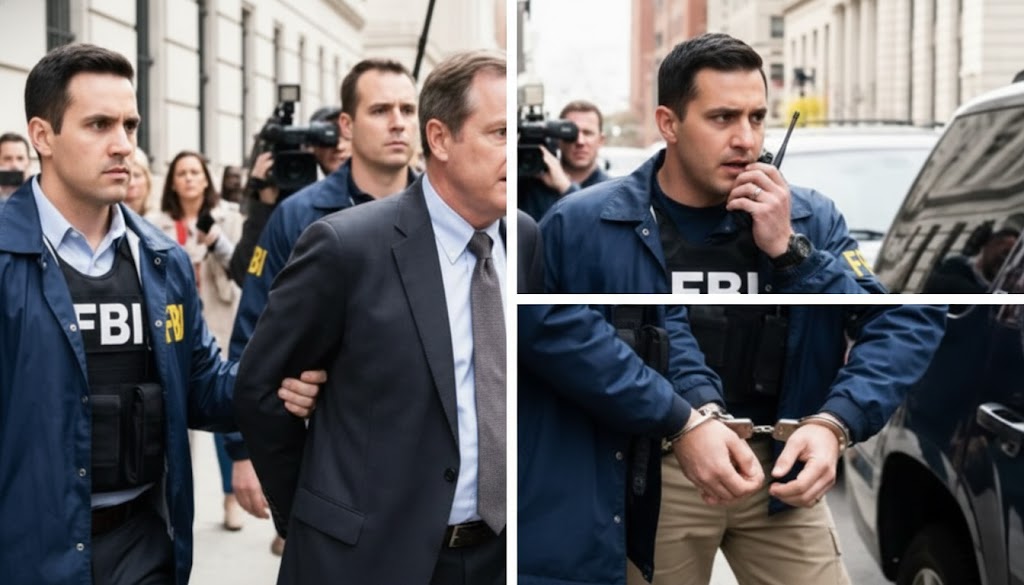
Chicago didn’t wake up to sirens.
00:00
00:00
01:31
That was the first thing Special Agent Marcus Hale noticed.
No helicopters chopping the sky.
No flashing lights tearing through downtown.
No emergency alerts lighting up phones.
Just another cold morning. Coffee brewing. Trains running late. Parents shoving kids out the door.
And beneath all of it, a $580 million cartel empire was already collapsing.

1
Marcus Hale hated countdown clocks.
They were everywhere in federal operations.
Whiteboards. Tablets. Briefing slides.
T-minus 96 hours.
That was all the time they had.
Four days to dismantle something that had taken more than a decade to build — an invisible machine that moved fentanyl, cocaine, and cash through Chicago like blood through veins.
The name on the file was clean and harmless.
Operation Steel Trap.
No city mentioned.
No cartel named.
Hale should have been relieved.
Instead, his gut twisted.
Because when an operation didn’t name its target, it usually meant the target was bigger than anyone wanted to say out loud.
2
The first briefing took place underground.
Literally.
A converted CTA maintenance tunnel, stripped of signage and scrubbed from public maps. FBI, ICE, DEA, Treasury. Faces Hale recognized. Others he didn’t.
That worried him.
“You’re here because traditional charges won’t work,” said Deputy Director Ellen Cross, her voice flat. “Drug cases collapse. Witnesses disappear. Jurors get scared.”
She clicked the screen.
TERRORISM ENHANCEMENT AUTHORIZATION — APPROVED.
The room went silent.
Using terrorism statutes on cartel networks wasn’t normal.
It was a last resort.
“Once this starts,” Cross continued, “we don’t arrest individuals. We collapse ecosystems.”
Hale raised a hand. “And if the ecosystem fights back?”
Cross met his eyes.
“It already has.”
3
Hale’s assignment seemed simple.
Financial mapping.
Follow the money.
Freeze it.
Break the spine.
But within hours, nothing made sense.
Cash laundromats reporting millions in daily turnover but no customers.
Clinics prescribing opioids without patient records.
Apartments listed as vacant pulling industrial-level power loads.
Chicago wasn’t hosting a cartel.
It was the cartel.
Built into zoning laws.
Business permits.
Utility grids.
Someone had designed it to survive audits, raids, even leadership losses.
Someone patient.
4
The first twist came twelve hours before launch.
A data analyst flagged a ghost account.
No name.
No SSN.
No address.
But it controlled routing instructions for over 40% of identified stash houses.
Hale leaned closer to the screen.
“This isn’t a person,” he muttered.
“It’s a switch.”
If flipped, entire neighborhoods would go dark — phones, payments, logistics.
They weren’t dismantling a gang.
They were stepping into a kill switch.
5
Hour One.
No sirens.
Teams moved simultaneously across the city.
Clinics shut down mid-appointment.
Warehouses sealed before trucks could roll.
Apartments breached while suspects slept.
Hale watched the feeds.
Too smooth.
Too quiet.
By hour twelve, arrests were already in the hundreds.
No resistance.
No panic.
That’s when Hale realized the truth.
They weren’t catching people.
They were being allowed to.
6
At Hour Twenty, phones started dying.
Burners first.
Then legit lines.
By Hour Twenty-Four, cash movement froze across entire blocks.
Businesses unrelated to the cartel started failing transactions.
Someone had flipped the switch.
But not them.
“Director,” Hale said into the secure line, “we didn’t trigger the lockdown.”
A pause.
Then Cross answered.
“We know.”
7
The second twist hit harder.
A safe house raid on the South Side uncovered ledgers.
Not drug tallies.
Names.
Judges.
Inspectors.
Permit officers.
But every name was marked with a date.
Some in the past.
Some… in the future.
Expiration dates.
Hale felt cold.
This wasn’t corruption.
It was a schedule.
8
By Hour Forty-Eight, Chicago media noticed something was wrong.
Not the arrests.
The absence.
Neighborhoods went quiet.
Dealers vanished.
Corners emptied.
A vacuum.
And vacuums pull something in.
Hale argued to pause.
“They’re clearing space,” he warned. “You don’t do that unless—”
“Unless you’re making room,” Cross finished.
9
The third twist came from ICE.
A detainee broke.
Not a street guy.
A logistics coordinator.
He laughed when agents mentioned Chicago.
“This city?” he said. “This was never the prize.”
He leaned forward.
“This was the test.”
10
Hour Seventy-Two.
763 arrests logged.
Seizures so large they stopped counting publicly.
The government declared success.
Hale didn’t sleep.
He stared at one remaining file.
The ghost account.
It was still active.
Still routing.
Still waiting.
Then it received a single command.
Not from Chicago.
From overseas.
11
Hale followed it.
A data tunnel buried beneath legitimate traffic.
It led to shipping manifests.
Rail schedules.
Border crossings.
Not Midwest.
National.
The cartel empire hadn’t collapsed.
It had shed skin.
Chicago was Phase One.
12
At Hour Ninety-Six, Operation Steel Trap officially ended.
Applause.
Handshakes.
Press statements.
Hale slipped out early.
Back to the tunnel briefing room.
Alone.
On the screen, the ghost account blinked once.
Then displayed a message:
PHASE COMPLETE. REDISTRIBUTION INITIATED.
Below it, a list of cities.
None circled.
Yet.