The silence didn’t break all at once.
It cracked.
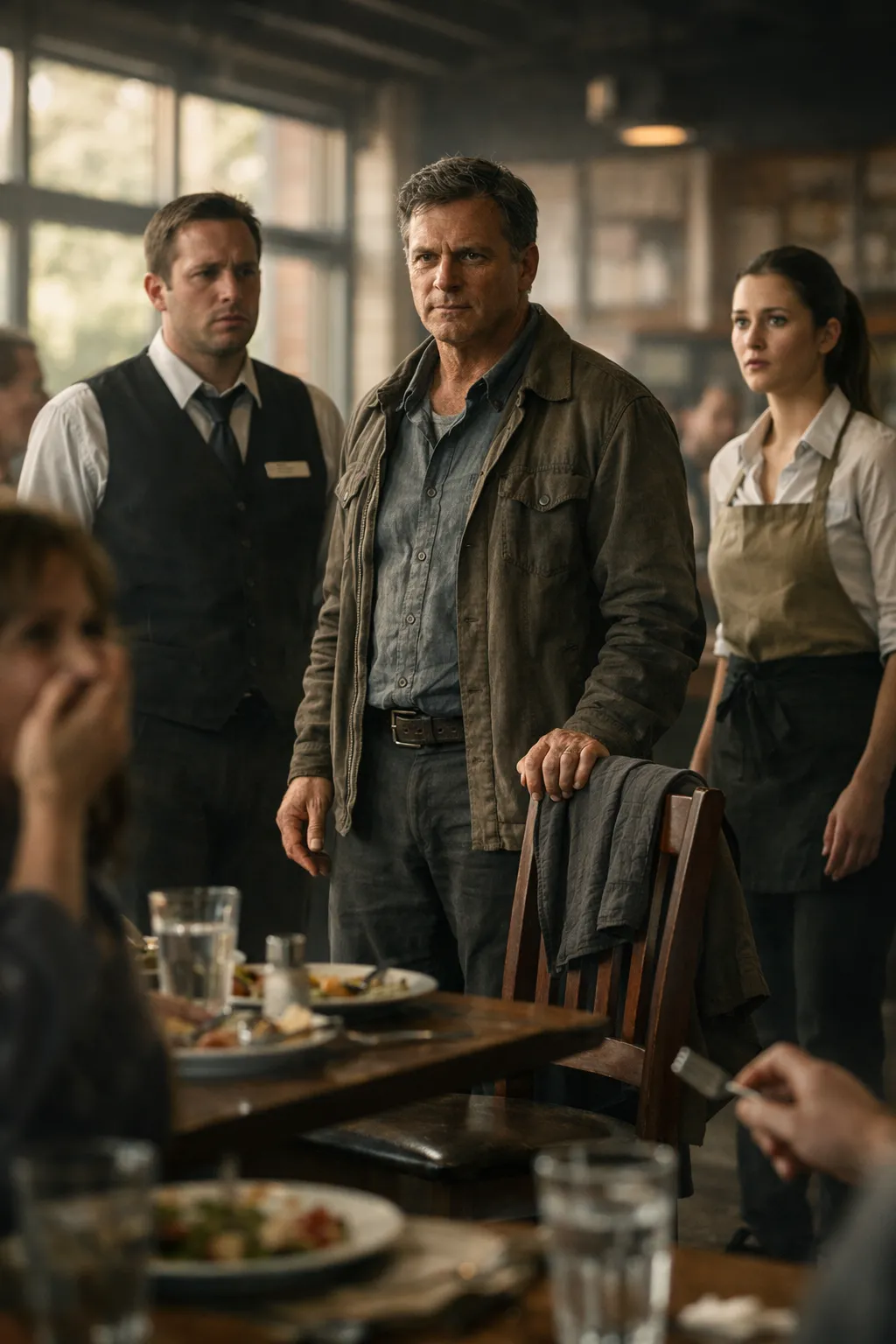
The manager stood rigid beside the table. “Sir… I—I didn’t know you were coming today.”
The man in the worn coat rose slowly. He didn’t rush. He didn’t raise his voice. He simply removed the old coat and draped it neatly over the back of the chair.
“I wasn’t coming as the owner,” he said calmly. “I was coming as a customer.”
Every fork in the room had stopped midair.
The server stood frozen near the counter, her earlier smirk gone. Her hands trembled slightly as she whispered, “I… I didn’t know.”
He looked at her — not with anger, but with something heavier.
“I know,” he replied.
That was worse.
He turned to the manager. “Call a brief staff meeting. Now. Five minutes. Everyone.”
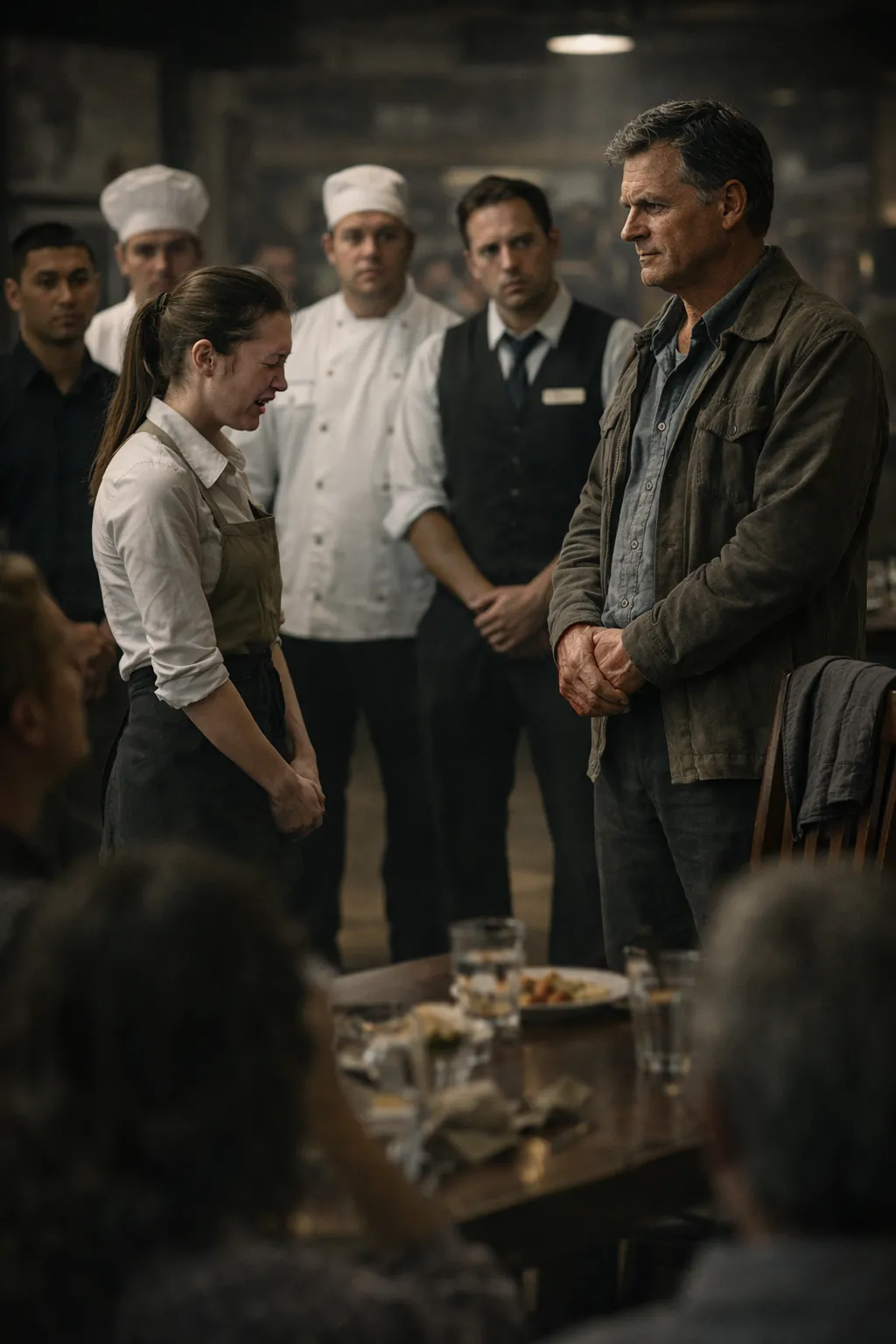
The lunch rush paused. Customers watched as staff gathered near the center of the dining room. Some diners leaned in, sensing they were witnessing something far bigger than an awkward mistake.
The owner faced his employees — the polished shoes of the manager beside his scuffed ones.
“When I opened this restaurant,” he began, “I couldn’t afford the sign out front. I painted it myself. I washed dishes here at night after serving tables all day.”
He let that settle.
“I built this place so that anyone could walk through those doors and feel respected. Anyone. On their best day. On their worst day.”
His eyes met the server’s.
“You didn’t insult a beggar,” he said quietly. “You insulted the values this place stands on.”
Tears welled in her eyes. “I’m sorry,” she choked. “I didn’t think—”
“That’s the problem,” he interrupted gently. “You didn’t think.”
The room was painfully still.
He paused long enough for everyone to feel the weight of the moment.
“I could fire you,” he continued. “And it would be justified.”
The staff shifted.
“But if I fire you without giving you the chance to understand what you did — then I’ve failed too.”
A few customers exchanged surprised glances.
“You’re suspended for two weeks,” he said firmly. “During that time, you’ll volunteer at the community kitchen we partner with. You’ll serve people who come in wearing the same shoes I wore today. And when you return, you’ll attend empathy and service training with the entire staff.”
He turned slowly, making eye contact with every employee.
“Because this isn’t just about her. If one person felt comfortable saying that out loud, then we all need to reflect.”
The manager swallowed hard.
The server broke down completely. “Why… why give me another chance?”
The owner stepped closer.
“Because someone once gave me one,” he said. “When I looked like nothing.”
He picked up his coat.
“And because leadership isn’t about punishment. It’s about building people — or letting them go if they refuse to grow.”
He walked toward the door, then stopped.
“One more thing,” he added without turning around. “From today forward, no one here judges a customer’s worth by their wallet or their wardrobe. If that’s difficult, this isn’t the place for you.”
The bell above the door chimed as he left.
The restaurant didn’t return to normal that day.
It became quieter. More careful.
The manager rewrote staff guidelines that afternoon. The team spoke differently to guests. They noticed things they hadn’t before — the tired mother counting change, the construction worker sitting alone, the elderly man lingering over a single cup of coffee.
Two weeks later, the server returned.
She was different.
She greeted every customer with steady eyes and sincere warmth. When a man in a worn coat entered one afternoon, she approached first.
“Welcome,” she said gently. “Can I get you some water? And maybe something warm?”
The owner watched from the corner booth.
This time, he didn’t need to reveal himself.
He simply smiled.
Because the culture inside those walls had shifted.
And sometimes, the most powerful message isn’t delivered through punishment —
It’s delivered through the opportunity to become better than you were yesterday.