Prologue — The Silence in the Factory
The machines stopped first.
At 5:38 a.m., the conveyor belts at NorthStar Protein in southern Minnesota slowed to a crawl. By 5:41, the floor supervisor noticed entire sections of the line unmanned. Gloves left behind. Hard hats on the ground.
By 6:00 a.m., federal vehicles were parked outside.
No sirens. No shouting. Just quiet coordination.
Within hours, similar scenes unfolded across the state — distribution warehouses, food processing plants, agricultural facilities.
And by nightfall, Minnesota felt different.
Not louder.
Quieter.
Too quiet.

Chapter 1 — The Announcement
The announcement came from Washington at noon sharp.
A federal directive expanding immigration enforcement operations in several states — Minnesota prominently named.
Discover more
celebrity
Science
Bible
The administration described it as “restoring integrity to the system.”
Supporters called it decisive leadership.
Opponents called it destabilizing.
Governor Elias Warren — fictional counterpart to a real-world political archetype — watched the press conference from his office in Saint Paul, jaw clenched.
Behind him, aides refreshed economic dashboards.
Red arrows everywhere.
Processing capacity dropping.
Shipping delays mounting.
The governor didn’t panic.
Not yet.
But he understood one thing immediately:
This wasn’t just about enforcement.
It was about leverage.
Chapter 2 — The First Fallout
Within seventy-two hours, several factories reported operational slowdowns.
Some temporarily closed shifts.
Local news outlets ran footage of empty parking lots where trucks once lined up before dawn.
On social media, the narrative split in two:
• “Finally enforcing the law.”
• “Crippling the state economy.”
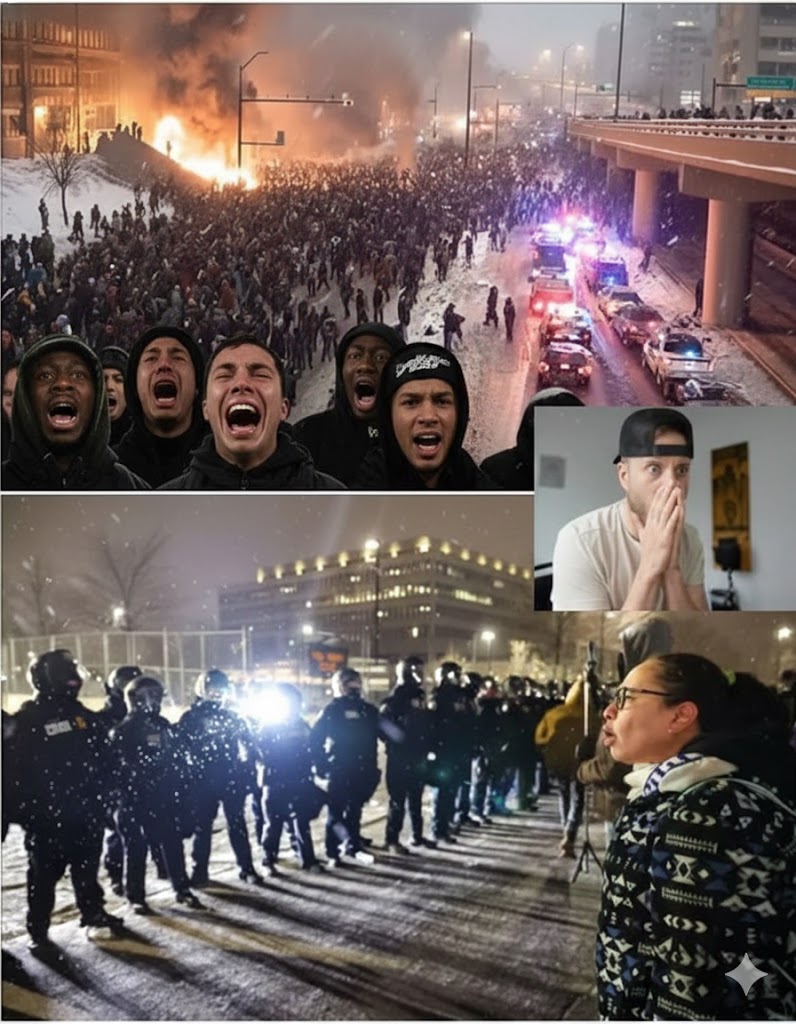
In Minneapolis, protests formed outside federal buildings.
Mostly peaceful.
But tension simmered.
In one neighborhood, a convenience store was vandalized overnight. Another warehouse reported break-ins. Law enforcement described them as “opportunistic crimes,” not organized unrest — but images spread faster than clarification.
National commentators seized on it.
The governor went on air that evening.
“We can enforce laws,” he said, “without destabilizing communities or harming lawful businesses.”
Across the country, the President responded in a brief post:
“We’re restoring order. If states can’t manage it, we will.”
The temperature dropped below freezing that night.
Minnesota’s political climate was colder still.
Chapter 3 — The Man in the Middle
Evan Reed had never wanted to be in the middle of history.
He was a logistics director for a mid-sized agricultural exporter near Rochester.
His plant processed grain shipments bound for overseas markets.
After the enforcement sweep, 38% of his workforce vanished.
Some detained.
Some simply gone.
Orders backed up.
International buyers called daily.
“If shipments stop,” one client warned, “we’ll shift contracts elsewhere.”
Reed wasn’t ideological.
He was practical.
And he knew if the plant closed, 600 families — documented or not — would suffer.
When state officials contacted him for testimony at a legislative hearing, he hesitated.
He had no interest in politics.
But he had numbers.
And the numbers were alarming.
Chapter 4 — The Intelligence Brief
In Washington, Deputy National Security Advisor Claire Whitman reviewed a classified memo.
The memo wasn’t about immigration.
It was about supply chains.
Specifically, agricultural and protein exports that Minnesota helped anchor.
The analysis warned of cascading effects:
• Rising commodity prices
• Contract losses to foreign competitors
• Transportation bottlenecks across Midwest rail systems
Whitman understood optics.
The administration wanted to demonstrate authority.
But economic tremors were unpredictable.
She recommended a calibrated approach.
The response she received was blunt:
“Stay the course.”
Chapter 5 — The Governor’s Dilemma
Governor Warren convened an emergency economic task force.
Business leaders.
Labor representatives.
Law enforcement.
Immigration attorneys.
The room was divided.
Some argued the enforcement exposed long-ignored workforce vulnerabilities.
Others warned that sudden removals were destabilizing fragile supply networks.
Warren faced a choice:
Challenge federal authority aggressively — risk escalating into a constitutional confrontation.
Or negotiate quietly — risk appearing weak to his own base.
He chose a third option.
He requested a direct meeting with the President.
The response: declined.
Chapter 6 — The Surge
As days passed, enforcement actions continued.
Not just in factories — in transportation hubs, distribution centers, rural processing sites.
Rumors spread faster than verified reports.
In parts of Minneapolis and Saint Cloud, scattered thefts and property crimes ticked upward. Police attributed them to a mix of economic stress and opportunism — not organized unrest.
But cable news framed it differently.
“Is Minnesota unraveling?”
Markets reacted.
Investors began questioning state-level stability.
And then something unexpected happened.
Chapter 7 — The Data Leak
An investigative journalist published leaked internal emails suggesting federal officials anticipated economic disruptions — and accepted them as collateral pressure to compel policy alignment.
The emails were ambiguous.
No smoking gun.
But enough to ignite fury.
Was economic pressure part of the strategy?
The administration denied it.
The governor called it “reckless governance.”
Protests swelled.
Yet behind the noise, a deeper current flowed.
Chapter 8 — The Hidden Vulnerability
Claire Whitman received a second classified report.
This one was more troubling.
Foreign trade competitors were aggressively courting buyers who traditionally sourced from Minnesota.
If contracts shifted permanently, the damage wouldn’t be temporary.
It would reshape regional economics for years.
Whitman tried again to recommend recalibration.
Again, she was told:
“Enforcement comes first.”
For the first time, she wondered whether political symbolism was overtaking strategic caution.
Chapter 9 — The Night of the Freeze
A severe winter storm hit unexpectedly.
Highways closed.
Supply chains strained further.
With reduced workforce capacity, several facilities couldn’t restart operations after the storm passed.
Evan Reed stood in his silent warehouse, watching frost gather on idle machinery.
He calculated losses in his head.
And he realized something chilling:
If this continued another month, his plant would shutter permanently.
Chapter 10 — The Breaking Point
Governor Warren addressed the state in a televised speech.
His tone was measured but firm.
“We respect federal authority. But Minnesota will not be collateral damage in a political strategy.”
He announced state-level emergency economic measures.
Tax relief.
Rapid workforce replacement programs.
Legal aid expansion.
The administration responded sharply.
“States must comply with federal enforcement priorities.”
Cable networks framed it as open warfare.
But something else was happening behind closed doors.
Chapter 11 — The Call
Late one night, Warren received a call from an unexpected source.
Claire Whitman.
Off the record.
She didn’t offer concessions.
She offered warning.
“Global markets are reacting,” she said. “If this spirals, neither side controls the fallout.”
Warren listened.
For the first time, both sides recognized the risk wasn’t political loss.
It was structural damage.
Chapter 12 — The Twist
The investigative journalist who leaked the emails released another piece.
This time suggesting private political donors with agricultural interests outside Minnesota stood to benefit from contract shifts.
The implication wasn’t direct wrongdoing.
But it raised uncomfortable questions.
Was enforcement purely legal policy?
Or was economic advantage intertwining with politics?
Public trust eroded further.
Chapter 13 — The Quiet Negotiation
Without cameras, without press releases, emissaries met in Chicago.
Federal officials.
State representatives.
Industry leaders.
No one wanted public retreat.
But everyone wanted stability.
Negotiations were tense.
Concessions subtle.
Language carefully crafted.
Chapter 14 — The Uncertain Pause
Enforcement operations slowed — not stopped.
Factories cautiously resumed partial shifts.
Markets steadied slightly.
But the damage lingered.
Communities felt fractured.
Trust thin.
Governor Warren knew he had survived the immediate storm.
But he also knew something else:
The balance between federal authority and state resilience had shifted.
Perhaps permanently.
Epilogue — The Horizon
Spring thawed Minnesota slowly.
Factories hummed again — not at full capacity, but moving.
Political scars remained.
In Washington, strategists debated next moves.
In Saint Paul, Warren studied polling data and economic reports.
And somewhere in the quiet halls of federal power, discussions continued about how far enforcement tools could extend — and what future leverage they might provide.
The standoff had not ended.
It had merely paused.
Because in an election year…
Every move echoes.
And the next directive could arrive at dawn.