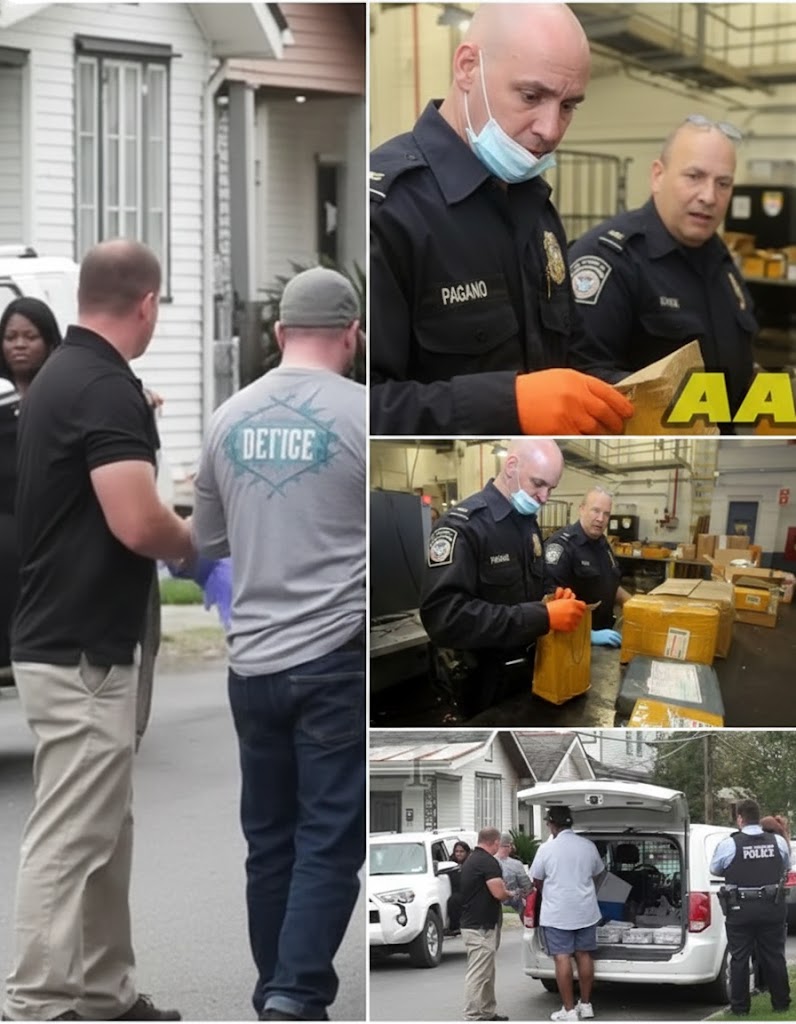
The Last Delivery Route
No one noticed the pattern at first.
They never do.
Packages arrive late all the time. Sometimes they disappear. Sometimes they show up ripped open, resealed with cheap tape and apologies printed in gray ink. The United States Postal Service moves nearly five hundred million pieces of mail every single day. Chaos is baked into the system. That’s what made it perfect.
Agent Daniel Cross realized something was wrong on a Tuesday morning that felt aggressively normal.
Rain streaked down the windows of the Chicago Field Office. The coffee tasted burned. The printer jammed twice. Cross had been awake for thirty-six hours, chasing a fraud lead that went nowhere, when an analyst dropped a thin folder on his desk and said, almost as an afterthought, “This one’s probably nothing. But it’s… weird.”
Cross hated that word.

Weird usually meant expensive.
The folder held twelve delivery complaints from six different states. Illinois. Ohio. Georgia. Arizona. New Jersey. California. Different routes. Different dates. Different carriers. The only thing tying them together was what wasn’t in the packages when they arrived.
Not stolen.
Swapped.
Cross leaned back in his chair and stared at the ceiling tiles, counting the cracks. He’d spent fifteen years in federal law enforcement. Drug cases. Corruption cases. Counterterrorism. Nothing moved narcotics more reliably than private vehicles and human greed. The Postal Service was sacred ground. Untouchable. Audited to death. Digitally logged. GPS-tracked.
Too clean.
“What did the dogs say?” he asked.
The analyst hesitated.
“They never got a chance to sniff.”
That made Cross sit up.
The First Thread
Three weeks later, a controlled test package left a distribution center in St. Louis.
Inside was nothing illegal. Just a weighted metal box, RFID-tagged, chemically marked, and logged into a classified tracking system that sat outside the USPS network. The box was designed to behave like narcotics under scans and weight checks without actually being narcotics.
If it vanished, they’d know where.
If it arrived, they’d know how.
It never arrived.
Instead, it reappeared six days later in a locker in El Paso, Texas, three hundred miles off-route, wrapped in different packaging, bearing a different barcode, and registered to a funeral supply company that did not exist.
That was the moment the case stopped being an audit and became something else entirely.
They called it Operation Dead Letter.
The Postmen
The first arrest happened quietly.
A carrier in New Mexico named Raul Mendoza. Forty-two. Married. Two kids. Clean record. Twelve years of service. Never late. Never flagged. Never missed a scan.
He broke in under five minutes.
He didn’t scream. He didn’t cry. He just stared at the table and said, “You’re too late.”
Mendoza explained the system in pieces, like someone describing a dream they were afraid to wake from.
It didn’t start with drugs. It started with favors.
A rerouted package here. A delayed scan there. A missed delivery marked “attempted.” Someone always paid. Cash at first. Then gift cards. Then envelopes taped under mail trucks. Always small. Always deniable.
Then one day, a supervisor said the wrong thing.
“You’re reliable,” the man told him. “We need reliable.”
That’s when Mendoza became a postman in name only.
Routes were rewritten. Union protections weaponized. Automated sorting systems quietly adjusted by subcontracted IT firms that no one had audited in years. Certain barcodes triggered human handling instead of machines. Certain ZIP codes bypassed secondary screening entirely.
The drugs traveled inside legal packaging.
Books.
Medical supplies.
Funeral paperwork.
Election materials.
And sometimes… inside other people’s mail.
By the time Mendoza finished talking, Cross felt something cold settle behind his ribs.
“How many?” Cross asked.
Mendoza laughed once.
“You still think this is small.”
4,200
The number didn’t come from Mendoza.
It came from the ledger.
A handwritten notebook recovered from a burned-out postal van in Bakersfield, California. The fire had been ruled accidental. Electrical fault. Case closed.
Except the notebook survived.
Names. Routes. Codes. Drop phrases disguised as route notes. “Dog alert.” “Mailbox blocked.” “Customer moved.”
Each one meant something else.
By the time the task force cross-referenced the names, the count stood at 4,200 mail carriers across thirty-two states.
Not all active.
Not all knowing everything.
But all part of the same shadow delivery system.
And that was when the cartels stopped pretending they didn’t know the investigation existed.
The Warning
Agent Cross’s apartment was untouched.
That was the problem.
No forced entry. No missing items. No cameras tripped. No neighbors saw anything.
But on his kitchen table sat a padded envelope addressed in perfect block letters.
Inside was a single USPS badge.
Not his.
And a note.
EVERY ROUTE ENDS.
Cross didn’t sleep that night.
The Trap
The task force needed proof that couldn’t be buried.
Not testimony. Not ledgers. Not one more scared carrier flipping for a deal.
They needed to catch the system in motion.
So they built a fake surge.
A phantom shipment. High value. High priority. Rumored through informants like a secret too big to keep. Enough to activate supervisors. Enough to force coordination. Enough to bring the real architects out of the shadows.
The shipment was scheduled to pass through three major hubs.
It never made it past the first.
Because someone inside the task force pulled the plug.
That was the second twist.
Internal Affairs flagged a leak. Then another. Then three more. Suddenly Cross realized the investigation wasn’t compromised at the edges.
It was compromised at the center.
The Postal Service hadn’t just been infiltrated.
It had been absorbed.
The Man Who Didn’t Exist
They finally found him in an employee database that hadn’t been updated since 2009.
Name: Evan Holt
Position: Logistics Optimization Consultant
Clearance: Contractor – Tier 3
Supervisor: None listed
Holt had no criminal record. No social media. No digital footprint before age thirty.
But every rerouted package traced back to one algorithm.
His algorithm.
When agents arrived at the address on file, they found an empty office, wiped clean, except for a whiteboard.
Written in red marker were five words.
You already depend on us.
The Collapse
Raids began at dawn.
Facilities.
Sorting centers.
Regional offices.
Private IT firms tied to USPS infrastructure.
Mail trucks lined federal impound lots like abandoned animals.
The public was told there were “operational disruptions.”
They were not told that millions of packages were being opened under armed guard.
They were not told how much had already passed through undetected.
They were not told how many routes were still live.
By nightfall, Cross stood in a command center watching red dots blink across a map of the United States.
Most went dark.
Some didn’t.
The Open Ending
At 2:17 a.m., Cross received an encrypted message on a phone he didn’t remember installing.
No sender.
Just coordinates.
And a USPS tracking number that was still moving.
Somewhere in the system, a delivery was still active.
And whoever controlled it wanted him to follow.
Cross grabbed his jacket.
Outside, a postal truck idled at the curb.
Engine running.
No driver inside.
The back doors unlocked.
The scanner beeped.
Out for delivery.
And then the screen went black.