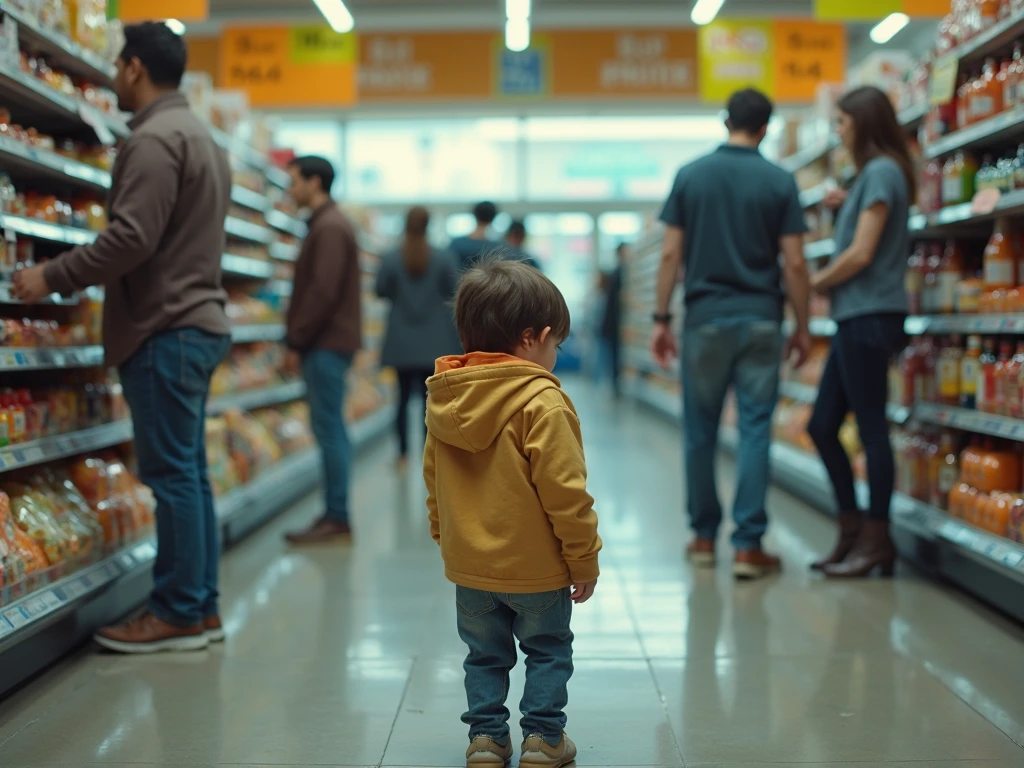
“He’s a boy and boys need to toughen up.” That’s what my father said after abandoning my 7-year-old son at the supermarket. Some people might stay silent and let it go for family and peace, but I’m not one of them. I don’t allow anyone to do anything that could harm my child. After I sat down and explained everything to my parents, they refused to admit they were wrong. Instead, they shouted and cursed at me. In the end, I decided to take legal action against them. That decision also marked the end of my relationship with my parents. Follow along with my story and tell me, was I wrong for taking my parents to court to protect my child?
Hello, I’m **Grayson**, 37 years old, a construction engineer living in California. I spent my entire youth climbing the career ladder, not for fame or fortune, but to give my family a secure and whole life. My wife **Hannah**, 35, is a brilliant financial specialist at a multinational corporation. She’s a strong, straightforward woman who faces life’s harshest moments with logic and clarity. Something I truly admire about her. We’ve been married for 12 years, and not a single day goes by that I’m not grateful to have her by my side. And then after we got married came **Mason**, our son. He’s 11 now, with green eyes just like his mom’s, and a smile that can wipe away the exhaustion of an entire day in a split second. Mason is my light, so I get up early every morning and give everything. The day he was born, I made a promise to myself. I would never let anything or anyone hurt my son. But 4 years ago, my parents, the very people I once believed I could trust with the most precious person, made me break that promise.
—
The Day Mason Was Left Alone
4 years ago, on a chilly Saturday morning in March, the sky was gray, the air crisp, the kind of half-hearted spring morning in California that makes you want to stay wrapped up in bed. The school was out for the weekend and Mason was home. But Hannah and I, because of work, still had to head out like any other day. That morning, we both had important meetings. Neither of us could stay home. And like many busy days before, we went with the usual solution, dropping Mason off at his grandparents’ house. I drove for about 15 minutes. My parents lived just 10 miles away. When I pulled up in front of their house, my mom came out to open the door. She looked surprised to see us so early, but the moment she saw Mason, her face lit up with a smile. She bent down to hug him like they hadn’t seen each other in ages. I got straight to the point. “I’ve got a meeting. Can you watch Mason for the morning?” She nodded right away, no questions asked. While ruffling Mason’s hair, she said, “Later, I’ll take you to the store. Want to get some cookies and grape yogurt?” Mason’s eyes lit up. He jumped and shouted, “Grandma, you’re the best.” At that moment, I smiled. That scene gave me peace of mind. I remember thinking, “At least I’ve got my parents close by. When it matters, I can still count on them. We may not be close, but they’re still Mason’s grandparents.” And then I drove off to work for my meeting. I had no idea that just a few hours later, I would come to see my parents for who they were.
I got to the office at 8:00 a.m. That morning, the conference room was tranquil. I was at the head of the table presenting the progress of phase 2 of our project. Everyone was focused. My slides were on page 8 when my phone resting on the table started buzzing. I quickly hit decline and kept talking. But not even 30 seconds later, it buzzed again. The same unknown number. Right then, **Mr. Hudson**, the eldest member of the board, spoke up from across the table. “Grayson, take the call. Sounds urgent.” I nodded and replied, “Excuse me, I’ll be right back.” I grabbed my phone, stepped out of the room, and answered the call. When the door shut behind me, a woman’s voice came through, clear but tinged with concern. “Hello, is this Mr. Grayson?” “Yes, this is he,” I replied. Once she confirmed she had the right person, her voice picked up speed like she was in a situation. “I’m calling from Crescent Market. Your son Mason is currently in the security office. He got lost in the store. Luckily, he remembered your phone number and asked us to call you.”
At that moment, I froze. I stared down the hallway, but everything blurred. My body felt like it had gone numb. My mind went blank. I didn’t say a word. The woman hesitated, then gently raised her voice. “Mister Grayson, can you hear me?” I blinked, forcing myself to pull it together. “Yes, I’m here. I’m on my way. Please stay with him.” As soon as I hung up, I called my mom. She picked up after a few rings. I didn’t waste a second. “Mom, the supermarket just called. Mason’s lost. He’s at the security office. What the hell happened? Where are you and dad?” And my mom, utterly calm like nothing had happened, replied, “He called you. Smart kid, didn’t let us down.” I instantly shouted, “What the hell are you even talking about?” And just like that, she raised her voice, too, clearly annoyed. “We were just trying to help you two out, Grayson. Don’t blow this out of proportion.” I hung up. I didn’t give her another second to speak. I walked back into the meeting room. Everyone was still waiting for me to continue my presentation. I stood at the door, took a deep breath, and said, “I’m sorry. My son’s in trouble. He’s lost at a supermarket. I have to go.” No one stopped me. No glares, no judgment. Mr. Hudson gave the nod, stood up, and said, “Go. Family comes first.” I nodded my thanks, and left.
On the way to the car, I called Hannah. She didn’t answer the first time. The second time, she picked up. I spoke as fast as I could. “Mason’s lost at Crescent Market. I’m heading there now. Come if you can.” Her voice was sharp and firm. “On it, I’m going now.” I hit the gas, mind racing with a hundred questions. How did Mason get lost? What the hell did my parents do? About 20 minutes after the call, I arrived at the entrance of Crescent Market. When I exited the car, I rushed straight to the greeter at the door. I asked her where the security office was. She pointed to the far end of the hallway on the left. I didn’t even thank her. I just nodded and took off in that direction. As soon as I pushed the security office door open, I saw Mason curled up in a chair, clutching a small stuffed bear that one of the staff had probably given him to calm him down. His face was flushed, his eyes swollen from crying. The moment he saw me, he jumped up, burst into louder sobs, and ran straight into my arms like I was the only safe place left in the world. I dropped to my knees and wrapped him in a tight hug. My voice was quick, soothing, urgent. “Mason, I’m here, buddy. It’s okay. Daddy’s here.” He held on to me as his life depended on it. I could feel the shaking sobs against my shoulder. He couldn’t speak. He just cried. And I didn’t ask anything. I just held him, rubbing his back gently, my head resting against his hair, my heart still pounding from the shock.
About 10 minutes later, Hannah arrived. She all but ran into the room, spotted the two of us, and immediately wrapped her arms around both me and Mason. “Mason, are you okay?” Her voice was thick with emotion. Just then, a security guard approached me. I stood up, letting Hannah hold Mason, and shook the guard’s hand. He was an older man in uniform, professional, and calm. Before I could say anything, he spoke. “Around 9:30,” he began. “We were alerted by a female shopper. She found the boy crying alone near the candy aisle, terrified. No adult in sight.” I nodded, forcing myself to stay composed. “We brought him here to the office and tried to calm him down. At first, he couldn’t speak. He was too panicked. But after a few minutes, he settled down and started clearly saying his dad’s name, his mom’s name, and both your phone numbers.” His voice was steady and transparent, making sure I heard every word. At that moment, I silently thanked myself and my wife. Ever since Mason turned three, Hannah and I had drilled our full names and phone numbers into him every single day at bedtime, during breakfast, over and over. Some people laughed at us and said we were being too strict, putting unnecessary pressure on a little kid. But in this very moment, I knew we’d done the right thing. If it weren’t for that, who knows how long Mason would have had to sit in that room alone. I turned to look at Mason, now huddled close to his mother. He’d stopped crying, but streaks of tears still marked his face. Hannah wiped them away with a tissue while I turned back to the guard, shook his hand again, and said softly, “Thank you. Thank you all. Because of you, my son’s safe.” The man nodded and replied gently. “We were just doing our job, but it’s a good thing your boy remembered those numbers. Not every kid can do that.” I tightened my grip on his hand and gave a quiet nod. Even then, I couldn’t let myself think about the worst-case scenario. I just knew one thing for sure. If I’d gotten there any later, if Mason hadn’t remembered my number, I don’t even want to imagine what could have happened. We left the supermarket after thanking every staff member who had helped Mason, from the older security guard to the young woman at the front desk. Every single one of them had been kind, patient, and gentle. And without them, I honestly don’t know if things would have turned out this way.
—
The Aftermath and the Decision
We didn’t take Mason straight home. The first thing Hannah and I did was drive directly to our family doctor’s clinic. No appointment, no hesitation. I just needed to know that my son was genuinely okay. **David**, our longtime pediatrician, took Mason in the moment we walked through the door. He’s always had a way of putting kids at ease. Even though I could see the concern in David’s eyes, he greeted Mason with a calm smile and talked to him like nothing serious had just happened. The checkup lasted about 30 minutes. When it was over, David came to the waiting room where Hannah and I sat. He didn’t speak right away. He just sat across from us, leaned forward, elbows on his knees, and looked me in the eye. “He’s okay,” he said. “No signs of physical injury. Everything looks normal.” I barely had time to exhale before he continued. “But it’s going to take some time for him to settle emotionally. Over the next week or two, Mason may be jumpy, have trouble sleeping, or react strongly to loud sounds. The most important thing right now is that you’re with him. Don’t leave him alone, even if it’s just for a few minutes.” I nodded, responding quietly. “Yes, I understand.” Hannah sat beside me, gripping my hand tightly, saying nothing. But I knew we were thinking the same thing. This time we had trusted the wrong people. And Mason was the one who had paid the price. After thanking David, we took Mason back to the car. And as I shut the door and buckled him in, I knew exactly what to do next. This wouldn’t end with a careless phone call and a smug comment from my mother. I was going home. I was going to face them. And this time, I wouldn’t stay silent like I had all those other times.
About 30 minutes later, we stood in front of my parents’ house. I rang the doorbell twice. A few seconds later, I heard familiar footsteps and the door opened. It was my mother. The moment she saw us, her face lit up. She opened her arms wide, expecting Mason to run into them. “Mason, you are amazing. Grandma’s so proud of you.” She roared, her eyes sparkling with a joy I couldn’t understand. But Mason didn’t move toward her. He stepped back half a step, then turned and pressed himself tightly against Hannah’s side. He didn’t look at her. Didn’t say a word. And I could see it. Plain as day in his eyes. He was on guard. My mother froze. She hadn’t expected that reaction. But she said nothing. And I stayed on the doorstep, making no move to enter. I looked her straight in the eye, my voice steady, every word deliberate. “Can you tell me why you left a 7-year-old child alone in a supermarket? Do you have any idea how often kids get kidnapped these days?” She answered like she was being unfairly accused. “We were just trying to help you. We wanted to make Mason tougher. And instead of being grateful, you show up here blaming us.” Her words made it hard to breathe. I spoke through gritted teeth. “Do you seriously not see how irresponsible, wrong, and utterly inhumane that was?” She crossed her arms and lifted her chin, defiant. “When you were Mason’s age, we let you ride your bike around the neighborhood alone, and look, you turned out just fine.” I shook my head and replied, “30 years ago was different. There weren’t as many cars. Crime wasn’t what it is today. Child abductions barely existed. But now, kids disappear in broad daylight. Open the news. It’s everywhere.”
Right then, I heard footsteps from inside. My father walked out, coffee mug in hand, but his eyes were no longer calm. He stepped to the doorway, blocking the entrance, and said in a cold, threatening tone, “You standing here lecturing me, Grayson? Talking down to the man who raised you?” I didn’t respond. He glanced at Mason and continued, “He’s a boy, a man in the making. He needs to be tested. What happened today? That was a lesson.” And he passed. That was it. Couldn’t hold back anymore. “Dad,” I said, “Mason is seven. He’s a child. He’s not a man.” He raised his eyebrows, voice dripping with contempt. “But he made it, didn’t he? He remembered your number and made the call. That’s a win. You should be thanking us.” I let out a dry, bitter laugh. “Thank you? You’re lucky I haven’t reported you yet for child endangerment. The ones who deserve an apology, aren’t you? It’s Mason and Hannah. And if you still have a conscience, you owe them at least that, a real apology.” Silence dropped like a weight. Then my father’s face twisted in fury. He growled. “That’s enough. Get the hell out of my house. And don’t you ever come back. I raised you. And now you stand there demanding I apologize to you.” I met his glare, unflinching. My voice was low but firm. “Fine. I’ll press charges and we’ll let the law decide how this ends.” He slammed his hand against the door and shut it hard. No goodbye. No final word. No glance back. Hannah stepped beside me and gently took my hand. Mason clung to her side without questions or confusion, but I knew he understood. He had seen, heard, and felt exactly what this place had become. I turned, lifted Mason into my arms, and we walked away from that house. As if we were leaving behind a place that no longer deserved to be called family.
I drove my wife and son back home. Mason sat in the back seat, his head resting against the window, eyes staring out, but not seeing anything. Hannah sat beside me, hands clasped together in her lap, silent. The entire drive was wordless, but it wasn’t the peaceful silence you get after a long day. It felt heavy, like everyone’s holding something in, afraid that if they spoke, everything might come pouring out and they wouldn’t be able to stop it. I gripped the steering wheel a little tighter, and my mind started to rewind. I thought back to when I was Mason’s age. I was a good kid, curious, loved building blocks, fascinated by airplanes, but my parents never saw me as a child. To them, I was a rough draft that needed shaping, correcting, and forcing into the mold they believed a real man should be. I remembered one time I got lost in the park chasing a kite. When I finally made it back, my mom didn’t hug me. She didn’t ask if I was scared. Instead, she said, “See, that’s what happens when you run off. Remember that next time.” And my dad, he just shrugged and said, “Good. You’ll be fine if you can find your way back when you’re lost.” Back then, I thought their strictness meant they cared. And maybe in a different time, that kind of parenting didn’t seem so harsh. Back when neighbors left their doors unlocked. When kids played outside till dark and came home on their own, there weren’t daily news stories about abductions, missing kids, or strangers pretending to be friends to lure children away. But now things are different. I glanced in the rearview mirror. Mason was still there, not crying, but his eyes. His eyes held something that hit me hard. The kind of look that only comes when a child realizes not everyone is safe. Not even the people they’re told to trust. Not even grandparents. I looked over at Hannah. She was turned halfway in her seat. Eyes on Mason, too. We didn’t say anything, but I knew we were thinking the same thing. This was going to leave a mark. And now it’s up to us to be the ones who help heal what others choose to hurt.
—
Seeking Legal Counsel
That night, we didn’t let Mason sleep alone. I laid a mattress right next to his bed, and Hannah lay on the other side, her hand gently resting on his chest, as if to remind him we were right there, not going anywhere. Mason had fallen asleep after dinner, but his sleep was anything but peaceful. Every few minutes, he would stir, sigh, or mumble softly like he was trapped in a dream he couldn’t entirely escape. Anna and I didn’t talk much. We stayed quietly on either side of him, watching, waiting, because we knew this wasn’t over yet. Just like Dr. David had warned, around 2:00 a.m., Mason suddenly jolted awake. He started crying quick, broken sobs, as he’d just fallen out of a nightmare. Hannah sat up instantly, wrapping her arms tightly around him. I moved in close, too, pulling them both into my arms. “It’s okay, baby,” I whispered. “We’re here. Mommy and daddy are right here. We’re not going anywhere.” It took nearly 15 minutes before Mason was calm enough to lie back down again. His face was still streaked with tears, his small hands still clinging tightly to his mother’s shirt, and all we could do was hold him steady and quiet until he finally drifted back to sleep.
I got up early, made coffee, and sat silently the following day. I needed to clear my head to think carefully about whether I should really take legal action against my parents. At 7:30 a.m., I opened my contacts and scrolled to **Frank**, a longtime friend and lawyer specializing in child protection cases. I hit call. Frank picked up after a few rings. Initially, he sounded a bit groggy, but when I gave him a quick rundown of the situation, his tone shifted instantly. Serious, focused. “It’s the weekend,” he said. “But if you can come by at 2 this afternoon, I’ll be here.” I thanked him and agreed right away. At exactly 2:00 p.m., I arrived at Frank’s law office. There were no pleasantries, no small talk. He pulled out a chair, motioned for me to sit, and got straight to it. “Tell me everything, every detail.” So, I did. From the moment we dropped Mason off at my parents’ house to the phone call from the supermarket, the confrontation at their home, and Mason’s panic attacks that night. Frank nodded throughout, absorbing every word. And when I finished, he leaned back and said, “Under California law, abandoning a minor in a public place, especially without supervision, and in a way that endangers their physical or emotional safety, can be grounds for legal action. Depending on the severity, it could result in a civil penalty or even criminal charges.” I sat quietly for a few seconds, then asked him directly, “So, should I press charges?” Frank didn’t flinch. He looked me in the eye and said calmly, “You should, not to get revenge, but to protect your son and to ensure your parents or anyone else in your family, ‘Never do something like this again to any child.'” I nodded slowly, holding his gaze, and without hesitation, I said, “Then let’s do it.”
—
The Legal Process Begins
2 days after I met with Frank, the formal complaint was filed with the district attorney’s office in my county. Frank assured me I wouldn’t need to appear in court right away. As my legal representative, he would handle everything by the law. But he also made one thing clear: because this case involved a child, it might be managed on two separate tracks, one administrative, one criminal, depending on the initial findings of child protective services and the DA’s office. 3 days after we submitted the paperwork, I received a call from the district attorney’s office. An investigator, her name was **Megan**, would be meeting with me and Mason. They needed to assess the emotional impact on my son and determine whether there was sufficient evidence to move forward with criminal charges. Frank went with us to the meeting. Megan wasn’t what I expected. She wasn’t cold or clinical. She was calm, patient, and deeply present. She sat down with Mason in a small sunlit room, toys neatly arranged in the corner. She didn’t jump right into questions. Instead, she started with a story about fire trucks, something Mason’s always loved. It took nearly 10 minutes of gentle conversation before Mason began to share what had happened that day. Megan didn’t rush him. She didn’t pressure him. And when he got to the part about standing alone, crying in the supermarket, I saw something shift in her eyes. She turned to me and said quietly, “I’ll make sure this is fully documented.”
The session lasted a little over an hour. Frank called with an official update. That afternoon, the DA’s office had accepted the case. They had decided to proceed with administrative action and mandatory counseling sessions for my parents. But Megan had made it clear if my parents failed to cooperate or repeated this behavior, the case would immediately escalate to criminal prosecution. I nodded. Truthfully, I didn’t want to see my parents behind bars. That wasn’t the point. I just wanted them to understand and to stop. Not for me, for Mason. But I also told Frank without hesitation, if they ever did this again, even once to Mason or any other child in our family, I would see this case through to the very end. Before I left Frank’s office, I asked him one final question, one I imagine any father would ask in a situation like this. “Do I need to prepare more evidence? Surveillance footage, witnesses, a statement from the doctor?” Frank didn’t answer right away. He looked at me for a moment, then slowly nodded. “Good question, but don’t stress. You’re not expected to handle all of this on your own.” I looked at him a little surprised. He continued, his voice calm but firm. “Once the complaint is accepted, representatives from the appropriate agencies, usually law enforcement or child protective services, will open an official investigation. They’ll reach out to the supermarket to retrieve security footage and take statements from the employees, the person who reported it, you and your parents. They’re also authorized to collect medical records from Dr. David, if necessary. Everything is done to ensure fairness and objectivity.” I nodded, feeling a small weight lift from my shoulders. Frank leaned forward slightly, his tone more serious now. “You don’t need to run around gathering evidence. Your job right now is to protect your son. Let the legal system do what it’s built to do.” I looked at him and let out a long breath. “So, all I can do now is wait.” He gave a slight smile. “Not just wait, trust, trust that someone’s standing on the side of what’s right this time.” I left the office in silence, but inside everything felt more apparent than ever. This wasn’t just about me and my parents anymore. This was about responsibility and consequences.
—
The Public Trial
Wednesday morning, 4 days after I left Frank’s office, my phone rang. It was my father’s number. I picked up. His voice hit me before I could even say hello. “You went and filed charges against your parents. You ungrateful bastard.” I kept my voice steady. “You and Mom dared me to. I just followed through.” He snapped back, voice sharp and bitter. “I said that in the heat of the moment. And you, my son, this is how you treat me.” I didn’t argue. “If you truly don’t see how abandoning a 7-year-old child is wrong, then that’s exactly why I had to do this.” And with that, I hung up. Just a few hours later, the messages started rolling in. The first came from my aunt. “Is this how you treat your parents? If people hear about this, the whole family’s name will be shamed.” Then a cousin called me at 10 p.m. talking like he was some moral authority. “It wasn’t even that big of a deal. Why blow it out of proportion?” One person even sent me a voice note to scream and curse. I read, I listened, then I blocked them one by one. I don’t need them to understand. I only need my son to be safe.
The following day, I met with Frank again. I told him about my father’s angry call and the flood of messages from relatives like some storm. Frank nodded, opened his laptop, and pulled up a new file. “The district attorney’s office has completed their preliminary investigation,” he said. “Footage from the supermarket, the doctor’s report, the recorded confrontation. It’s all enough. They’ve decided not to settle for a civil penalty.” I frowned. “What do you mean?” Frank looked up, his eyes sharpening, and laid it out clearly. “They’re taking this to court, a public trial. There will be a judge, full documentation, and a permanent legal record. If your parents are convicted, the sentence could include a fine, mandatory counseling, and their file will be marked with endangering a minor.” I leaned back in my chair, quiet for a moment. Then I looked him straight in the eye. “Can outsiders attend the trial?” Frank raised an eyebrow, slightly surprised. Still, he replied. “It’s a public court. Anyone who wants to be there can walk in.” I nodded. A faint smile tugged at the corner of my mouth. “Good,” I said. “I’ll invite the whole family. Every one of them has been texting me insults these past few days. Let them come. Let them hear it from the court, the law itself. Who was in the wrong?” Frank didn’t say anything, but he looked at me a little longer than usual. Not with judgment, but with something quieter, something like respect.
Two days before the trial, I spent the entire evening doing just one thing. I opened my contacts list, scrolled from top to bottom, and sent a message to every relative one by one. I didn’t skip anyone. Aunt Cheryl, Uncle Marcus, Uncle Brad, Aunt Lynn, my cousin in Texas. Even that one younger cousin who once called me heartless and blocked me on Facebook. The message was short, just a few lines. “I’ll be in court this Thursday at 9:00 a.m. at the county courthouse because of Mason. Because of the thing you all called me ungrateful for. It’s a public hearing. If family means something to you, I invite you to attend. Sit, listen with your ears.” No one responded that night, but I know they read it. And then Thursday morning, I saw them, all of them. Outside the courthouse, the air felt like it was about to ignite. My family had arrived 10 minutes before us. My mother was dressed in black, her face flushed red with fury. My father stood with arms crossed, ready to swing at the first person who looked at him wrong. The rest of the relatives stood around in little groups, whispering like it was some weekend family gathering. The murmur started as soon as I stepped out of the car with Hannah and Mason. And then my mother stormed over, pointing straight at my face. “You’re not even ashamed, are you, Grayson? Dragging your son here to sue his grandparents.” I said, “Nothing before I could take another step.” Aunt Cheryl cut in. “Do you even have a heart?” parading your parents out in front of the world like this. Then, Uncle Brad, his voice loud enough to drown out passing traffic. “You’re suing them over a few harsh words. Kids these days are so damn soft.” Still, I didn’t respond. I walked straight inside, eyes forward, saying nothing. Hannah held Mason’s hand tightly. My son clung to her side, nervous, but not crying. We walked past the courthouse doors. And for the first time in my life, I understood something deeply. Victory today wouldn’t be about yelling louder at the front steps. It would come from something they’d never learned to respect. The truth spoken out loud in front of the law.
The courtroom wasn’t huge. Maybe 30 seats total, but not a single one was empty that morning. I sat on the plaintiff’s side next to Frank. Just behind me were Hannah and Mason. Her hand rested gently on his shoulder the entire time. He didn’t understand everything happening, but could feel it. Today mattered. On the defense side, my parents were the first to enter. My father wore a crisp white shirt and dark blue tie, his face like stone. My mother wore dark clothes, her eyes scanning the room as if she were walking into a funeral, not a courtroom. And behind them, almost every relative I had messaged two nights before. Aunt Cheryl, Uncle Brad, Uncle Marcus, my cousin from Texas. One by one, sitting upright, eyes locked on the front. At precisely 9:00 a.m., the judge entered. She was a woman in her 50s, hair neatly tied back, voice calm, but firm. She didn’t waste time on the ceremony. After confirming identities, she began reading aloud, “The defendants, Mr. George McKay and Mrs. Linda McKay, are charged with violating section 273A of the California Penal Code, willful endangerment of the physical and mental well-being of a minor.” The allegation includes the abandonment of their grandson, Mason McKay, at Crescent Market on the morning of March 12th without supervision for a duration exceeding 40 minutes. The entire room went still. No one turned to look at me, but I could feel the weight of their eyes behind my back. The prosecutor stepped forward and laid out the findings, one piece at a time. The statement from the supermarket’s front desk clerk confirmed that a middle-aged woman had dropped off a child and then left alone, never returned. The testimony of the security guard who found Mason standing alone near the candy aisle, crying, trembling, with no adult nearby. Security camera footage showing the exact time my parents exited the store: 9:32 a.m. and the moment Mason was brought to the security office nearly half an hour later. The medical report from **Dr. David** diagnosed Mason with signs of mild anxiety and disrupted sleep lasting for days following the incident. When the prosecutor read aloud Dr. David’s recommendation, “The child should not be separated from his parents shortly to prevent the development of long-term psychological issues,” I saw Hannah lower her head and pull Mason closer. Across the room, my mother turned away. My father sat rigid, gripping the edges of his seat. His lips tight as if holding back something he couldn’t or wouldn’t say. And behind them, the family row that once judged me so harshly fell into a suffocating silence. People who had called me ungrateful now lowered their heads. Some pretended to check their phones. Others twisted their fingers in their laps, unsure where to look. The judge nodded when the prosecutor finished, then turned toward my parents. “Do the defendants wish to make a statement?” My father stood. He didn’t look at me. He didn’t look at Mason. His voice came out cold and flat. “We didn’t intend to harm the boy. We just thought he needed to learn independence.” No apology, no acknowledgment of wrongdoing, nothing. Frank glanced at me. He didn’t need to say a word. His eyes said it all. That was enough. And at that moment, I knew I didn’t need to prove anything else. They had done it themselves through their actions, through their silence, through the complete lack of remorse. Right there in front of all the people who had once stood by them, they had condemned themselves. After both sides had presented their case, the judge called for a 15-minute recess to deliberate and prepare the ruling. No one said a word during the break. Hannah took Mason into the hallway and bought him a small milk carton. I stayed inside with Frank, sitting quietly, eyes drifting across the courtroom. A room where just an hour ago, almost everyone still believed I was betraying my family. My mother hadn’t looked at me once since this all began. My father had, but not with regret. His stare was the stubborn, prideful kind.