The rain tapped steadily against the floor-to-ceiling windows of my mother’s coastal estate in Monterey, California. But the real storm raged inside the marble-floored dining room. “Congratulations, Mason,” my mother said, sliding a thick envelope across the glass table to my younger half-brother. “You’ve earned this.” Inside was everything: ownership of the house, control of the family foundation, the trust fund—all his.
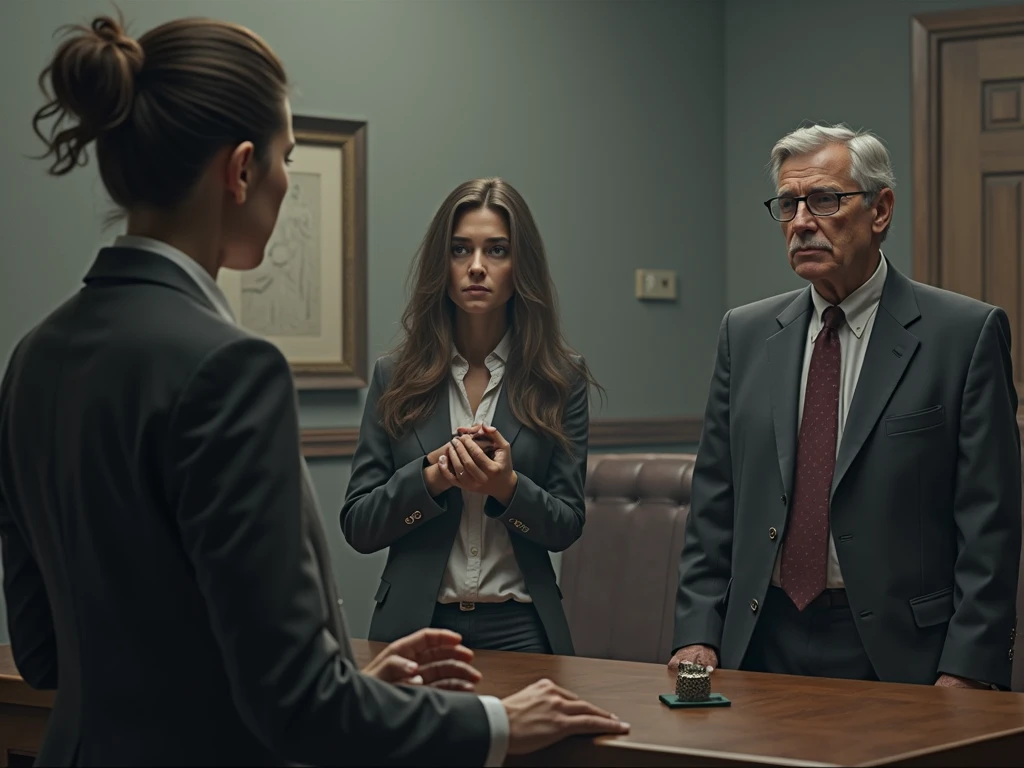
I sat stiffly across from them, 36 years old, and suddenly feeling like the invisible child again. My hands trembled slightly under the table, fists curled in my lap. Mason wouldn’t meet my eyes. He kept staring at the envelope like it might vanish. My stepfather swirled his wine, lips pressed into a smirk. Then my mother turned to me. “And you, Elise,” she said coolly, “you were always too sensitive, too idealistic, not built for real life.” It stung more than I expected.
There were five of us there: my mother, Mason, my stepfather, the lawyer, and me. But I had never felt more isolated. She waved toward the man in the suit. “Let’s finalize everything.”
“Mom,” I said quietly. “Don’t do this.”
“You walked away, Elise,” she scoffed. “Left the firm to go teach in rural Peru, remember? What did that get you? A tent and mosquito bites.”
“You never asked why,” I said. “Not once.”
“Because it didn’t matter,” she snapped. “Mason stayed. Mason proved himself.”
“No,” I said calmly. “He played a role, one you desperately needed.” My mother rolled her eyes.
—
The Grandfather’s Clause
Then the attorney, **Mr. Lancaster**, a sharp-eyed man in his 60s, raised a hand. “Actually, before we proceed, there’s a clause you should all be aware of.”
My mother blinked. “What clause?”
He opened the folder. “The one your late father added quietly but legally binding.” Mr. Lancaster looked my mother squarely in the eyes. “There’s a sealed amendment to the trust. It was added 7 years ago at the direct request of your late husband, Mr. **Charles Renault**.” My chest tightened. My grandfather, the only one who ever believed in me, the only one who told me I had more resilience in my silence than most had in their loudest speeches.
“What amendment?” my mother snapped, her voice clipped with annoyance.
Mr. Lancaster calmly removed a faded document from the leather folder. “This was notarized during Mr. Renault’s final weeks. His instructions were explicit. It was to remain sealed unless an attempt was made to remove Elise from the succession line.” Her expression cracked.
“He had no such power!”
“He did,” Mr. Lancaster said evenly. “He retained 52% controlling interest in the Renault family trust until his passing, and that interest now has directives that supersede any recent motions.” Mason stiffened. My stepfather said nothing, his wine glass hovering midair.
Mr. Lancaster turned toward me. “Miss Elise, would you like to read it or shall I?” I shook my head slightly. My eyes were on Mason’s envelope, the same envelope meant to erase me. “Please read it.”
He unfolded the parchment slowly. “Should my granddaughter Elise Renault ever be deemed unsuitable by her family, I hereby grant her full governance and voting rights over my share of the Renault trust and its subsidiaries. This shall take effect immediately and shall supersede any previous provisions. Furthermore,” he continued, “no changes to estate ownership or family governance may be made without her written consent.”
Silence fell. Even the ocean beyond the window seemed to pause. “What the hell does that mean?” My mother barked.
Mr. Lancaster looked at her, then to me. “It means your daughter is now the majority controller of the trust. Nothing signed today will stand without her approval.”
My mother stood abruptly, her chair scraping the marble floor. “She’s unprepared! She has no experience with boardrooms or balance sheets!”
“Maybe not your kind,” I said, standing too. “But I’ve led. I’ve protected. I’ve created things that lasted.” I turned toward the attorney. “Let’s proceed. We have work to do.”
Mason’s eyes darted nervously. My stepfather looked away. My mother didn’t sit down. Instead, she froze as the gravity of power shifted away from her for the first time. She didn’t speak, but the tension in her posture told me everything. And that’s when I saw it. Something I never expected in her eyes: Fear. Not of me, but of what it meant to lose control. Real, quiet fear. I softened my voice. “You can sit, Mom. This isn’t about revenge. All I ever wanted was a seat at the table. A voice. A chance.” Still, she didn’t move.
Then Mason broke. “Wait, this isn’t fair! Elise left. She went off to what? Build tiny houses?”
“I built safe housing for domestic abuse survivors,” I replied. “I helped veterans rebuild their lives. I didn’t run from this family. I ran towards something better.”
He scoffed. “That’s sweet and all, but that’s not how you run Renault Holdings.”
I smiled faintly. “Maybe not, but it’s how you rebuild its soul.”
If you felt that shift, the moment power returned to the one they tried to silence, don’t forget to subscribe to the channel. Because what Elise does next will not only redefine the legacy, it will challenge everything her family thought they controlled.
—
Unveiling the Truth
“I know enough,” I said, meeting Mason’s eyes, “to know you’ve been funneling money through a consulting firm owned by your old fraternity brother in Nevada.” His face went pale. My mother inhaled sharply.
“Elise, stop! This is family!”
“Was it family?” I asked, voice cracking slightly. “When you stood by while I was cut out? When you praised Mason while ignoring every sacrifice I made for all of you?”
“You never belonged in this world,” she murmured, eyes low.
“No,” I said, nodding. “You made that perfectly clear. But Grandfather thought differently.”
Mr. Lancaster cleared his throat. “Miss Elise, your grandfather didn’t just leave you voting shares. He left something else, meant to be opened at this exact time.” He opened his briefcase and retrieved a weathered leather box. Inside was a gold-plated compass. Beneath it, a folded letter addressed to me in my grandfather’s graceful script. My fingers trembled as I unfolded it.
“My dearest Elise, if you’re holding this, then your mother has done what I feared she might. Do not hate her. She was shaped by a world that taught her control is love. But you, my dear, were always different. Quiet strength, steady vision. You are the compass. Follow your own path and others will follow you. Grandfather.”
Tears brimmed, but I didn’t let them fall. I looked up. “Let’s proceed.”
As I signed the acknowledgment of my controlling interest, my mother finally spoke. “You think this makes you powerful?” she said, her tone sharp. “You think he gave this to you out of love? It was to spite me.”
I studied her, not as a daughter chasing approval, but as a woman seeing clearly. “No,” I replied. “He gave it to me because he believed I’d built something lasting.” And I walked out, decades of dismissal falling from my shoulders like dust. But peace didn’t wait on the other side of that door. War did, because power threatens those who’ve abused it.
—
The Battle for Renault Holdings
I had barely reached the corridor when I heard footsteps behind me. “Elise,” Mason called. I turned. His voice was casual, but his eyes weren’t. They were calculating. “You don’t have to do this,” he said.
“Do what? Shut me out? That’s the next move, right?”
“I haven’t made any moves,” I said evenly. “I simply stood up.” He smirked. “You think signing some papers makes you a leader? You don’t have the stomach for this.” My heart beat fast, but I stood firm. “I’m not here to prove myself to you. I’m here to lead with purpose. Something this family’s forgotten.”
He stepped closer, lowering his voice. “Two months,” he said, “You’ll crawl back. This company isn’t a school project. It’s a battlefield.”
“No,” I said quietly. “It’s a platform, and I’ll use it to elevate, not dominate.” He turned and walked away, but his clenched fists told me everything. This wasn’t defeat. It was preparation. And the days that followed proved it.
The whispers began. Elise Renault was back, and not as a visitor this time. Some called it hope, others a warning. I didn’t fire anyone. I didn’t call meetings. I listened. And what I discovered? Departments sabotaged each other. Promotions given for obedience, not merit. Exhaustion ignored. This wasn’t a company. It was a kingdom. And Mason had been crowned by chaos.
One afternoon, I walked into the breakroom. Conversation stopped. “Please,” I said, gently, lifting my hand. “You’re on break. Sit. Eat.” A custodian named **Rosa** slowly rose from her seat. “We weren’t allowed to sit if Mr. Mason walked in.” I paused, then shook my head. “That changes today.” Her face softened in a way that broke my heart a little. She sat back down, and so did the rest.
That night, I stayed late. The building emptied out, but I stayed alone under fluorescent lights, diving into the shadows Mason left behind. Three budget discrepancies, one illegal contract with a shell vendor, and a list of six employees terminated after raising ethical concerns. This wasn’t simple neglect. This was decay. If I didn’t act fast, I wouldn’t just inherit a mess. I’d be blamed when it collapsed.
The next morning, Mason stormed into my office, a smug grin hidden behind his rage. He slapped a folder down on my desk. “So, you want the CEO seat?” He hissed. “Let’s see how long you last.” I opened it. Green screenshots, emails, photos, all falsified. “These are fake,” I said, flipping through calmly. “Can you prove it?” He smirked. I met his eyes. “You really willing to burn everything just to destroy me?”
“I want what’s mine,” he said. “You are never supposed to be in this room.” I stood calm, firm. “I don’t want a throne, Mason. I want to fix what you broke.” He sneered. “You see healing. I see weakness.”
Then he turned and walked out, confident that I’d crumble. And that’s when I understood: this wasn’t sibling rivalry. This was war. But I had something Mason didn’t: The truth. Still, within 48 hours, the headlines hit like hammers. “New CEO tied to misused charity funds. Power struggle at Renault Holdings. Elise Renault: Unqualified heir or silent saboteur?” It didn’t matter that none of it was real. The internet didn’t wait for fact. My inbox blew up. Shareholders panicked. My phone didn’t stop buzzing. I’d barely begun, and already the narrative was spinning out of control. I told myself to breathe. That the truth would hold. But alone that night, curled on the couch in my office, I cracked. Not dramatically. Just quiet sobs into my sleeve. I wasn’t crying because people believed the lies. I cried because for a moment I believed them, too. Maybe I wasn’t enough. Maybe my grandfather had been wrong.
Then came a soft knock. I wiped my eyes, cleared my throat. “Come in.” The door creaked open. Rosa stepped in with a paper cup of tea. “I thought you might need this.”
“You didn’t have to,” I whispered.
She sat beside me. “You looked like you did. No one ever brought me anything when I cried in this room,” she added. “Maybe it’s time someone breaks the cycle.” Her words settled deep into my chest. “Thank you,” I said softly.
She looked me in the eye. “Miss Elise, do you want the truth about your family?” I hesitated, then nodded. “I’ve worked here 28 years,” she said. “I’ve seen everything they try to hide.” I stayed silent, throat thick. “You always looked people in the eye,” she said gently. “That’s why I believe in you.”
“Why help me?” I whispered.
She smiled. “Because someone once helped me when no one else did. And because this company doesn’t need another king. It needs a healer.”
—
Reclaiming the Legacy
The next morning, I entered the boardroom with steady calm. They were already there. Dozens of polished shoes, impatient eyes, and voices sharper than the suits they wore. I let them speak first. Accusations, doubts, demands for resignation. One shareholder threatened a lawsuit if I didn’t step aside with grace. When the room finally quieted, I stood. “If anyone here can prove those documents are authentic,” I said clearly, “I will resign today.” Silence. Then I slid a stack of originals across the table. Audit trails, financial inconsistencies, side payments buried in consultant contracts. Mason’s fingerprints were everywhere. I clicked the remote. The projector lit up. Security footage filled the screen: Mason entering the finance wing after hours, accessing a locked terminal, plugging in a USB drive—the timestamp. The same hour the falsified documents were created. No one said a word.
“Truth matters,” I said. “But I didn’t come here to destroy my brother. I came to rebuild what he compromised.” I turned to the firm’s legal counsel. “My grandfather didn’t choose me because I was flawless. He chose me because I still believe people can change, even the ones who’ve hurt us most. I won’t press charges,” I continued. “But Mason is suspended pending a full internal investigation.”
There was a long stunned pause. Then **Mr. Halpern**, a gray-haired former board member, stood up slowly. “I misjudged you,” he said. “I thought you were too soft for this, but today you reminded me why we started this company. It wasn’t about power. It was about people.” The energy in the room shifted. No cheers, no applause, just quiet recognition.
Mason never returned. But 2 days later, an envelope appeared on my desk, handwritten. “Elise, I don’t expect forgiveness. I didn’t just want the company. I wanted to be seen. I always believed you got the love. I never did. Maybe you just earned it differently. Mason.” I folded the letter and placed it beside my grandfather’s compass. Not every battle ends with a sword. Some end in silence, and some victories are born not from rage, but grace.
The office felt different now: not quieter, more present, awake. A month had passed since that morning in the boardroom. The press retracted the false accusations. Some called it luck, but those who mattered knew better. It wasn’t luck. It was integrity. Holding the line when it would have been easier to walk away.
There was only one voice I hadn’t heard: my mother’s. No calls, no messages, not even legal threats. I figured she was off somewhere rewriting the story in her own favor. Until one quiet Sunday, I stepped into my office. And she was there, sitting across from my desk. No makeup, no posture, just tired eyes and folded hands. “I had to see it,” she said.
“See what?”
“That you didn’t burn it down.” I didn’t reply. She looked older than I remembered, smaller even, like she had finally run out of fight. “You were right,” she said softly. “About Mason, about me, about how we lost sight of what mattered.” I said nothing. I wasn’t ready to make it easy.
She reached into her purse and handed me a photo. Me and Grandpa, I was 12, covered in paint. He was laughing. “He said you’d change everything,” she whispered. “I just didn’t want to believe it.”
“If I did,” I said gently, “It’s only because he believed in me.” She nodded. “I came here to say something. Something I should have said a long time ago.” She looked up, meeting my eyes. “I’m sorry, Elise, for everything.” And for the first time, I didn’t feel small anymore. But healing doesn’t start with blame. It starts when someone chooses to break the cycle. So I nodded. “Thank you.”
“I just needed to say it before I ran out of time,” my mother whispered. “Then don’t,” I replied softly. “Fix what you can. It’s not too late.” She didn’t answer, just gave me a long, quiet look and left.
Two weeks later, Rosa stepped into my office with a worn folder in her hands. “What’s this?” I asked.
“A list of everyone your mother pushed out for speaking up,” she said gently. “Figured you’d want to know.” I opened it, read every name. Then we sent out letters, each one a simple invitation to come back. No explanations needed. Not because I was trying to rewrite the past, but because legacy isn’t about bloodlines. It’s about what people feel when you leave the room.
Months passed. Renault Holdings didn’t become glitzier, but it grew warmer. Mason never returned, but we met for coffee once. No apologies, just quiet understanding. Maybe that was enough. My mother stayed distant, but one afternoon, a receipt arrived: a large donation in my name to the housing nonprofit where I once worked. No message, no name, just her way of saying she was trying. And somehow that was enough because I didn’t chase revenge. I earned something deeper. Peace, respect, a future that couldn’t be taken. Now when I enter the boardroom, I don’t hear whispers. I hear footsteps of people who walk with me, not behind me. Because someone once said I was nothing, and I proved them wrong without becoming them.
—
If my story moved something in you, drop a comment. Tell me what part stayed with you. And if you’re walking your own quiet road back to strength, subscribe because the world needs more voices like yours.