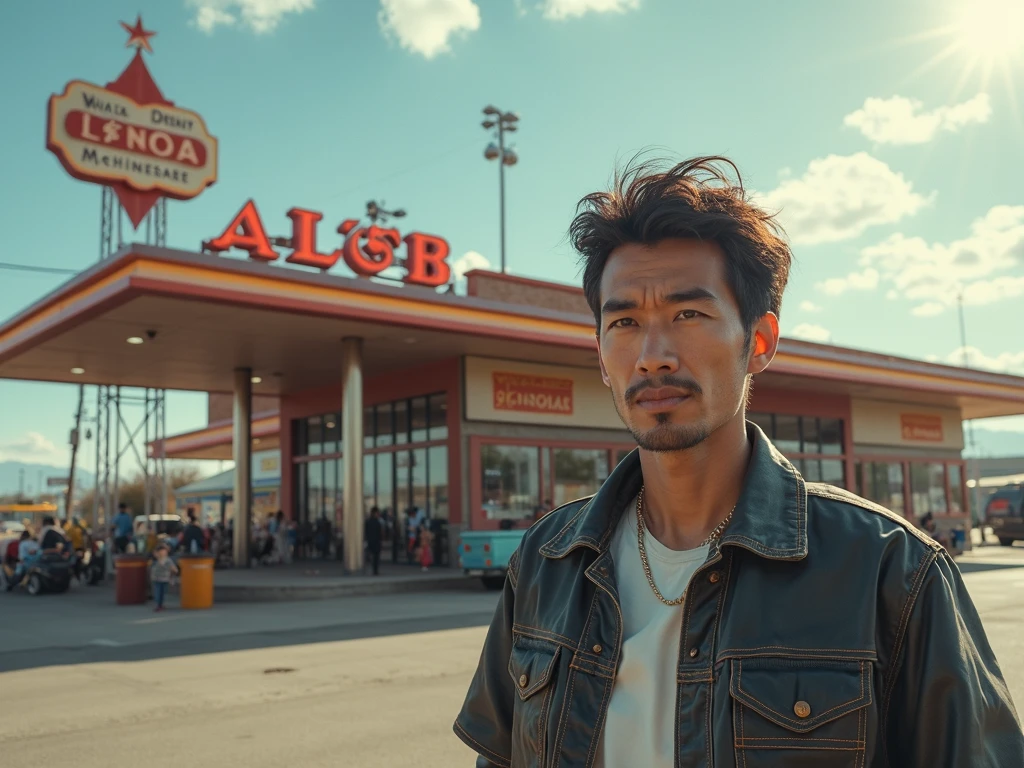
The old red star fuel sign groaned in the wind as I stepped onto the cracked asphalt. The keys cold and heavy in my hand. Briggs Fuel & Service. My dad’s pride and joy. And now, according to my brothers, my worthless inheritance. The peeling paint, the rusted awning, the flickering fluorescent “Open” sign that hadn’t lit up in years. It looked like the kind of place someone should have condemned. But to me, it was home. It was where I spent my childhood, where I learned the value of hard work, and where I felt closest to my father. My name is **Samantha Briggs**. I’m 34 years old, and this is how my father’s so-called junkyard gift changed everything.
The Reading of the Will
I could still hear my brothers’ laughter echoing from yesterday’s reading of the will. **Nathan**, the hot-shot real estate mogul, and **Eric**, the high-powered Manhattan litigator, both decked out in suits that probably cost more than what they assumed the property was worth. “To my daughter Samantha,” the lawyer had read. “I leave Briggs Fuel and Service, including all land, contents, and records.”
Nathan actually snorted. “Dad’s old gas station, perfect for the family mechanic.” Eric had offered a polite but smug smile. “Well, Sam, at least now you can finally run your own garage, but I’d sell quick. The place lost all its value when they built the bypass.” Their smugness had wavered slightly when the lawyer continued. “To my sons, Nathan and Eric Briggs, I leave the remainder of my liquid assets to be divided equally.”
Dad wasn’t poor, but he wasn’t swimming in cash either. The liquid assets totaled maybe $120,000 each. Not that it mattered to my brothers. They were already rich. They’d left town after college, leaving me behind to help Dad run the station while I worked nights to finish my degree in mechanical engineering. They hadn’t seen what I had. The unpaid bills, the quiet pride, the long days Dad worked to keep everything afloat after Mom passed. They hadn’t stayed to help him, to see how much this place meant to him. Now standing in the early morning light, the cold Wyoming wind cutting through my jacket, I felt like I was right where I needed to be.
A Walk Down Memory Lane
Dad bought this place in 1978. I learned to change oil before I was tall enough to reach the counter. Did my homework in the office while Dad patched tires, fell asleep to the sound of ratchets, and the smell of diesel. The key slid into the lock like it had done a thousand times before. The bell above the door jingled, soft, familiar. Inside, nothing had changed. Dust danced in the sunlight. Two empty coffee mugs sat on the counter. Yesterday’s newspaper still lay folded open to the crossword, half finished, just like Dad always left it. “Life’s a puzzle, Sammy,” he used to say. “You just have to figure out which ones are worth solving.”
I ran my hand over the Formica counter, worn smooth by decades of elbows and conversation. Dad knew everyone in town. He kept track of payment plans in a battered old ledger. Never switched to computers. Not because he didn’t understand them. He just didn’t trust them. The back office smelled like motor oil and peppermint gum. Dad’s desk was still a monument to controlled chaos. Old invoices, a few hand-labeled folders, a faded calendar from 3 months ago with appointments jotted in his blocky handwriting. I sank into his worn leather chair, its grooves perfectly molded to him, and now to me. I wasn’t sure what I expected to find. Closure, maybe? Grief, but mostly I just wanted to feel like he was still here. And then I opened the bottom drawer, the one with the false back, and everything changed.
—
The Hidden Clue
The smell of motor oil and stale coffee still lingered in the air. And for just a second, I could almost hear Dad’s voice in my ear. “Check everything twice, Sammy. The devil’s in the details.” Opening the desk drawers, I began the long, quiet task of sorting through nearly 45 years of records. Dad had kept everything from fuel receipts to customer invoices, even handwritten thank you notes from families he’d helped out over the years. Tucked between business licenses and equipment manuals, I found the original purchase agreement for the station, dated 1978. His handwriting was everywhere. It made me feel like he was still here, guiding me.
As I worked, I noticed a pattern. Certain documents were grouped together and marked with tiny red dots in the corners. Others had dates subtly underlined, some circled. My dad wasn’t careless, not even a little. Every detail had a purpose. Near the back of the drawer, I found an old photo album wrapped in a flannel shop rag. Inside were pictures I’d never seen before. Mom, pregnant with Nathan, standing beside Dad in front of the freshly painted station. It looked new then, like a dream just starting. But what caught my attention wasn’t what was in front of the station. It was what was behind it. In the background, partially obscured by brush and shadows, stood a strange metallic structure: tall, skeletal, and totally unfamiliar. I frowned. I couldn’t recall ever seeing anything like it behind the station. That whole area had been overrun with weeds for decades. Dad used to say we’d clear it someday, but we never got around to it.
I grabbed a flashlight from the back shelf and made my way outside. The sun had risen fully now, burning away the early fog that clung to the low Wyoming hills. The weeds were waist-high, thick, and tangled. But I remembered the old path, the way I used to sneak around back as a kid with peanut butter crackers and a book tucked under my arm. The structure was still there, hidden beneath a canopy of vines and time. It stood silent and rusted, but unmistakably real. A derrick, maybe 20 ft tall. My heart pounded. Could it be?
The Vultures Descend
But before I could get a closer look, I heard the crunch of gravel in the front lot. A sleek SUV pulled up next to my old Chevy truck. From behind the weeds, I could see Nathan climbing out, phone in one hand, sunglasses in the other. “Samantha,” he called out. “We need to talk about this place.”
I sighed, slipping the photo into my pocket and brushing the dirt from my jeans. Of course, he was here. As I stepped around the corner of the building, I saw both of my brothers standing near the SUV, looking wildly out of place in business casual and shiny loafers. “We’ve been talking,” James said, his tone already sliding into lawyer mode. “This place is a liability, between the environmental regulations and upkeep. It’s a burden. But we’re willing to make a fair offer. $25,000, more than reasonable considering…”
I crossed my arms. They’d flown in here like vultures, thinking I’d sign it all away for scraps. “Thanks, but no thanks,” I said flatly. “I think I’ll hang on to it for a while.”
Nathan’s jaw tightened. “Don’t be naive, Sam. You can’t run a gas station on your own. It’s a dinosaur. This land isn’t worth anything.”
“Maybe,” I said, fingers grazing the edge of the photo in my pocket. “But it’s mine.”
“$30,000,” James said. “Final offer. We’ve got the papers right here.”
I smiled genuinely this time, remembering Dad’s words about puzzles worth solving. “No, thank you,” I said. “Now, if you’ll excuse me, I’ve got work to do.” They left, tires spinning gravel across the lot, but I barely noticed. My mind was already racing back to the hidden derrick and the puzzle my father had left behind.
—
The Royalties File
That evening, after combing through hours of records, I finally found it. A dusty Manila folder marked with nothing but a red dot and one word written in Dad’s sharp block letters: Royalties. It was a document from 1978, stamped with one of Dad’s signature red dots. My hands trembled as I read the faded text. It was a geological survey of the property, specifically the back lot. According to the notes, the land had been flagged for unusual subsurface activity consistent with deep natural gas reserves. If this was real, if Dad had known all along, I needed to make some calls. But first, I had to check one more thing.
Moving to his desk, I ran my hands along its edges, remembering how Dad would sometimes sit there in silence, fingers tracing the corners like he was deep in thought. My thumb passed over a slightly raised spot on the back panel, warmer than the rest. I pressed. Click. A small safe popped open, hidden within the desk’s frame. Inside, a single envelope with my name written across it in Dad’s unmistakable handwriting. I opened it slowly, already blinking back tears.
“Dear Sammy, if you’re reading this, you’ve already started putting the pieces together. You always were the clever one, the only one who truly understood the value of patience and hard work. What you found out back isn’t just an old derrick. It’s proof. Proof of what I discovered the day I bought this station. Something I kept hidden, waiting for the right time. Your brothers will come after it once they realize its worth. Don’t let them. I’ve left you everything you need to protect what’s yours. The documentation is there. You just have to know where to look. Remember what I always said: The best things in life often look worthless to others. That’s what makes them precious. Make me proud. Love you always, Dad.”
By the time I finished reading, I was crying in the same chair Dad had once ruled this little office from. I didn’t feel alone. I felt trusted. That night, I drove into town and called **George Martinez**, Dad’s oldest friend and the county’s most respected environmental engineer. He’d known Dad for over 40 years. If anyone could confirm this, it was George. He sat back in his kitchen chair, his mouth agape as I laid the survey in front of him. “Well, I’ll be,” he muttered, running his hand over the page. “Your Daddy was one smart cookie. Samantha sat on this for decades and didn’t tell a soul.”
My thoughts were racing. “If this is right, if the tests are accurate, what are we talking about, George?”
The $50 Million Revelation
The next morning, we sat across from each other at the local diner, steam curling off our coffee cups. George had brought his iPad and was already pulling up satellite imagery. “See these patch patterns in the vegetation behind the shop?” he said, pointing to faint splotches of color. “That’s methane seepage. Classic indicators.”
I leaned in. “So, it’s real?”
He nodded, dead serious. “Your daddy’s property sits on top of one of the largest known natural gas pockets in the state. Conservative estimate? You’re looking at $50 million in extraction rights. Maybe more depending on current market demand.”
I felt dizzy. $50 million. No wonder Dad had stayed quiet. No wonder he didn’t trust anyone else with this. “Your brothers sniffing around yet?” George asked, eyebrow raised.
“Yesterday,” I said, “offered me 30 grand. Called it generous.”
George snorted. “Bet they’ll stop thinking it’s so worthless once they realize what you’re sitting on. You need to get everything locked down now. Lawyers, mineral rights, permits before they start playing dirty.”
Right on cue, the diner door chimed. Nathan walked in, flanked by two men in tailored suits. When he saw me sitting with George, his smile disappeared. “Well, well,” he said, his voice dripping with charm. “Having breakfast with Dad’s old pal. How quaint.”
“Nathan,” I replied coolly, setting down my mug. “Didn’t expect to see you here.”
“Just showing some colleagues around,” he said, gesturing to the two men. “These gentlemen are from Clayton Development. They’re very interested in revitalizing this area.” George shot me a warning glance. We both knew that name. Clayton Development was known for aggressive land grabs, especially where mineral rights were involved. “Sorry to interrupt,” one of the suits said with a smirk. “Mind if we ask you a few questions about your property? We’d love to discuss some opportunities with you, Miss Briggs.” one of the Clayton men said smoothly.
“Perhaps in a more private setting.”
“Samantha’s not interested,” George cut in, gathering the documents from the table. His tone left no room for debate.
Nathan’s practiced smile vanished. “This isn’t your business, old man.”
“Actually,” I said, rising from the booth and tossing a $10 bill onto the table. “George is exactly the kind of person I trust, and you can tell your colleagues, I’m not selling. Not now. Not ever.” I walked out before they could respond, my boots crunching the gravel. As I reached my truck, I heard Nathan’s voice behind me. “You can’t develop that land yourself, Samantha. You don’t have the connections, the money, the expertise.” But I was already sliding into the driver’s seat, mind racing. If Clayton Development was involved, Nathan knew or suspected the truth about what lay beneath the back lot, which meant I had to move fast.
—
Unraveling Dad’s Strategy
Back at the station, I dove into Dad’s files with renewed urgency. The documents marked with red dots formed a trail carefully laid out across decades: property surveys, land ordinances, geological evaluations, environmental impact assessments. My father hadn’t just stumbled across a gas deposit. He’d planned for this quietly. Then I found them. Letters dated 1978, just months before Dad bought the station. Correspondence with a retired geologist from the University of Wyoming. The findings were clear: deep natural gas deposits beneath the valley floor. The previous owner had no idea, but Dad had done the research, verified it himself, and made the deal of a lifetime. And then he’d spent decades buying up mineral rights from surrounding parcels. Small, cheap pieces no one cared about. It hadn’t been debt that cost him the lakehouse or the stocks. It had been strategy, investment.
My phone buzzed. “James, Michael told me about Clayton. Don’t be stupid. This is bigger than you. Let the professionals handle it.” I rolled my eyes and kept searching. In the back of the last filing cabinet, I found a locked steel box. The small brass key from Dad’s desk safe slid in perfectly. Inside: the mother lode. Original deeds, mineral rights documents, correspondence with the State Energy Commission, environmental certifications, and one more thing, a small silver thumb drive. I plugged it into the old desktop. It whirred to life, revealing years of saved emails and scanned letters. Dad had filed everything with the State Environmental Protection Agency, documenting his work to preserve the land. He wasn’t just protecting the secret. He was protecting the land and the town that depended on it.
Another text came through. “Michael spoke to Aunt Sharon. She agrees. You’re in over your head. Family meeting tomorrow, 10:00 a.m. Be there.” Same old Michael. Drag Aunt Sharon in. Assume I’ll cave under pressure. He didn’t know what I knew.
The Boardroom Showdown
The next morning, I walked into Michael’s high-rise office downtown. Everyone was there. Nathan, James, Aunt Sharon, two Clayton Development reps, and a wall of lawyers in expensive suits. “Samantha,” Michael said smoothly, gesturing to a seat. “We’re here to help you make the right decision. Clayton is prepared to offer you $500,000 for the station. That’s more than fair.”
I placed my briefcase on the table. “Actually,” I said calmly, “I have a counter proposal.”
James laughed. “A counter proposal? You don’t even know what you’re sitting on.”
“You mean the natural gas?” I replied quietly but clearly. “Yeah, I know exactly what I’m sitting on.” The room fell silent. Nathan’s face turned the color of clay. “How did you—”
“Dad told me,” I said, opening the briefcase. “Not directly, but he left the pieces for me to put together. While you two were off building careers in cities you barely live in, he was building something here. And he knew I’d be the one to finish it.”
One by one, I laid out the documents: mineral rights, survey reports, state approvals, a full extraction plan that met all environmental and safety regulations. The Clayton reps leaned forward, suddenly attentive. “This isn’t just a gas station,” I said. “It’s a legacy, and I’m not selling it for scraps.”
“This is family property,” Aunt Sharon argued, her voice rising. “Your brothers should have a say.”
“Actually,” I said, sliding one final document across the table. “They don’t.” Everyone leaned in as I unfolded it. A legal trust agreement, notarized and signed. Dad transferred full ownership to a trust in my name 5 years ago. “It’s all completely legal and binding, right, James?”
James grabbed the document, scanning it furiously, his expression darkened. “This is ironclad,” he admitted, voice low. “So here’s my counter proposal,” I said, turning to the Clayton executives. “I retain full control over the property and all rights to the deposit. You provide the infrastructure and extraction expertise. We split the profits 70/30 in my favor. But there’s a catch. I want ironclad commitments to local job creation, transparent environmental protection practices, and community investment. Non-negotiable.”
“That’s ridiculous!” Nathan barked. “You can’t actually believe she can—”
One of the Clayton executives cut in. “And it’s a fair proposal considering the scope and value of what’s beneath that land.” He turned to me with a measured nod. “We’d be open to discussing terms.”
Four hours later, I walked out of Nathan’s office with a signed preliminary agreement in my hands. The Clayton team would draft final contracts over the coming weeks, but the foundation was laid. I’d retain control, just as Dad intended, while leveraging their resources to turn potential into reality. As I reached the elevator, James jogged up behind me. “Samantha, how long have you known about the gas?”
“Yesterday,” I said honestly about Dad trusting me with all this. “My whole life.” The elevator doors opened. I looked at both of them. “You know, you could have visited more. Asked about the station. Asked him. There was more going on here than oil changes and pump repairs.”
“We had careers to build,” Nathan muttered, joining James.
“So did I,” I replied. “But I made time for Dad, for this place, for the people here. And somehow it all worked out exactly the way it was supposed to.”
—
Briggs Energy Corporation
That evening, back at the station, I sat in Dad’s old chair again. The desk was just as I left it, except now I saw more clearly. I glanced at the crossword puzzle he’d left behind. Funny, I hadn’t noticed it before, but he’d filled in more of it than I thought. In the margins, in his steady handwriting, he’d written, “Sammy, the real puzzle isn’t finding treasure. It’s becoming the kind of person who deserves to find it.” That line stayed with me.
Over the next year, Briggs Fuel and Service became something entirely new: **Briggs Energy Corporation**. We restored the original building, preserving it as company headquarters. The derrick was cleaned up and surrounded by state-of-the-art equipment, and a clean extraction facility went up on the back lot. Built with local contractors and staffed by people from our own community, the project brought jobs, real ones, and hope. We started a scholarship fund for local high schoolers interested in environmental science. Dad would have loved that.
Nathan and James eventually came around after I offered them seats on the board, non-controlling, of course. They began showing up more often. Sometimes the best way to repair a family is to give them a chance to earn what they once expected. Every morning, I still get to the station early. The old red star sign stands tall next to our new logo, a symbol of past and future working side by side. **Joe**, the son of Dad’s first employee, now runs the service side. He still greets every customer by name, just like Dad did.
In my office, I keep two things above all others: The original geological survey that started it all, and a framed quote from Dad’s letter. “The true value of anything—property, business, family—isn’t in what others think it’s worth. It’s what you’re willing to invest in it. Time, faith, love. Those are the real assets that appreciate.”
Last week, a little girl wandered into the office with her dad. She ran her fingers along the old desk, eyes wide. “My dad built this company right here,” I told her. “He taught me that the best treasures are the ones hiding in plain sight. You just have to know how to look.” She nodded like she understood. And as she left, I couldn’t help but wonder if somewhere down the road, she’ll remember that moment when it’s her turn to see value where others only see dust.
—
Thank you for joining me on this journey. A journey that began with a dusty gas station and a set of keys most people would have thrown away. If my story spoke to you, I want to ask for something simple: Support people like me. Support the ones who stay behind, who keep things running quietly, who believe in the value of legacy when the world only sees dollars and cents. Leave a comment if you’ve ever been underestimated or told your dream wasn’t worth it. I’d love to hear how you proved them wrong or how you’re working toward that day. Your voice matters. And if you saw something in my story that reminded you of yourself, I hope you hold on to that spark. Not every treasure comes with a spotlight. Sometimes it’s tucked inside an old filing cabinet or a promise made between a father and daughter. The world might laugh at the idea of an old gas station, but I’m living proof that the right hands can turn overlooked places into something extraordinary. So, here’s my advice: Don’t be afraid to bet on yourself. Be patient. Pay attention. And when everyone else walks away, be the one who stays. Because sometimes that’s where the real magic begins.