Growing up, I was never the favorite. I’m 29 now, and my older sister Amelia (31F) has always been the star of the show. If I dropped a plate, it was a catastrophe. If Amelia broke something, well, accidents happen, and she didn’t mean it. That’s just how things were in my family. My parents always had a soft spot for her. Meanwhile, I was the one blamed for anything that went wrong. But what started as little things spiraled into something much darker as we grew older.
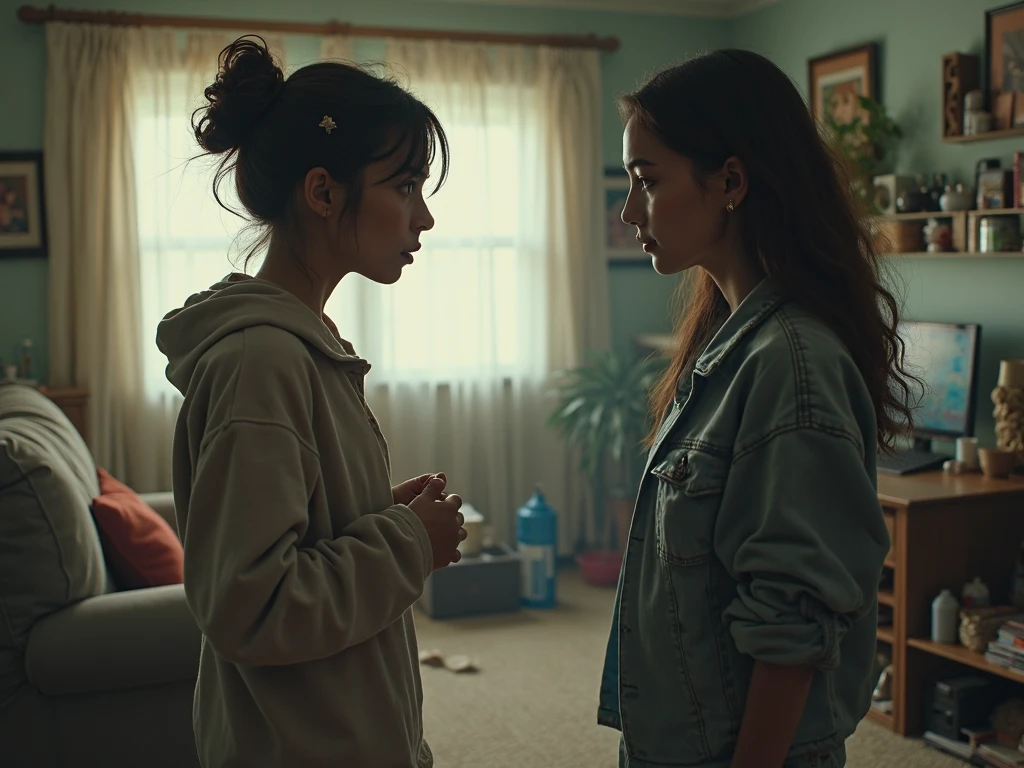
Childhood Manipulation and Gaslighting
When I was around eight, Amelia started getting clever about how to make me the fall guy. One time she snuck into my room and took a $20 bill I’d been saving from Christmas. Then she stuffed it into my backpack and told our parents she saw me taking it from my mom’s purse. Of course, they believed her. Why wouldn’t they? I was the troublemaker, after all. Mom went through my bag, found the money, and grounded me for a month. I didn’t even know how it got there until Amelia smirked at me later and said, “You’re too easy.”
These setups became a regular thing: broken vases, stolen lunch money, missing homework. If Amelia could pin it on me, she did. By the time we hit our teens, she had perfected the art of gaslighting. She’d stage arguments where she’d stay calm and composed while I, frustrated and confused, would end up shouting, “That’s not what happened!” Of course, to my parents, this just made me look like I had anger issues.
Adulthood and the Latest Incident
Fast forward to adulthood, and Amelia hasn’t changed. If anything, she’s gotten worse. She has a knack for spinning stories that make her look like the innocent victim and me, the unhinged aggressor. A few years ago, during a family barbecue, Amelia made up this story about how I exploded at her over something trivial. It never happened, but by the time the night was over, my mom was looking at me like I had just kicked a puppy.
The latest incident, though, it was the last straw. A few months ago, we had a family gathering at my parents’ house. I thought everything went fine. I kept my distance from Amelia, helped clean up after dinner, and didn’t raise my voice once. But the next day, I got a call from my mom, furious. She said Amelia told her I had a meltdown and screamed at her for no reason. Apparently, Amelia was so shaken that she didn’t feel safe staying in the house that night. None of this happened. Not a single word of it. But once again, my parents believed her without question.
After that, they stopped returning my calls. My dad blocked me on social media. My mom sent me a long text about how I needed to work on myself and seek help for my anger. It was humiliating. I tried defending myself, but nothing I said mattered to them. Amelia’s word is gospel. The worst part? It didn’t stop with my parents. My cousin Sophie reached out to me recently saying she heard from Amelia that I was “dangerously unstable” and needed professional help. Amelia has been spreading this narrative to anyone who will listen. She’s painted me as this ticking time bomb, and I’ve been powerless to stop it.
I live alone now in a small apartment a few towns over. I have a steady job and a handful of close friends who know the real me. They’ve been my rock through all of this, especially as my family keeps pulling further away. But it’s exhausting having to constantly explain myself, to reassure people I’m not the monster Amelia makes me out to be. It’s like fighting a battle where the other side has all the weapons, and I’m just standing there empty-handed.
A Turning Point: Gathering Evidence
A few nights ago, I was scrolling through my old messages with Amelia, trying to figure out where it all went wrong. That’s when I realized there were patterns: times when she contradicted herself, times when she slipped up and accidentally admitted to her lies. I started taking screenshots, saving emails, organizing everything into a folder. If no one was going to believe me based on my word, then I’d show them proof. It’s not just about clearing my name anymore; it’s about getting my life back. My cousin told me Amelia’s been telling people I’m a danger to myself and others. That’s not just a lie, it’s defamation.
I’ve decided I’m not letting her ruin me any further. If she wants to play dirty, fine. But this time, I’m fighting back. I’ve already started documenting everything: every text, every voicemail, every interaction with my family. I’m also looking into getting a recording device for when I have to deal with Amelia in person. My friends are supportive, even suggesting I talk to a lawyer if it comes to that. One even joked that I should write a tell-all book about how to survive a sibling sociopath.
And then, like a flashback, I remembered something from when we were kids. I was 14, and Amelia had convinced my parents I was stealing money from their wallets. I wasn’t, of course, but I remember thinking back then, “How do I prove something I didn’t do?” That’s exactly how I feel now. But this time, I have a plan. The first step is reaching out to my parents one last time to try and get through to them. If that doesn’t work, I’m taking this public. I’m not sure where this will end, but I know one thing: I’m done staying quiet.
Update One: Taking Control
After my last post, I decided it was time to stop being reactive and start taking control of the situation. Amelia had spent years controlling the narrative, but now I was going to rewrite it with cold, hard evidence. The first step was preparation. I bought a small recording device online, something discreet that could easily fit in my pocket. It wasn’t cheap, but I figured if it could capture Amelia in the act, it would be worth every penny. I knew I couldn’t rely on just my word anymore. People believe what they see and hear, and I needed proof.
With that set up, I reached out to my cousin Sophie. She’s one of the few family members who still talks to me, though she’s also close with Amelia. I figured she might know what Amelia’s been saying about me recently. When we met up, Sophie hesitated at first, but after I told her everything that’s been going on, she admitted Amelia had been bragging about how “easy” it was to make me look bad. That was the word she used: “easy.” Sophie didn’t seem entirely comfortable with the whole thing, but she confirmed that Amelia had been spreading stories about me losing it at family events. She also mentioned that Amelia has been telling people I need professional help, which explained why even distant relatives had started acting weird around me.
After that conversation, I knew I had to get more organized. I went through old text messages, emails, and anything else I could find, saving screenshots and categorizing them into folders. It was time-consuming, but it felt like progress. I found messages where Amelia contradicted herself, texts where she tried to guilt-trip me, and even emails where she played the victim after clearly instigating an argument. It was all there, written in black and white.
The next piece of the puzzle fell into place by accident. A few days later, I ran into Amelia at a mutual friend’s birthday party. I didn’t know she’d be there, and I almost left when I saw her. But then I realized this was an opportunity. I turned on the recording device in my pocket and stayed. Amelia wasted no time approaching me. She had that smug look on her face, the one she always gets when she knows she’s in control. She made a few snide comments, subtle enough that anyone listening might think she was just teasing, but pointed enough that I knew exactly what she was doing. Then, as if to rub salt in the wound, she said something along the lines of, “It doesn’t matter what you say, everyone believes me, not you.” I didn’t respond, just let her talk, knowing the recorder was capturing every word.
After the party, I started seeing vague, dramatic posts on Amelia’s social media. Things like, “It’s exhausting having to deal with toxic people who can’t take responsibility for their actions,” and “Some people will never change no matter how much help they need.” It was obvious she was talking about me, but of course she didn’t name names. She never does. It’s part of her game, keeping things just vague enough that no one can call her out directly. Then an aunt I hadn’t spoken to in months called me out of the blue. She started the conversation by asking how I was doing, but it quickly turned into her expressing concern about my mental health. Apparently, Amelia had been talking to her too. The lies were spreading further than I realized.
That’s when I decided to test Amelia. I told Sophie, knowing she’d pass it on to Amelia, that I was considering taking a job out of state. I made it sound like I’d already started packing. Sure enough, the next day, my mom called me, furious. She accused me of being selfish for planning to move without discussing it with the family, even though we hadn’t spoken in weeks. That confirmed it: Amelia had leaked the fake story almost immediately.
As I kept digging, I started noticing a pattern in Amelia’s behavior. It wasn’t just about me; her lies extended to other parts of her life too. On her social media, she claimed to have a high-ranking position at work, but I remembered her complaining last year about being passed over for a promotion. She also posted photos from a business trip that I’m pretty sure were taken during a vacation with her friends. The more I looked, the more I realized lying wasn’t just a tactic for her; it was a lifestyle. Feeling emboldened, I decided to consult a lawyer. I wasn’t sure if Amelia’s actions could be considered defamation, but I wanted to know my options. The lawyer was cautious, saying defamation cases are tricky, but she agreed that I had a strong case if I could prove Amelia’s lies had damaged my reputation.
Meanwhile, my Reddit post was gaining traction. The support I received was overwhelming. People shared their own stories of manipulative family members and offered advice on how to gather evidence. Some even suggested going completely no contact with my family, but I wasn’t ready for that yet. Not until I exposed the truth. As I worked through my plan, I stumbled upon something big: a secret about Amelia that could change everything. I’m not ready to share the details yet, but let’s just say this might be the key to turning the tide.
Update Two: Financial Deception Exposed
After my last update, things escalated quickly. The fake story about me moving out of state confirmed Amelia was leaking information, but that was just the beginning. I hadn’t expected what came next: uncovering something that went far beyond her lies about me.
It started with Sophie, my cousin. We were chatting again when she mentioned something offhandedly about Amelia helping out my parents financially. That caught my attention because I knew Amelia’s job wasn’t exactly stable. Sophie went on to explain that Amelia had been telling people she was covering bills for our parents, claiming I wasn’t helping at all. She even showed me a screenshot of Amelia complaining to another relative about being the “only responsible one.” That didn’t sit right with me. Curious, I started digging.
My parents are usually private about money, but I remembered seeing my mom’s email password written in an old notebook at their house during one of my visits years ago. It was still saved in my notes. I logged into her email and combed through the inbox. I wasn’t sure what I was looking for at first, but then I found it: a string of messages from Amelia to my parents claiming she needed money for “emergencies.” There were vague explanations about medical expenses and work-related costs, but they didn’t add up. Attached to one email were what looked like fake invoices for a car repair shop and a hospital bill. I Googled the hospital name; it didn’t even exist. I compared the dates on the invoices to Amelia’s Instagram posts; on the day she was supposedly bedridden from a medical emergency, she was posting selfies from a beach vacation.
That wasn’t all. Buried in the emails were bank transfer confirmations: my parents had sent Amelia thousands of dollars over the past 2 years. My stomach dropped. They believed her story so completely that they were financially supporting her, all while she painted herself as their savior to the rest of the family. I compiled everything: the emails, the invoices, and screenshots from her Instagram posts. Then I sent an anonymous email to my parents with the evidence. I didn’t include my name, just the facts.
Within hours, my mom called me, clearly upset. She accused me of fabricating the documents to get back at Amelia. My dad, on the other hand, was silent during the call, which told me he was starting to piece things together. The next day, I got a message from Sophie. Apparently, my parents confronted Amelia about the email. She denied everything, of course, and spun a wild story about how I must have hacked her accounts to fake the evidence. She even claimed I had been stalking her, which was absurd. But here’s the kicker: she called half the family trying to discredit me further. She said I was “spiraling” and needed help. A few relatives messaged me asking if I was okay. It was infuriating, but I kept quiet. I wanted to let her dig her own grave.
That opportunity came sooner than expected. Amelia called me, probably trying to provoke me into saying something she could twist. I kept the conversation calm, all while recording it on my device. At one point, she let her guard down and admitted she had “borrowed” money from my parents but said it wasn’t a big deal because they’re “fine financially.” That recording became the final piece of my growing arsenal of evidence.
Meanwhile, I spoke with my therapist about everything that had been happening. She had already been helping me navigate the emotional toll of Amelia’s behavior, but this time I asked for something more concrete. She agreed to write a letter confirming my mental stability, which directly contradicted the lies Amelia had been spreading. Armed with evidence, I decided to go public. I created an anonymous account and started posting screenshots of Amelia’s lies and manipulations online. I left out my name and family’s details, but the story quickly gained traction. People in the comments were shocked, and some even shared their own experiences with toxic siblings. The post went viral, and soon extended family members began reaching out, apologizing for believing Amelia. This was the tipping point. My parents, especially my dad, started questioning Amelia’s stories. My mom was still in denial, clinging to the idea that Amelia must have had good intentions, but as more relatives saw the posts and came forward with their own doubts, the cracks in Amelia’s facade began to show.
That’s when Amelia escalated. She threatened legal action, accusing me of defamation. What she didn’t know was that I had been consulting a lawyer since the beginning. My lawyer reassured me that the evidence I had was solid and that any case she tried to bring against me would likely backfire. Then came the moment of truth. My parents invited me to a family dinner, insisting it was time to talk. Amelia was there too, smug as ever, but I was ready. During the meal, I pulled out the recordings, emails, and screenshots, presenting everything to the room. It was like watching a movie: my dad’s face turned pale, my mom was speechless, and Amelia… she lost it. She accused me of setting her up, but the evidence was overwhelming. By the end of the night, my parents apologized. It wasn’t perfect, and I’m still skeptical of how genuine they were, but it was a start. Amelia stormed out, yelling that we’d all regret this. For the first time in years, the lies were out in the open, and Amelia’s web of manipulation had finally unraveled.
Update Three: Forged Communications and Public Fallout
After the family dinner where Amelia’s lies were exposed, I thought things would finally settle down. Instead, Amelia went into overdrive, doing everything she could to paint herself as the victim. Within days, my phone was flooded with messages from extended family. Some were confused, asking what was going on. Others were outright angry, claiming I’d orchestrated a public humiliation of Amelia.
It turned out Amelia had been busy. She called anyone who would listen, spinning a new narrative: I had planned the entire confrontation to destroy her reputation. She claimed I’d hacked into her accounts, manipulated her emails, and faked the recordings. To make it worse, she added that I’d been stalking her, showing up uninvited to events just to harass her. The audacity of it all was almost laughable, but it worked on some people who were already inclined to believe her.
My dad seemed to see through her act, but my mom wasn’t so sure. She told me Amelia had been crying non-stop, saying I’d ruined her life. Mom still clung to the idea that Amelia wouldn’t act this way unless she had a reason. It was exhausting watching my parents split into two camps: one starting to believe me, the other still trapped under Amelia’s spell.
The breaking point came at a cousin’s birthday party a week later. I wasn’t planning to go, but Sophie convinced me it was a good chance to show the family I wasn’t hiding. Amelia, of course, was there too. She didn’t waste any time. The moment she saw me, she started raising her voice, accusing me of being a stalker. She pointed at me and told the room I’d hacked her accounts to frame her. It was pure chaos. I stayed calm, knowing my recorder was running in my pocket. Let her dig her own grave. The accusations were so wild that even a few family members who had supported Amelia started looking uncomfortable.
After the party, I reviewed the recording—her tone, the dramatic accusations—it was all there. But before I could even decide what to do with it, I stumbled upon something even more shocking. I was going through old emails when I found messages from Amelia sent years ago, pretending to be me. She had forged entire conversations, sending rude and insulting emails to family members in my name. That explains so much: why some relatives had distanced themselves from me without explanation. The details she included in those fake emails were chilling; she even copied my writing style.
I compiled this new evidence and sent it to my parents. My dad was furious, finally seeing Amelia’s manipulation for what it was. My mom, though, hesitated. She claimed Amelia “must have had a reason” for doing what she did, as if that somehow justified it. I didn’t push her; the evidence spoke for itself.
That’s when Amelia escalated her legal threats. I received a cease and desist letter from her lawyer accusing me of harassment and defamation. My lawyer responded immediately, including copies of the evidence we had gathered so far. The response also included a counter-threat: if Amelia continued her campaign of lies, I would sue her for defamation and emotional distress. Sophie later told me that Amelia admitted privately she had no real case; she was banking on the legal threat scaring me into backing down. When that didn’t work, Amelia went silent for a while. But I wasn’t done yet.
Frustrated, I turned to Reddit again. I wrote a detailed post about everything that had happened, including screenshots of emails and recordings (with identifying details redacted). The post exploded, gaining over 50,000 upvotes in less than 24 hours. The comments were filled with people sharing their own stories of manipulative family members, some even offered advice on how to deal with Amelia’s latest smear campaign. But it didn’t stop there. Internet “sleuths” in the comments started digging into Amelia’s online presence. They found inconsistencies in her social media posts, pointing out how her job titles seemed to change depending on the platform. One user claimed to recognize Amelia and said she’d exaggerated her role at work, even lying about promotions. This revelation gained traction and caused serious problems for Amelia. Word got back to her employer, and she was reportedly called in for a meeting to clarify her position.
As more family members saw the Reddit post, the fallout spread. Some called Amelia directly, demanding explanations. Others reached out to me, apologizing for believing her lies. Amelia’s carefully constructed image was falling apart, and she couldn’t control the narrative anymore. Eventually, even my mom had to confront Amelia. The mounting evidence was impossible to ignore. Amelia broke down, accusing me of “ruining her life” and claiming she only lied because she felt “pushed into a corner.” My dad told her to stop making excuses, but my mom still tried to comfort her. It was frustrating to watch, but at least the truth was finally out in the open.
While it felt good to be vindicated, the entire process was draining. The constant calls, messages, and emotional toll were overwhelming. Even with the support of Reddit and my friends, it was hard to keep going. But I wasn’t giving up. Amelia’s meltdown made me wary; this wasn’t over yet.
Update Four: Escalation and Final Retreat
After my last update, Amelia’s behavior took a darker turn. With most of the family now siding with me, she started doubling down on her lies, claiming the evidence I presented was fabricated with help from professionals. She told anyone who’d listen that I’d hired someone to hack her accounts and create fake emails. The story was absurd, but Amelia has always been good at sowing doubt, especially among people who didn’t know the full story.
Then the anonymous messages started. I began receiving emails from burner accounts accusing me of being a manipulative liar. The messages were poorly written but detailed enough that I knew they had to come from someone close to the situation. A few of them included vague threats about ruining my reputation. It wasn’t hard to figure out who was behind them, but I needed proof. I reached out to a friend of mine who works in IT. With his help, we traced the emails back to an IP address associated with Amelia’s home network. That was the confirmation I needed. Armed with this information, I documented everything and filed it away. I didn’t respond to the messages, knowing Amelia was likely fishing for a reaction.
A few days later, Amelia made a surprising move. She sent me a long message claiming she wanted to “start fresh” and “put the past behind us.” She wrote about how much she missed our sibling bond and how hard it had been to see our family torn apart. It was so out of character for her that I immediately suspected ulterior motives. But I played along, agreeing to meet her in a public place. I made sure to bring my recording device to the meeting, just in case.
Amelia was overly friendly, trying to steer the conversation toward reconciliation. But as we talked, she slipped up. She started venting about how hard it had been for her to “keep everything straight” over the years and casually mentioned how easy it had been to frame me when we were younger. She laughed it off, saying it wasn’t a big deal because “no one got hurt.” The entire conversation was recorded.
After the meeting, I shared the recording with my parents and a few key family members. Amelia’s tone, the casual admission of guilt—it was undeniable. My dad was furious, and even my mom, who had been hesitant to fully believe me, finally apologized. Hearing Amelia’s own words had shattered any lingering doubts. I also shared the recording with Reddit, along with an update on the anonymous messages and the IP address trace. The thread blew up, gaining even more attention than my previous post. People were stunned by how far Amelia had gone to protect her lies. The comments were a mix of support and horror, with many users sharing similar stories of toxic family members.
Amelia’s world started crumbling fast. She deleted all her social media accounts within a day of the update going viral. Friends and family members who had supported her began cutting ties, and even those who tried to remain neutral distanced themselves. Amelia had always been good at controlling the narrative, but now she had no platform left to spin her stories.
Around the same time, a former friend of Amelia’s reached out to me. She had seen the Reddit thread and wanted to share her experiences. She sent me screenshots of conversations she’d had with Amelia, detailing how Amelia used to manipulate people in their friend group. It was the same pattern: lies, playing the victim, and turning people against each other. This friend also mentioned that Amelia had borrowed money from her under false pretenses and never paid it back. The new evidence further solidified Amelia’s reputation as a manipulator.
Most of the family sided with me, but a small group still clung to Amelia’s narrative, claiming she had been “bullied into a breakdown.” It was frustrating, but I decided not to focus on them. The truth was out, and that was enough for me.
Amelia’s next move was predictable: she announced to a few family members that she was leaving town. She claimed she needed to “escape the toxicity” and “start fresh somewhere else.” But most people saw it for what it was: an attempt to run from accountability. Meanwhile, Amelia quietly dropped all her legal threats against me. My lawyer advised against pursuing a defamation case, as Amelia was already discredited. He said there was no point in dragging things out further when I’d effectively won.
My parents issued heartfelt apologies for the years of enabling Amelia’s behavior and for doubting me. They’ve started making efforts to rebuild our relationship, but I’ve set firm boundaries. I’ll stay in limited contact, but I won’t allow them to bring Amelia back into my life again unless she takes full accountability for her actions—which, let’s be honest, isn’t likely to happen.
Reflecting on everything, I feel a strange mix of relief and exhaustion. For years, I lived under the weight of Amelia’s lies, constantly defending myself against her manipulations. Now the truth is finally out, and I’m free to move on. The Reddit community has been incredible, offering support and sharing their own stories. It’s comforting to know I’m not alone. For now, Amelia is out of the picture, and I plan to keep it that way. Whatever she does next, it won’t involve me.
Update Five: Peace and Healing
It’s been a few months since everything with Amelia blew up, and life feels like it’s finally settling into something close to normal. She’s been completely silent: no cryptic social media posts, no dramatic calls to family, nothing. From what I’ve heard through mutual family members, she’s keeping a low profile, which makes sense after everything that came to light. Even those who once sided with her have distanced themselves.
I focused on moving forward. Therapy has been a game-changer. My therapist has helped me unpack years of gaslighting and manipulation, and I’m finally starting to rebuild the self-confidence Amelia worked so hard to tear down. I’ve also been throwing myself into work and reconnecting with friends. It’s refreshing to spend time with people who know the real me, without the shadow of Amelia’s lies hanging over every interaction.
My parents have been making an effort too. After the last update, they started attending family therapy. It wasn’t an easy process; there were a lot of uncomfortable conversations about how their favoritism toward Amelia hurt me growing up. But for the first time, they’re acknowledging their role in everything. My dad has been especially proactive, apologizing directly and showing he wants to rebuild trust. My mom is trying, though she still struggles with guilt over enabling Amelia for so long.
Other family members have also reached out. Several apologized for believing Amelia’s stories and admitted they should have asked for my side before taking her word as gospel. It’s been bittersweet. On one hand, it feels good to have those bridges rebuilt. But on the other, I can’t help but wonder how different things might have been if they’d questioned her earlier. Still, I’m choosing to focus on the fact that we’re all moving in the right direction now.
The support from Reddit has been incredible. Sharing my story online was one of the best decisions I ever made. Not only did it help expose Amelia, but it also connected me with thousands of people who’ve dealt with similar family dynamics. Knowing I wasn’t alone gave me the strength to keep fighting. The viral attention even sparked discussions in my DMs about toxic relationships and how to navigate them. It’s been humbling to see how many people were inspired by my story to stand up for themselves.
I did hear through a cousin that Amelia is planning to move to a new city. Apparently, she’s telling people she wants a “fresh start” and plans to “turn over a new leaf.” Whether that’s true or just another angle to gain sympathy, I don’t know, and frankly, I don’t care. Her decisions no longer affect me, and that’s a freedom I never thought I’d have. That said, Amelia did reach out one last time. I got a cryptic email from her a few weeks ago. It was half an apology, half a blame game. She wrote about how hard things have been for her and how she hopes I can forgive her someday, but she also accused me of escalating the situation and dragging the family into “unnecessary drama.” I didn’t reply. I’ve made it clear to my parents and anyone else who asks that Amelia is not welcome in my life unless she takes full accountability for her actions—and even then, I’m not sure I’d want her back.
Family gatherings have resumed without Amelia, and honestly, they feel so much lighter now. There’s an emphasis on open communication, and I’ve noticed my parents making an effort to include me in decisions and listen to my perspective. It’s not perfect; healing this much damage will take time, but it’s progress. For the first time in years, I feel like I belong in my own family.
A journalist even reached out recently, interested in doing a piece on toxic family dynamics. While it was tempting, I decided not to pursue it. I’ve shared enough of this story online, and while I’m grateful for the platform Reddit gave me, I don’t want to keep living in the past. This chapter is closed, and I’m ready to move on.
Looking back, the entire experience has been a painful but necessary lesson. I’ve learned the importance of boundaries, self-advocacy, and trusting my instincts. If something feels wrong, it probably is. And no matter how hard someone tries to rewrite your reality, the truth has a way of coming out. You just have to be willing to fight for it.
To everyone who supported me, shared advice, or simply took the time to read my story, thank you. You reminded me that I wasn’t alone, even when it felt like the whole world was against me. Knowing that my experience helped others stand up to their own toxic family members makes everything I went through feel worth it.
As for Amelia, I don’t know what her future holds, but whatever she does next, it’s not my responsibility. For the first time, I feel free to focus on my own happiness without her shadow looming over me. I’ll leave you with this: never doubt yourself when someone tries to twist your reality. It’s exhausting. It’s frustrating. And sometimes it feels impossible. But the truth will always win.