The blast of the school bus horn still echoed in my ears, a jarring sound that had shattered the quiet morning and left me seething. Dropping my daughter off at the stop sign had seemed like a logical, time-saving solution, a mere second’s delay. Yet, the bus driver’s aggressive reaction and my own defiant middle finger had escalated a minor inconvenience into a full-blown moral dilemma. I knew flipping them off was wrong, but their self-righteous anger felt utterly unwarranted. Was I truly the asshole here?
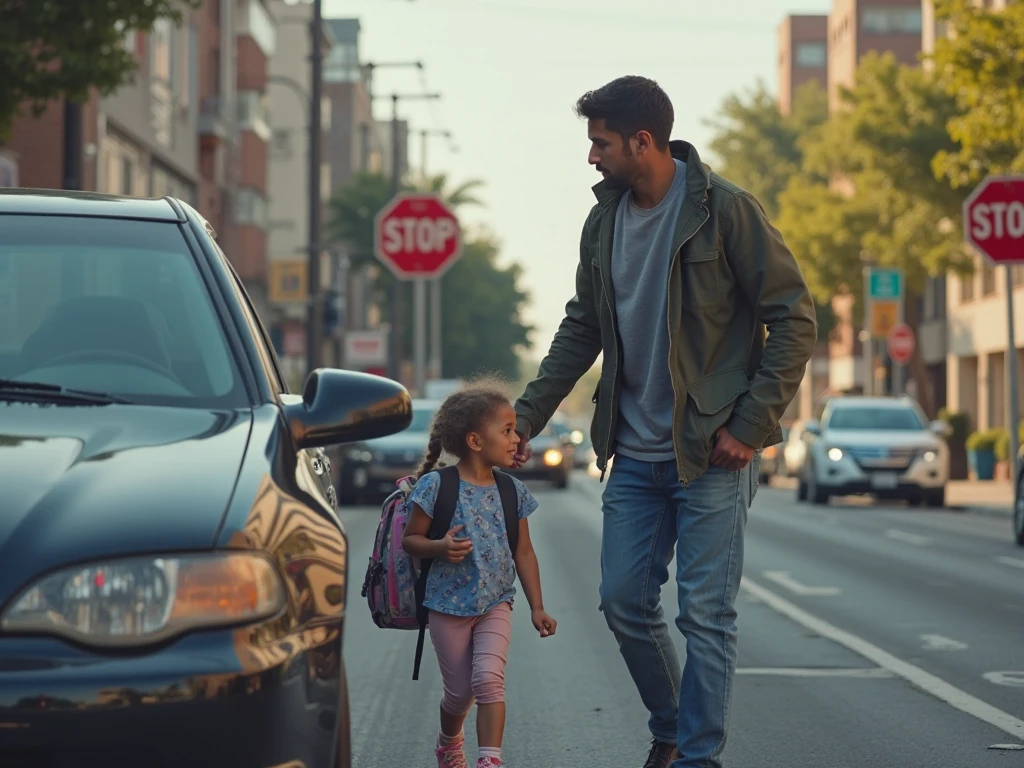
The next morning, I drove my daughter to school again, opting for the long, slow crawl through the official drop-off line. The memory of the previous day’s confrontation still prickled. As we finally inched our way to the front, my daughter pointed. “Look, Mom,” she said, “there’s our bus driver.”
I glanced over. The bus driver was out of their bus, talking to a police officer who was parked nearby, flashing their lights. My stomach tightened. Was this about me?
As I pulled away from the drop-off, I saw the bus driver walk over to a small group of parents standing on the sidewalk. They were pointing towards the intersection where I’d dropped off my daughter yesterday, their expressions grave. Curiosity, and a knot of dread, pulled me in. I parked a block away and walked back, feigning a phone call as I subtly approached.
“It’s just ridiculous,” one parent was saying, shaking their head. “They’re going to get someone killed.”
“I’ve seen it happen twice this week,” another chimed in, “kids just jumping out of cars at that intersection. It’s so dark, and with the glare from headlights…”
Then, the bus driver spoke, their voice clear and surprisingly weary. “I know I laid on the horn yesterday, and I probably shouldn’t have,” they said, looking at the parents. “But I’ve got a reason. A year ago, almost to the day, my own son was hit by a car. It was early morning, still dark, and he was crossing the street at an intersection just like that one. The driver didn’t see him. He’s still in physical therapy, and he’ll never walk quite right again.”
A collective gasp went through the small group of parents. The bus driver’s eyes were shadowed, filled with a raw pain that transcended mere aggression. “I took this route specifically,” they continued, their voice cracking slightly, “because it’s the one my son used to take. Every morning, when I see a kid jump out of a car at that corner, in the dark… it’s like watching it happen all over again. I know it’s not fair to the parents, and I’m trying to be better, but the horn… it’s just a raw, desperate reflex. I just want them to see the danger, to feel the fear I felt, so they don’t have to live through what I did.”
I stood frozen, the phone still pressed to my ear, listening to the crushing weight of their confession. The “aggressiveness,” the “self-righteousness” I’d perceived – it wasn’t about a power trip or a petty delay. It was the desperate, visceral scream of a parent haunted by trauma, a raw, protective instinct born from an unimaginable loss. My middle finger, in that context, wasn’t just rude; it was a blind, callous gesture in the face of a hidden pain I couldn’t have comprehended. The moral calculus of the situation had just been flipped on its head, revealing a tragic backstory that shifted the entire weight of judgment onto my own shoulders.